
One look at the face of a whitemargin stargazer (Uranoscopus sulphureus) is surely enough to scare off any unwanted intruders, with that enormous, pouting mouth full of frightening teeth and bulging eyes staring upwards.
They look like a small, grotesque person who’s been buried up to their neck in the sand and are really angry about it.
Actually, stargazers do their best not to be seen at all. They are ambush predators with supreme abilities to subdue their prey.
Much of the time, they bury most of their body in the sandy seabed, using their wide pectoral fins to shift the substrate aside, then leaving only their eyes sticking up and their mouth ready to swallow anything that comes near.
If no prey is forthcoming, stargazers can lure them in.
A feathery flap of skin sticks out of their mouth, which can fool passing fish and crabs into thinking there’s a wriggly worm for them to eat. But when they come in to investigate, they get much more than they bargained for.
Stargazers quickly suck water into their wide mouths, creating a strong vacuum and slurping up prey in the blink of an eye.
As well as their menacing hunting tactics, whitemargin stargazers are also well equipped to defend themselves. They have several venom-loaded spines that deliver a nasty sting.
This 45cm-long species (around 18in) lives in the tropical waters of the Indian and Pacific Oceans, from the Red Sea across to Fiji and Tonga.
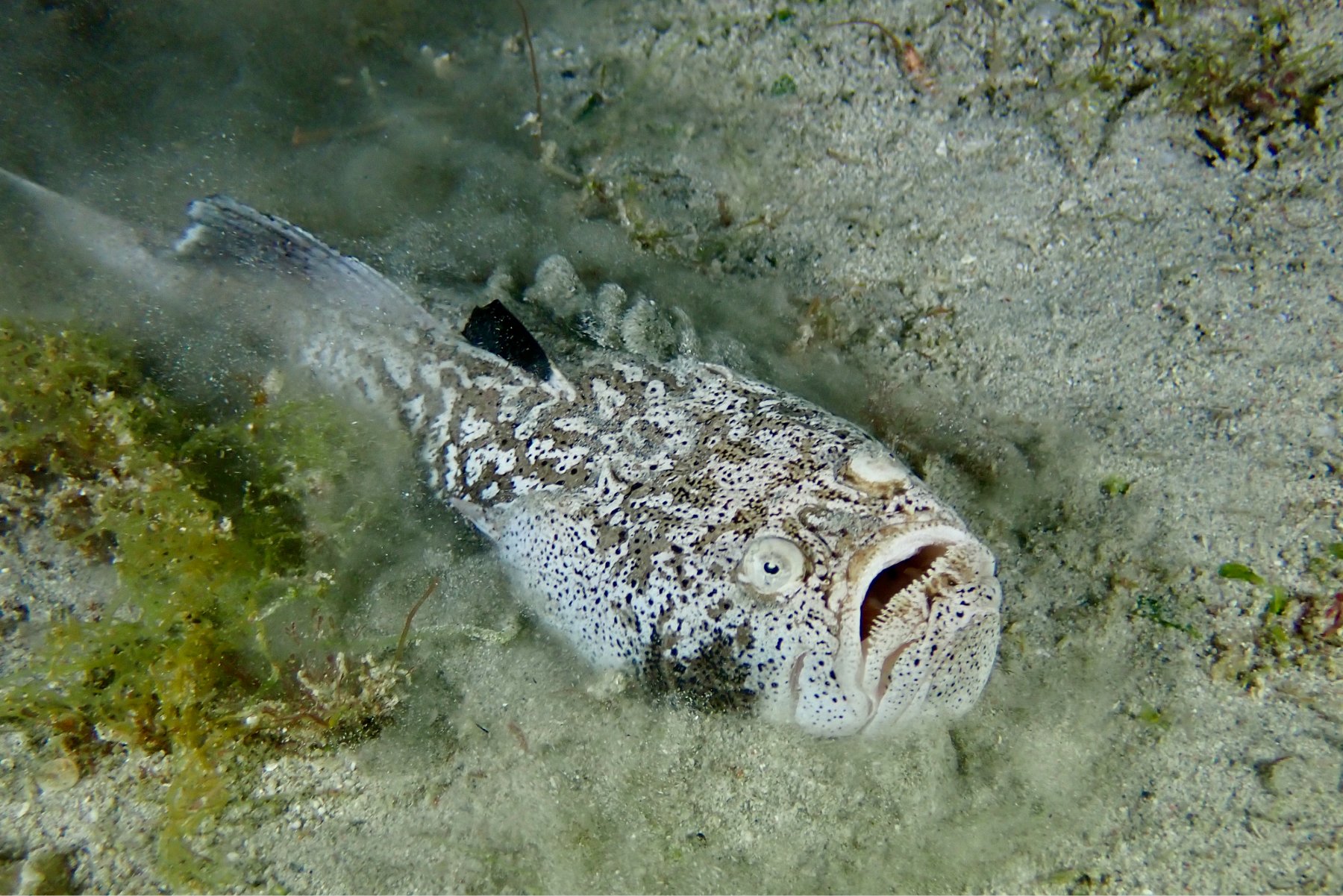
Around 50 other species of stargazers live in waters around the world, all of them venomous, so in many places there’s a chance of treading on one. Getting a stargazer spine jabbed in your foot can be excruciating, but it’s usually not fatal.
And that’s not all they have up their fishy sleeves. Whitemargin stargazers can generate an electric shock from specialised cells between their eyes.
They are one of many fish species that ignore the wise safety guidance about not mixing water and electricity – water being at least a billion times more effective at conducting electricity than air.
On at least six separate occasions, different groups of fish have independently evolved the ability to generate electric shocks, which they put to various uses.
Most notorious and powerful are the electric eels (not actually true eels) from the Amazon Basin, which produce a truly shocking 200-volt zap to overcome their prey.
Elephantfish use a gentler electric current to sense their surroundings in murky rivers, much like bats use sonar for echolocation.
Whitemargin stargazers use their electric shocks as a deterrent; not enough to subdue prey, but enough to put off any bigger animals from coming too close.
Like all electric fish, stargazers have adapted muscle cells that, instead of contracting, pump charged ions across cell membranes, building up a charge that can then be quickly released when it’s needed.
How they do this without giving themselves an electric shock in the process remains something of a mystery.
To submit your questions, email us at questions@sciencefocus.com, or message our Facebook, X, or Instagram pages (don't forget to include your name and location).
Check out our ultimate fun facts page for more mind-blowing science
Read more:
