
Reckon you could shift 83 enormous stones across the English countryside without using any wheels? Whoever built Stonehenge did.
In fact, when construction began on the megalithic structure on Salisbury Plain 5,000 years ago – that’s centuries before the Great Pyramids were built – builders in Britain had little more than stone tools, timber, rope and sheer manpower to work with.
So how did they pull off one of the greatest engineering feats of the prehistoric world, moving some stones from at least 750 kilometres (466 miles) away?
Legend says it was the work of giants summoned by the wizard Merlin. Others believe it was the devil making a deal with an Irishwoman.
But as far as science can tell us, the real story of how our ancestors built Stonehenge over a 1,500-year period is far more intriguing.
Five millennia later, we’re still piecing it together. And the more we discover about the mysterious origins of the iconic stone circle, the more questions seem to arise.
Why, for instance, did the builders spend huge amounts of time and effort digging massive, mysterious-looking pits around Stonehenge that served no clear purpose?
And how did the builders and their families end up on Salisbury Plain in the first place? (Spoiler alert: many of their ancestors weren’t from Britain.)
For centuries, researchers have been staring hard at ancient fragments of bone and stone to try and make sense of it all.
Here are six of the weirdest and most fascinating discoveries they have made about Stonehenge:
1. Stonehenge may have just been a copycat
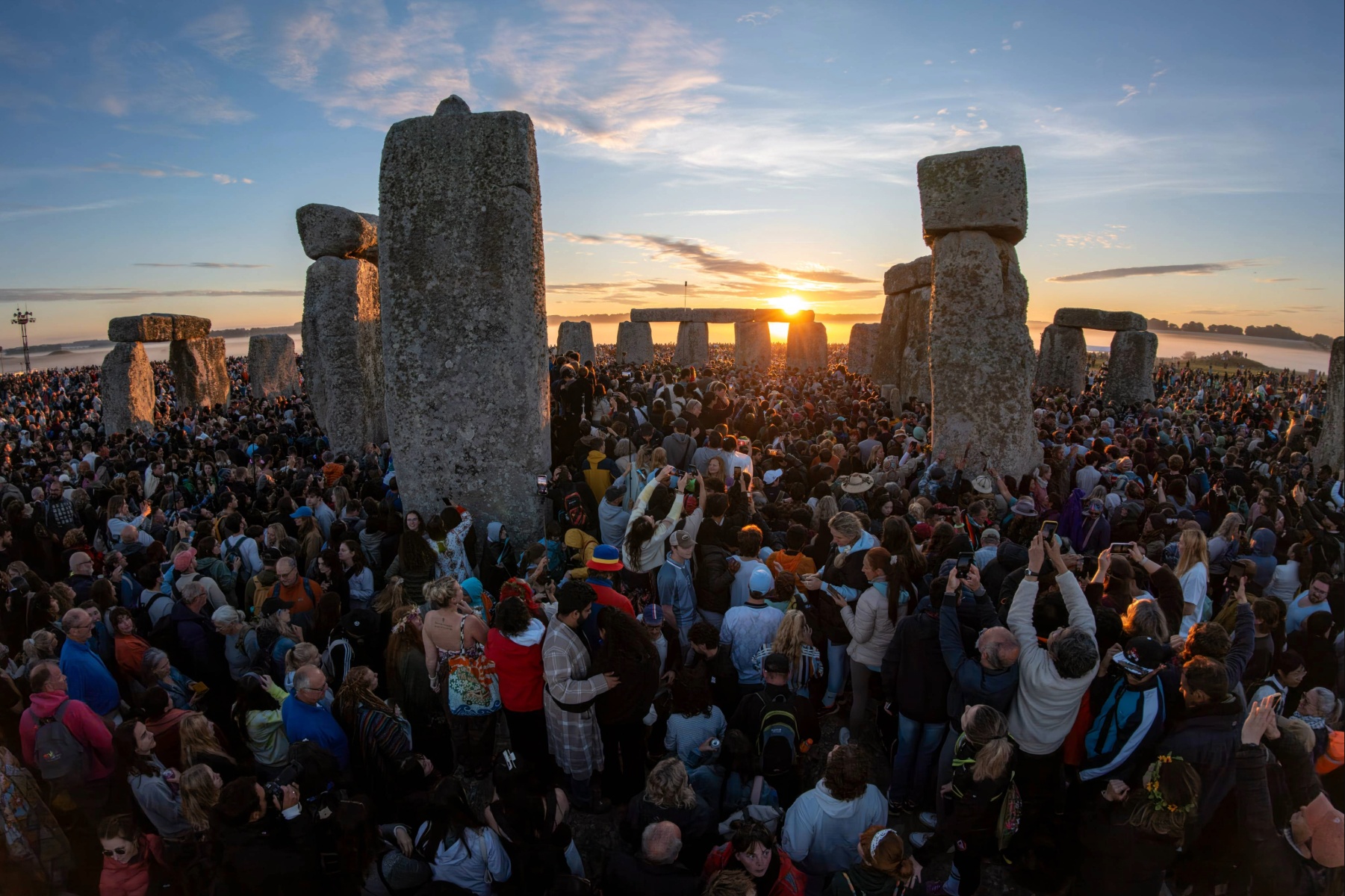
Just 5km from Stonehenge is a far less popular ancient monument that also captures the summer and winter solstices… and it did it first.
In June 2026, a team of experts from Wessex Archaeology announced their discovery of a 5,000-year-old structure at nearby Bulford which, like Stonehenge, was built to mark the longest and shortest days of the year.
The evidence that a monument at Bulford ever existed is hidden underground, less than a 10-minute drive from the world-famous heritage site.
It consisted of two massive timber posts positioned 120 metres (394 ft) apart – roughly four times the diameter of the stone circle at Stonehenge.
“We believe it’s one of the earliest attempts to capture the exact position of the midsummer sunrise and midwinter sunset,” says archaeologist Phil Harding, whose team excavated the remains of the Bulford monument.
The Bulford monument was carbon-dated to around 3000 BC, 500 years before the first stones were laid down at Stonehenge.
So, did Stonehenge just copy Bulford’s homework?
It’s “debatable” whether or not Bulford served as inspiration for its more famous cousin, explains Nick Snashall, archaeologist for the Stonehenge and Avebury World Heritage Site.
“What it does show is the mindset of the people of this time. The solar alignment was already important, and by this time, people were already gathering here in huge numbers.”
Sadly, Bulford’s days as a prime spot for solstice-watching are over. Its builders went to extraordinary lengths to align the monument with the midsummer sunrise and midwinter sunset, but their calculations failed to account for the construction of a 21st-Century housing estate, which now blocks the view.
2. Seriously huge pits were built near Stonehenge (and nobody knows why)
Prof Vince Gaffney’s goal was to map out what lay hidden beneath the famous Stonehenge site, by scanning the ground with remote sensing equipment.
He and his team never thought this would lead them to what may be the biggest prehistoric structure ever found in Britain.
Just 3.2km (2 miles) northeast of the Stonehenge stone circle, Gaffney and his team discovered 20 huge circular pits, around 10 metres (33 feet) across and 5 metres (16 feet) deep. And they appeared to be arranged in a ring.
“What the hell are they?” was Gaffney’s first thought, he told BBC Science Focus.
The 4,500-year-old circle of pits – spanning 2 kilometres (1.2 miles) in diameter – surrounded Durrington Walls, a settlement believed to have been home to Stonehenge’s builders.
"These weren't little scoops. They're huge. So they were clearly significant," says Gaffney.
But the question of why on earth the Neolithic people spent so much time and effort building this enormous structure in the first place still has archaeologists scratching their heads.
One possibility is a symbolic link to the underworld which lay beneath, suggests Gaffney.
“You can’t prove this,” he adds. “But it’s no weirder than saying: Stonehenge has an orientation towards the solstice, therefore the solstice must have been important.”
Read more:
- We may have just cracked one of Stonehenge's greatest mysteries
- No, our ancestors weren't carnivores. Here's what they really ate and why it matters
- An ancient tooth is reshaping what we know about Stonehenge
3. One of its key stones may have travelled by glacier
In a time before wheeled transport, you might expect that Stonehenge’s enormous stones were lugged in from somewhere nearby. But in fact that’s not what happened at all.
At least 42 of the ‘bluestones’, named after the bluish hue they take on when wet, came from the Preseli Hills in Wales, 200km away.
The furthest-travelled stone of them all is the Altar Stone, which now lies recumbent at the centre of the circle, having made the journey all the way from northeast Scotland.
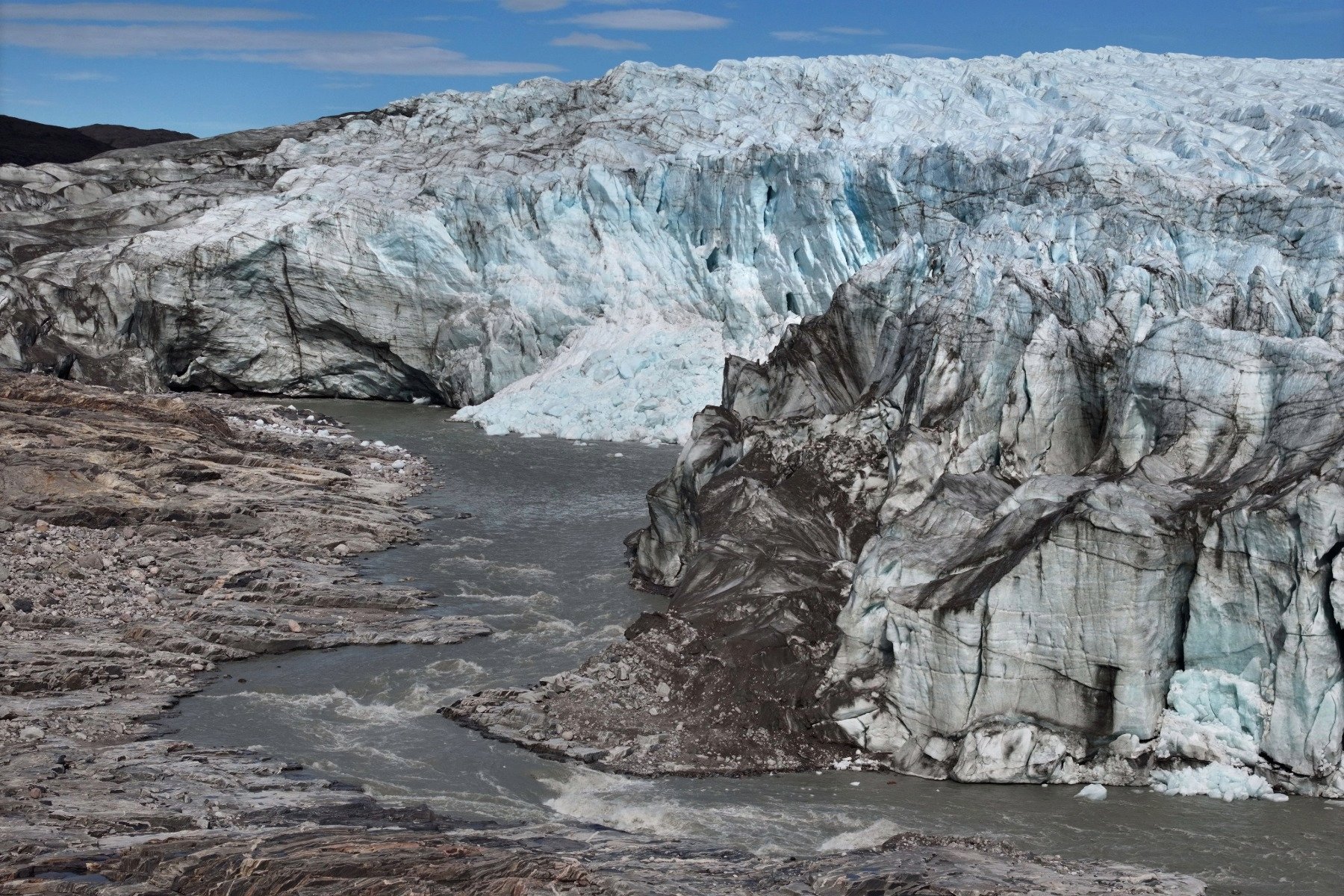
Something extraordinary would have had to happen for this six-tonne (13,200lb) slab of rock to be transported 750km southwest to Salisbury Plain. According to a study published in June 2026, it did: the Altar Stone may have hitched a ride on a glacier.
As Dr Remy Veness, a glaciologist at Sheffield Hallam University who co-authored the study, explains, Scotland used to be covered by a “really big ice sheet” that was up to 2,000 metres thick in places.
“Ice in a glacier is like a really slow river. It flows.” And as glaciers move, they carry things with them.
Based on what we know about how glaciers move in different environmental conditions, glaciologists can make computational models which act as a reverse weather forecast, predicting the movements of glaciers thousands of years ago.
According to Veness’s model, the Scottish Altar Stone would have travelled via glacier all the way to Doggerland, once a large area of land which connected Britain to the rest of Europe.
From there, it would have to have been moved by some other means to finally reach Stonehenge, which was still around 400 kilometres (248.5 miles) away.
If it was humans, and not Merlin’s giants, that heaved the Altar Stone the last part of the journey to Salisbury Plain, they would have been making a “once-in-a-generation” voyage, says Veness.
“They moved a rock three times the weight of my car without any high-tech machinery. It’s just incredible,” he says.
“However they got it there, it was really hard and probably a first-of-its-kind effort in this part of Europe.”
4. Its builders weren’t who you’d think
Archaeologists got pretty excited when it was revealed that the Altar Stone travelled all the way from Scotland before settling down in Salisbury.
But it turns out humans were making much, much longer journeys to reach the site, 1,000 years before the first stones were put up at Stonehenge.
In 2019, a study showed that the people who built Stonehenge were descended from populations originating in modern-day Turkey. Over 2,000 years, successive generations migrated west across the Mediterranean, reaching Britain around 4000 BC.
The researchers discovered this by analysing DNA samples extracted from the skulls of Neolithic people scattered across this migration path.
Using a technique called shotgun sequencing, they identified patterns in individuals’ genetic codes, which provide clues as to who their genetic ancestors were.
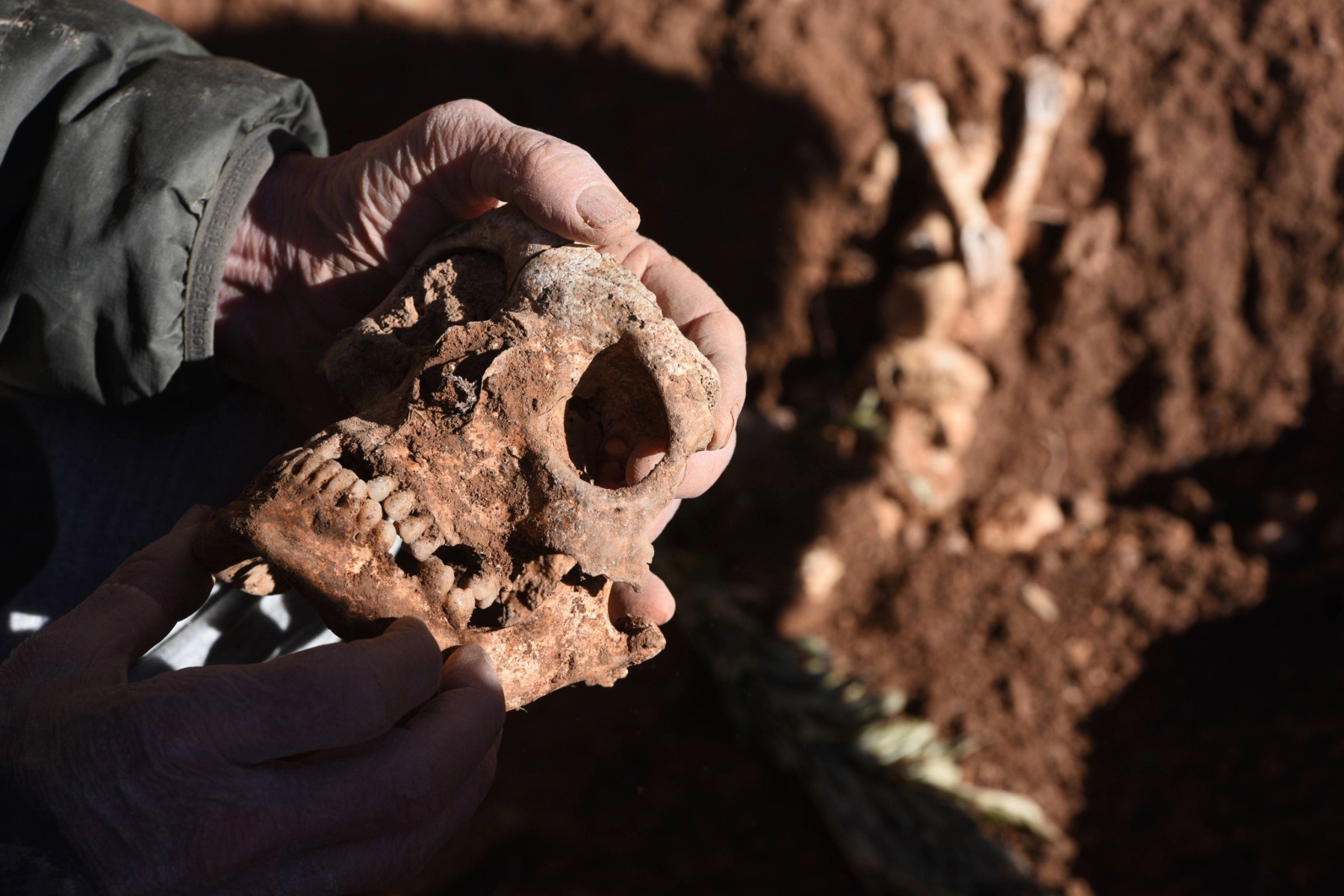
“Around 4000 BC, we start to see a change in genetic ancestry which suggests that a new pool of ancestors is being introduced to Britain,” says Tom Booth, a research scientist at the Francis Crick Institute, who co-authored the study.
“And we can trace those ancestors all the way back to Anatolia (modern-day Turkey).”
Anatolia was one of the earliest places in Europe and Western Asia where farming practices really took off, gradually replacing the old ways of hunting and gathering food in the wild.
Armed with a steady supply of food from crops and domesticated livestock, the Anatolians grew their population size and spilled out to surrounding regions, bringing their newfangled farming ideas with them.
By the time these migrants reached Britain, their ancestry was about 75 per cent Anatolian and 25 per cent hunter-gatherer – a genetic patchwork forged through 2,000 years of mixing with populations across Europe.
With new incoming populations comes dynamic social change, explains Booth. Migrants arriving at Stonehenge would have brought their own beliefs and languages, and would have had to negotiate their differences with the local hunter-gatherers.
Like Britain today, Stonehenge was a cultural melting pot, rich with diversity.
“The extent to which that involved antagonism between groups, or assimilation and integration, is a big question,” says Booth.
Read more:
- We might finally know how the pyramids were built
- Experts just found an enormous volcano lurking under England
- We didn’t conquer the world alone. This is humanity’s untold origin story
5. A serious load of pork was eaten there
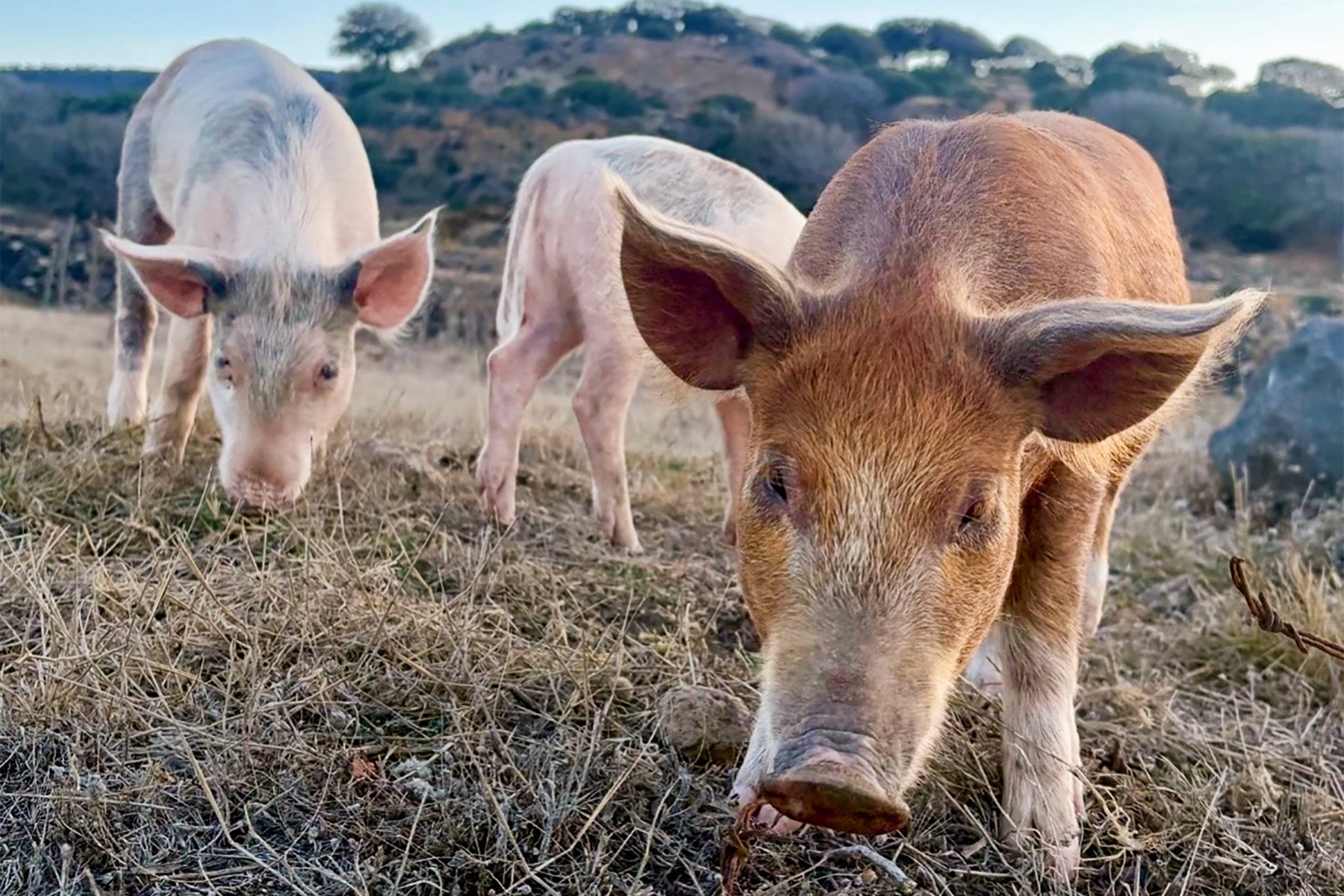
Over 38,000 discarded animal bones have been found at Durrington Walls, a settlement just 3.2km (2 miles) away from Stonehenge, believed to be home to the people who built and visited the stone circle around 2500 BC.
Ninety per cent of the excavated leftovers were from pigs, while the rest was mostly cattle.
Pork seems to have been the centrepiece of choice for winter feasts at Stonehenge.
We know these pork feasts were happening around midwinter because of the vast quantity of nine-month-old pig remains found at Durrington, explains Snashall. Pigs tend to give birth around March, which means they were being slaughtered right around midwinter.
“It’s a bit like turkey at Christmas,” says Harding. “You don’t eat turkey at any other times of the year, then all of a sudden you’ve got this mass cull of a species.”
Isotope analysis of cattle and pig teeth from the Stonehenge site shows that some of these animals must have travelled in from Wales and northeast Scotland.
“It’s probably not Aberdeen Angus because they didn’t exist at the time,” says Snashall. “But some of it was probably good Scotch beef.”
6. It was once surrounded by wooden posts
The builders of Stonehenge were clearly keen on leaving behind an impressive architectural legacy.
But scientists have discovered a building project that apparently they didn’t want anyone to see.
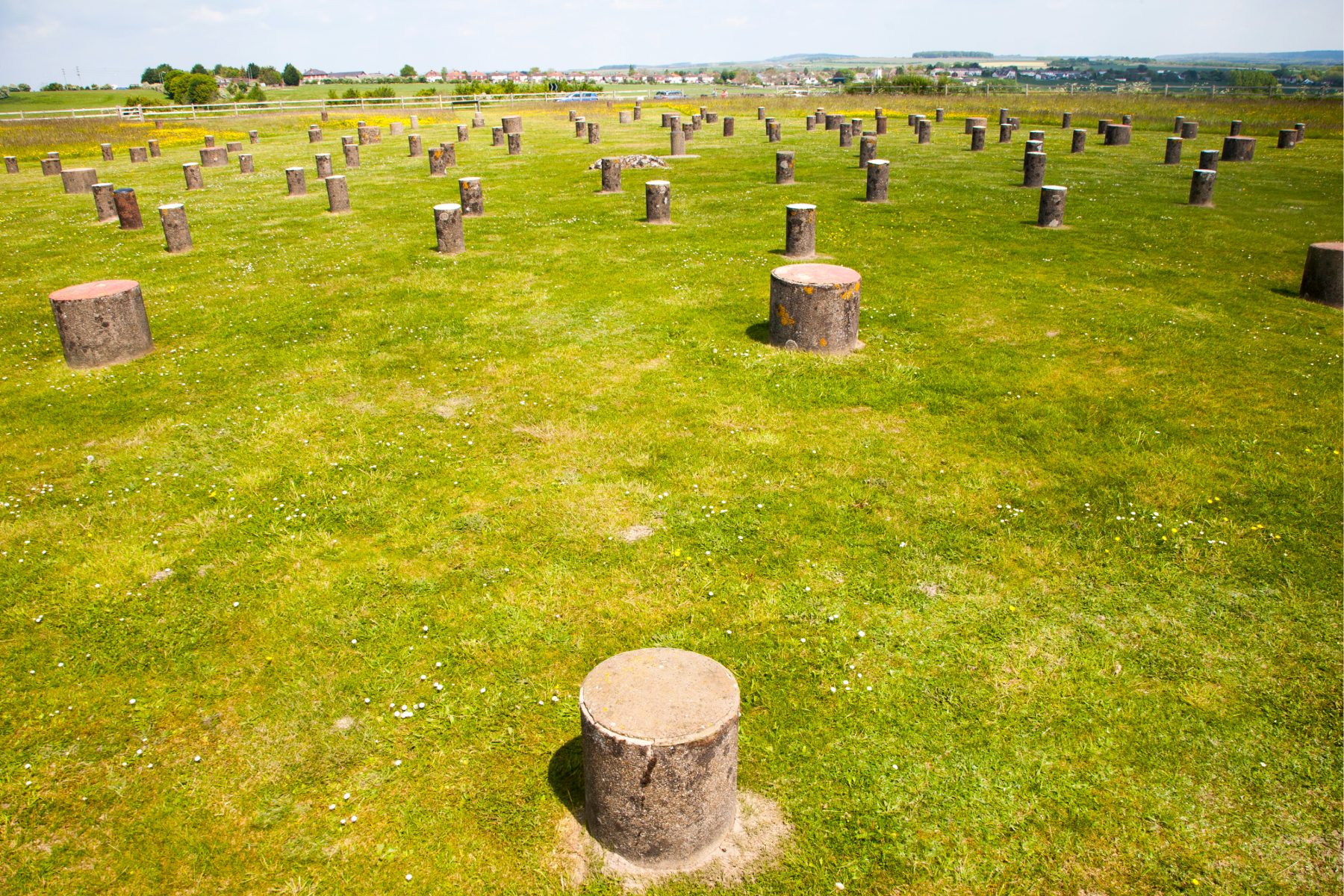
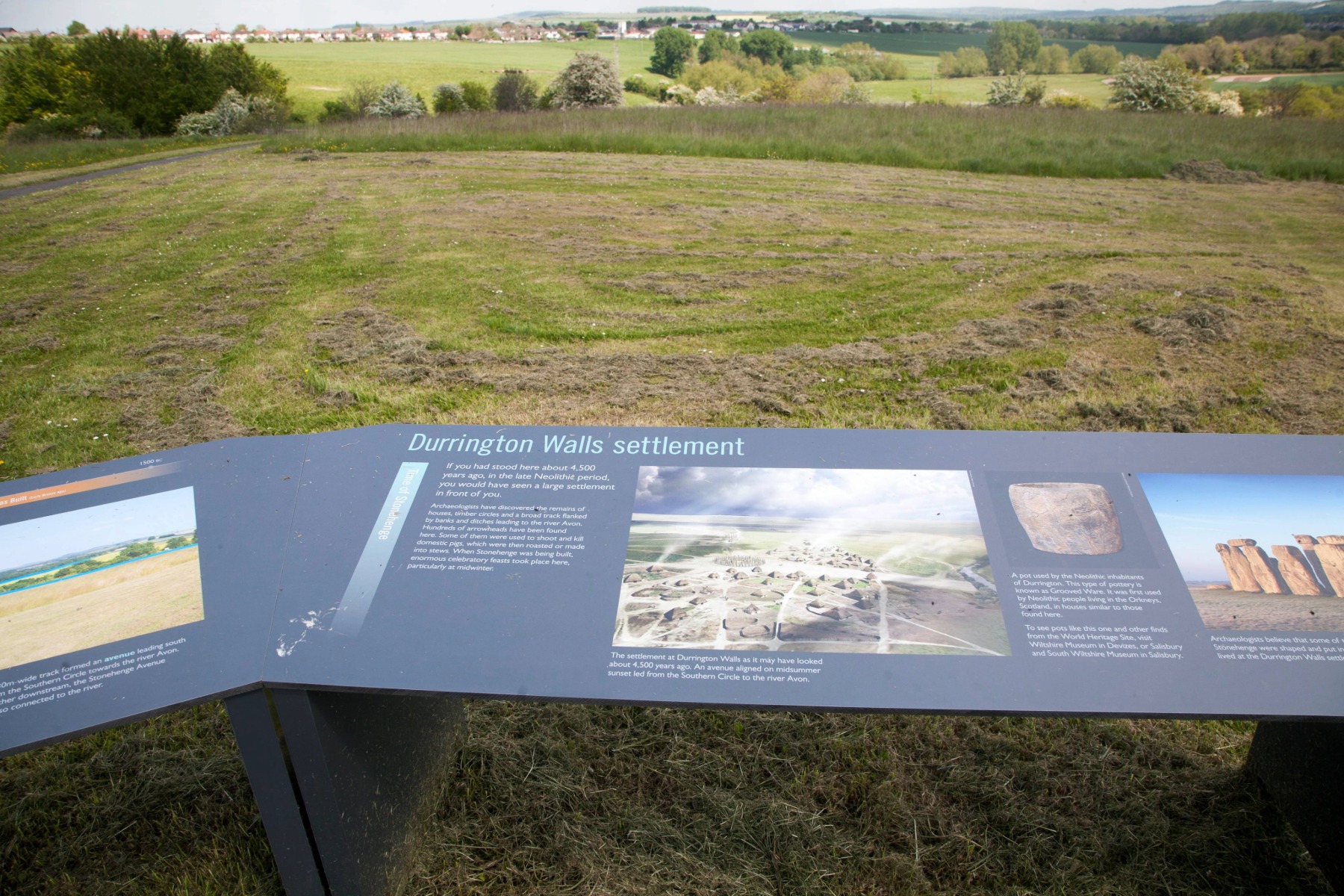
Archaeologist Vince Gaffney and his team discovered that a huge circle of approximately 300 timber posts was planted into the ground just 3.2km (2 miles) from Stonehenge, shortly after one of its major construction phases.
Then, for no apparent reason, they were all pulled out again less than 50 years later.
This was a well-kept secret until Gaffney and his team used remote sensing techniques to scan the area around Stonehenge and spotted a circle of enormous post-shaped holes underground.
Each trunk weighed 1.5 to 3 tonnes, so it would have been a tremendous effort to install and then quickly dismantle the 300-post structure.
“We don’t know who it was that was doing this,” says Snashall.
This all happened right around the time that the very first metal workers arrived on the British Isles during the early Bronze Age.
“Is it the early Bronze Age people that have come in and changed everything?” says Snashall. “Or is it still the Neolithic population and this is their reaction to what’s going on with these people coming in?”
As is often the case with the mysteries of Stonehenge, explanations lie somewhere between evidence and speculation.
The answer, concludes Snashall, is “we don’t know”.
Read more:
