In around half an hour on social media, you can learn the most extraordinary things about the pyramids of the world.
You’ll find out that they were not, in fact, tombs or monuments, but power generators designed to harness the Earth’s electromagnetic energy. You’ll also discover that beneath the pyramids in Giza are immense structures stretching more than 600m (1,970ft), evidence of which is being covered up.
And, of course, these incredible landmarks weren’t built by Egyptians or Maya or any other ancient people. It was the aliens, silly.
Of course, none of this is true.
Speculation and conspiracy theories abound about the pyramids in Egypt and beyond. In some ways it’s easy to understand why, says Dr Campbell Price, curator of Egypt and Sudan at Manchester Museum and author of Brief Histories of Ancient Egypt.
“It doesn’t matter how many times you see them, they are just amazing,” he says. “But that acts as a lightning rod for crazy theories.”
Very few armchair conspiracy theorists have been down in the dirt and actually studied the pyramids. Fewer still are qualified to.
When you speak to people who are qualified and have done fieldwork in Egypt or Mexico or China, they usually offer a wry and patient smile, then proceed to tell you what’s actually been discovered through decades of meticulous research and excavation.
“We know more than a lot of people think,” says Egyptologist Mark Lehner, director of Ancient Egypt Research Associates. “A lot of those theorists have never been to Egypt – they’re just not seeing the marks of the human hand, which are everywhere on the pyramids.
“I could walk with you in Giza tomorrow, and I’d show you tool marks. You can see where they were using chisels, where they're dumping globs of mortar between the stones of the interior of the Great Pyramid. Or graffiti with the names of the work gangs.”
Lehner has been excavating in Giza since the late 1980s and for all that he and his colleagues have discovered, he says there is always more to learn, both in Egypt and at other pyramid sites around the world. Here are six of the biggest outstanding mysteries – not conspiracy theories – about these wonders of the ancient world.
What is the Great Void?
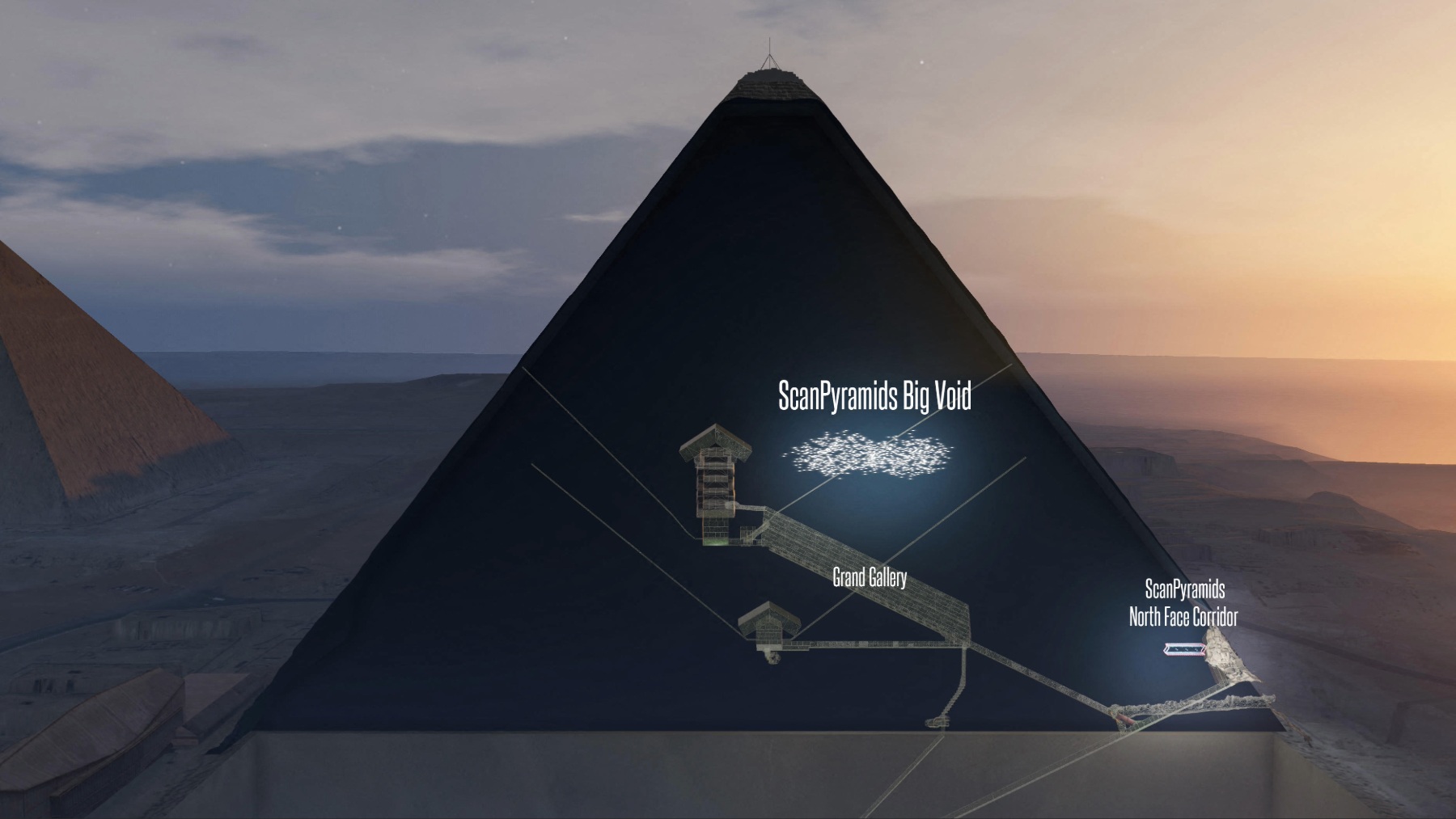
In 2017, researchers working with the ScanPyramids project announced the discovery of a previously unknown cavity inside the Great Pyramid of Khufu in Giza.
Using muon tomography – a technique that tracks cosmic rays passing through stone – they identified a large void above the Grand Gallery, at least 30m (100ft) long. Cue headlines about hidden chambers, lost treasures and ancient secrets waiting to be revealed.
The reality is both less dramatic and more interesting. “The void is very real. What it is for remains unknown,” says Lehner. “Is it level? Is it the same angle as the Grand Gallery? But there’s some kind of a void there.”
One possibility is that it served a structural purpose, helping distribute weight within the monument. Another is that it represents an architectural space connected to the pyramid’s construction.
“I think that the most likely explanation is it’s a construction gap where they would purposefully make spaces above chambers and passageways,” Lehner says.
“There are other examples in other pyramids, not quite as grand, but where they would do that. I think it probably has something to do with the construction and their concern about the weight-bearing load of these passages and chambers. They often overengineered.”
Some researchers have suggested it could be a previously unknown chamber, but there is currently no evidence that it contains artefacts, burials or anything particularly cinematic.
The mystery persists largely because archaeologists are reluctant to drill holes into one of the world’s most important monuments.
For now, the Great Void sits in an unusual category: a genuinely unexplained feature inside one of the most studied buildings on Earth.
Are there more pyramids hidden in the depths of the Amazon?
Twenty years ago, the idea of undiscovered monumental architecture hidden beneath the Amazon rainforest might have sounded like fiction. Today, it’s mainstream archaeology.
Advances in lidar – a laser-scanning technology capable of penetrating forest canopy – have revealed vast networks of settlements, roads, earthworks and ceremonial platforms across parts of the Amazon Basin and beyond in South America.
The emerging picture is of more intricate societies and landscapes that were far more densely populated than researchers once believed.
As recently as 2022, researchers discovered hidden pyramids, some as much as 22m (72ft) tall, hidden in densely forested areas of Bolivia and Ecuador. Other discoveries include the remains of a spiral-shaped temple in Peru.
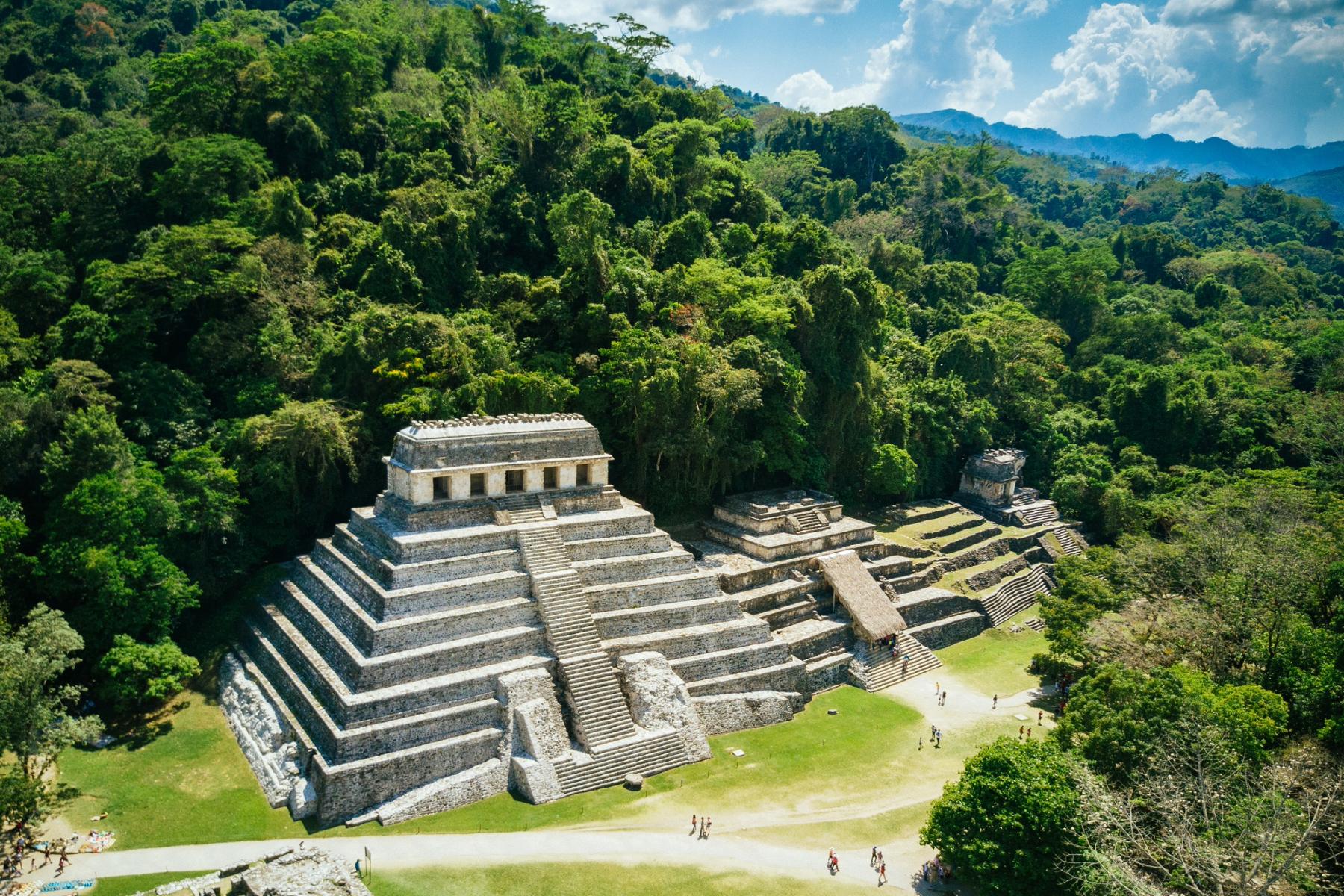
But it’s not just pyramids waiting to be found. “I think we already know pretty much all the pyramids in the Maya area [which spans southeast Mexico, Guatemala, Belize, Honduras and El Salvador] and in Mesoamerican Mexico too. Pyramids are very visible,” says Prof Takeshi Inomata, an archaeologist at the University of Arizona.
In 2020, Inomata discovered Aguada Fénix, believed to be the largest and oldest Maya ceremonial site, using lidar. The site in modern-day Mexico is almost 1.4km (0.9 miles) long. “You cannot see its shape and size when you are on the ground. That’s why we needed the lidar,” Inomata says.
So one of the lingering mysteries in South America is what else might lie waiting there. One 2023 study estimated the number of undiscovered buildings could be as high as 23,000.
The question is not whether there are more lost cities to be found – there almost certainly are. The question is just how big, how interconnected and how advanced they were.
How did ancient Egyptians move and manoeuvre the largest stones?
This is the granddaddy of pyramid mysteries, and one that has attracted more dubious explanations than almost any other archaeological question. If a stone weighs 100 tonnes or more, surely aliens, lost civilisations or anti-gravity technology must have been involved in moving them?
Well, probably not. The uncomfortable truth is that ancient people were often far more capable than we give them credit for.
Archaeologists have amassed substantial evidence for quarrying techniques, sledges, ropes, organised labour, waterways and ramps. The site where Lehner has worked since the 1980s is the ‘Lost City’, now believed to have housed some 20,000 workers who built the pyramid.
There’s even a papyrus called the Diary of Merer, discovered in 2013. It’s a 4,500-year-old logbook of a crew of workers transporting limestone through a series of canals during the time of Khufu.
Still, important questions remain. There is no universal agreement on the exact ramp systems used at Giza. The transportation of the heaviest blocks remains challenging to reconstruct in detail, but most Egyptologists believe ramps were involved.
“I have my own favourite ramp theory, where the ramp basically goes all the way from the quarry in the case of the Khufu Pyramid,” Lehner says. “A ramp of a reasonable size could get from that quarry – 350m (1,150ft) or so – to 30 to 40m (100 to 130ft) above the base of the Great Pyramid.
“But even then we still don’t totally understand how they finished the pyramid to the very tippy top. Just how they innovated, we’re not sure.”
Read more:
- We might finally know how the pyramids were built
- We could soon solve the world’s biggest archaeological puzzle
- Scientists uncover (very) creepy reason humans first kept pet cats
What are the Queen’s Chamber shafts at Giza?
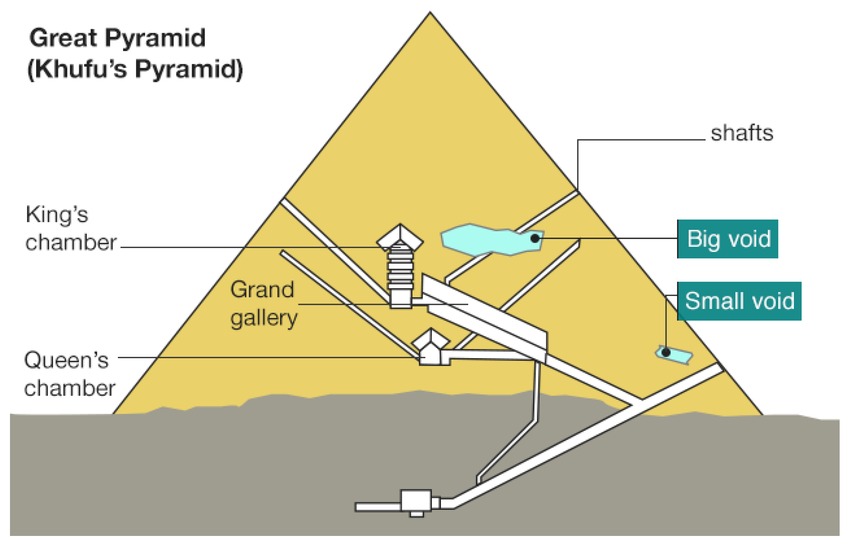
Inside the Great Pyramid, there are two narrow shafts extending from the so-called Queen’s Chamber. Unlike larger passages that visitors can walk through, these are tiny channels barely wide enough for modern robots. Their purpose remains one of the pyramids’ most enduring puzzles.
The mystery deepened in the 1990s when robotic explorations discovered what appeared to be small limestone ‘doors’ blocking the shafts. One even featured copper fittings resembling handles. Behind one blockage lay another and, for a brief moment, it looked as though Egyptology had stumbled into an adventure film.
The truth is more complicated. Most scholars doubt the shafts were ventilation systems, despite the popular label of ‘air shafts’. “I don't think the ancient Egyptians were concerned about air; this is not a health and safety risk assessment,” Price says. “They were tunnelling into much more muggy conditions elsewhere.”
Experts, Price included, more commonly interpret the shafts as symbolic passages connected to Egyptian beliefs about the afterlife and the king’s journey to the stars. Ancient Egyptian texts often link deceased rulers to specific regions of the sky, and some researchers have argued the shafts were aligned toward important stars or constellations. Others think they formed part of a broader religious programme whose details have been lost.
“There may be a stellar explanation, but there may also be a practical explanation for controlling the rise of the slope,” Price says. “It may be something as practical as a rope going through there for some engineering reason.”
If the shafts are something to do with stellar alignment, Price rejects the way some theorists take that idea further. “Seeing the pyramids as some kind of star map of Orion’s Belt on the ground – that’s pushing it slightly. I don’t know why the ancient Egyptians would want to do that. I’m not buying it.”
Why does Sudan have so many pyramids?
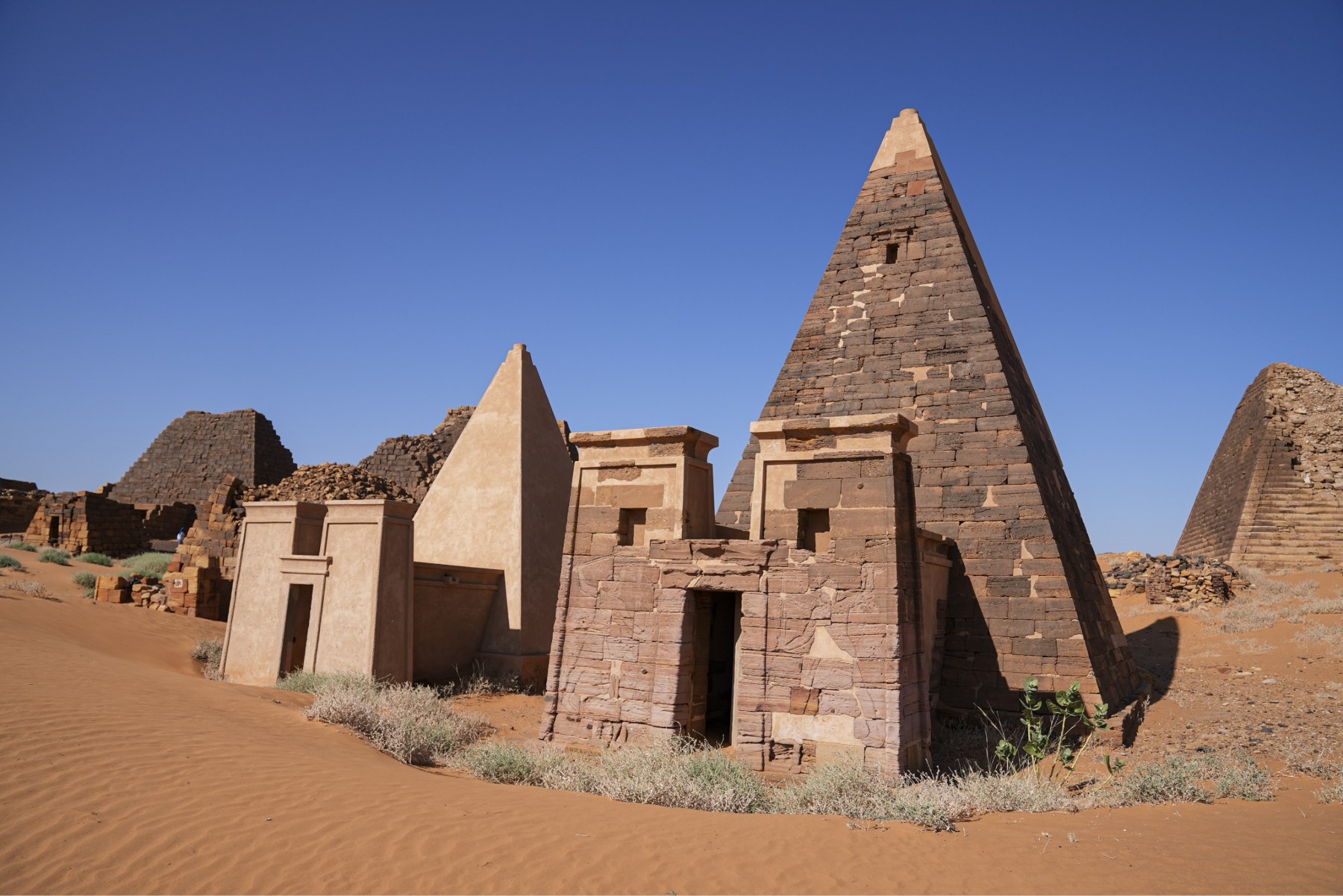
Ask people to name a land of pyramids and most will say Egypt. In fact, Sudan contains more of these ancient structures than its famous northern neighbour.
Most belong to the ancient Kingdom of Kush, which flourished in Nubia, south of Egypt. Beginning around the eighth century BCE, Kushite rulers adopted and adapted Egyptian traditions, including pyramid building. Over centuries they constructed hundreds of steep-sided pyramids at royal cemeteries such as Nuri and Meroë.
This raises an obvious question: why build so many? Part of the answer lies in time, Price says. “They were building these pyramids for longer than the ancient Egyptians were. Meroë was like a rival civilisation to the Roman Empire, in the last couple of centuries BCE, the first couple of centuries CE. So that’s why there are more of them.”
The pyramids are also smaller than the giant monuments of Giza, making them easier to build in greater numbers. Similar, smaller pyramids are believed to have once been common in Egypt – and probably inspired those in the Kushite kingdom, Price says – but they did not survive looters or the ravages of time. Those in Sudan were partly kept safe because they were more geographically isolated.
Today, of course, Sudan is gripped by war. The sooner that ends, the sooner humanity can address the appalling humanitarian situation in the region, and the world can learn more of the interconnected histories of African civilisations. “People ought to know more about the archaeology of Sudan,” Price says.
Who were the people who built Caral?
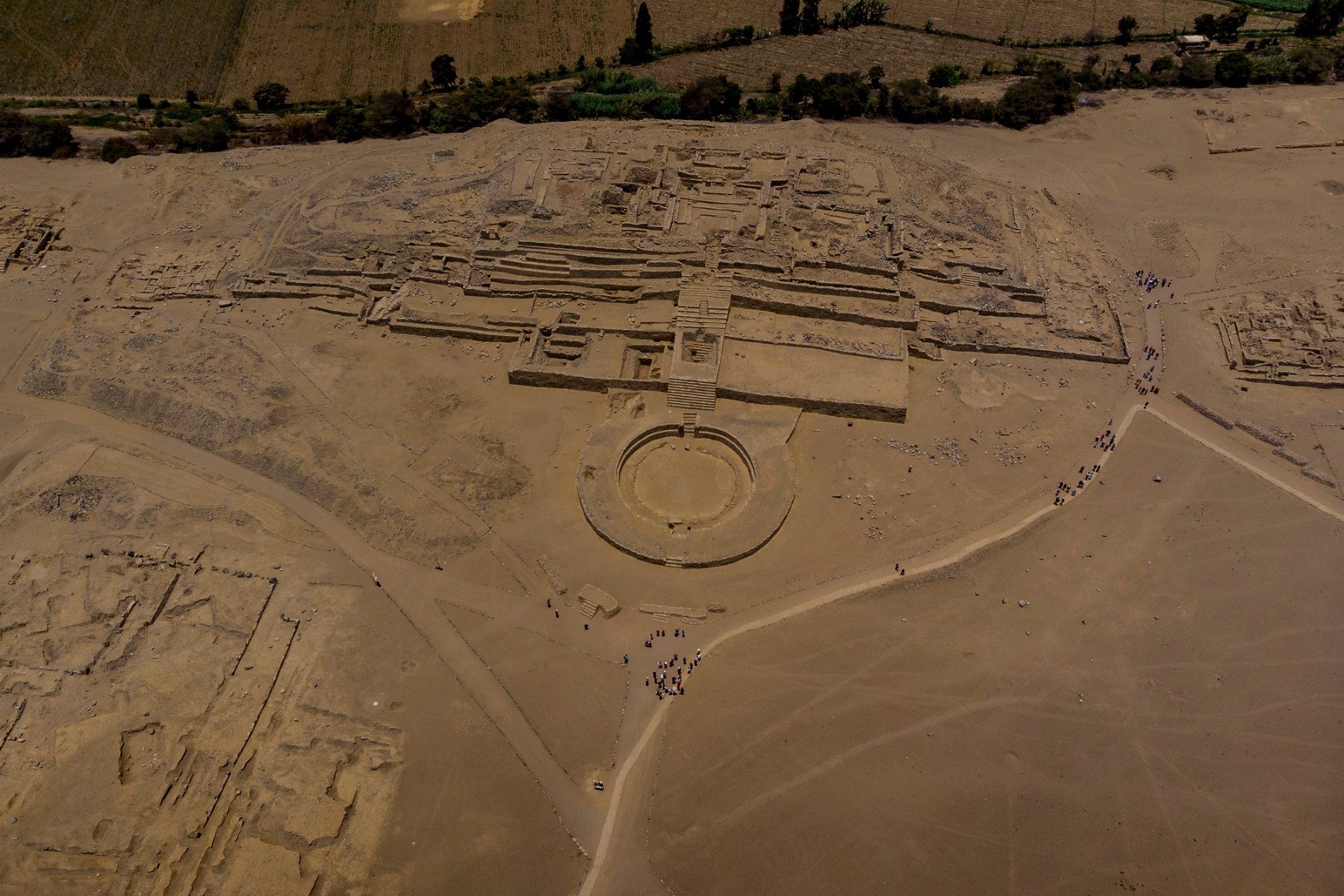
The ancient city of Caral, on the coast of Peru, is one of the oldest known urban centres in the Americas. Dating back roughly 5,000 years, it contains monumental platform mounds and pyramid-like structures built around the same time as some of the earliest Egyptian pyramids.
The mystery is not that we have no idea who built it. We know it was constructed by the people of the Norte Chico civilisation. The real puzzle is how such a complex society emerged so early.
Caral appears to have developed without many of the features traditionally associated with civilisation. There is little evidence of warfare. Monumental architecture appears before pottery became widespread. The economy may have relied heavily on fishing and trade networks rather than agriculture alone.
This challenges assumptions about how societies become complex. For decades, archaeologists often emphasised kings, armies and conflict as drivers of state formation. Caral suggests something different – potentially something collective.
“People built those big constructions in the really early stages of societal development,” Inomata says. “They were not built by kings coercing people into constructing them. We think people just got together and collaborated. But how it happened, more precisely, that’s the question I’d like to study more.”
Read more: