In the summer of 2025, astronomers spotted a visitor from beyond our Solar System coursing through the blackness of space.
Only the third interstellar object ever detected by our telescopes, it was picked up by an instrument in Chile designed to watch the skies for asteroids that might collide with Earth.
The object was freakishly fast. It moved at 220,500km/h (137,000mph) and was not bound by the Sun’s gravity.
At the time, most observers said the object – which became known as 3I/ATLAS – was most likely an interstellar comet, but with limited data and the object’s seemingly weird trajectory and behaviour, nobody could be sure.
What if this thing wasn’t a runaway ball of ice and rock? What if it was built? What if it was navigating? What if it was looking for us?
If these seem like fanciful, sensational questions, they weren’t to Prof Avi Loeb, an astrophysicist at Harvard University. Loeb published a speculative paper (published on the preprint site Arxiv) putting forward the idea that 3I/ATLAS was technological – potentially even hostile – based on its movements. And he didn’t stop there.
“I actually tried to approach the United Nations,” Loeb says now, “and got a very lukewarm response. I tried to initiate some kind of committee to establish a protocol for how we should respond to an interstellar object.
“They said, ‘Well, maybe the International Astronomical Union [IAU] needs to do that’. So I approached the IAU, and they said ‘Well, it would take two years to establish a committee’.”

Bureaucracy in the face of potential alien technology is possibly the most human response imaginable, but in this instance it didn’t matter.
3I/ATLAS was confirmed as an interstellar comet – the fastest ever recorded – and Loeb attracted criticism from other researchers, who said his speculation lacked evidence.
Some claimed the alien spacecraft narrative risked overshadowing what was a tremendous discovery in its own right.
Nevertheless, the comet’s dramatic flyby resurrected a familiar question. The same question asked by Steven Spielberg’s film, Disclosure Day. The same question driving the public appetite for yet more UFO files from the US government.
What would happen if we found undeniable evidence of alien life or technology?
The hunt is on
Humanity has been listening for radio signals from distant star systems since the 1960s. More recently, we’ve searched for other ‘technosignatures’ such as laser pulses or evidence of megastructures or industrial pollution in space.
Loeb also runs the Galileo Project, an attempt to locate technological artifacts trapped in our cosmic backyard.
“Any spacecraft launched with a speed less than 20 times our fastest rocket will stay bound by gravity to the Milky Way,” he says.
“So we can look around. It’s like space archaeology – we’re checking if there are any technological probes or objects that were launched over the past 10 billion years.”
There’s been nothing so far, but scientists are also looking further afield.

Our most advanced telescopes now routinely study the atmospheres of planets discovered orbiting distant stars, looking for favourable conditions where life could bloom.
And more powerful instruments will launch soon, starting with NASA’s Roman Space Telescope in August 2026.
We have never looked so hard for siblings among the stars – and, for some researchers, discovery of extraterrestrial life is not a question of if, but when.
“I think there’s not only growing interest, but growing realisation that the discovery of life beyond our Solar System, whether it’s basic and microbial or advanced and intelligent, is perhaps not that far into the future,” says Bill Diamond, CEO of the SETI Institute (SETI stands for Search for Extraterrestrial Intelligence), the non-profit research organisation dedicated to exploring and understanding life in the Universe.
“Every star in the sky is a solar system, and about 30 per cent of the worlds around them are likely to be Earth-like and in the habitable zone of their host star,” Diamond says.
“So the implication is tens of billions of potentially habitable planets in our own galaxy alone. Evidence is mounting that the statistical probability that we’re alone in the Universe is zero.”
Read more:
First contact
Researchers agree that the most likely discovery won’t be a flying saucer above the White House or orbs over a corn field. It would be a blip in a dataset, like dodgy accounts spotted in an audit – a pattern or a single entry that shouldn’t be there.
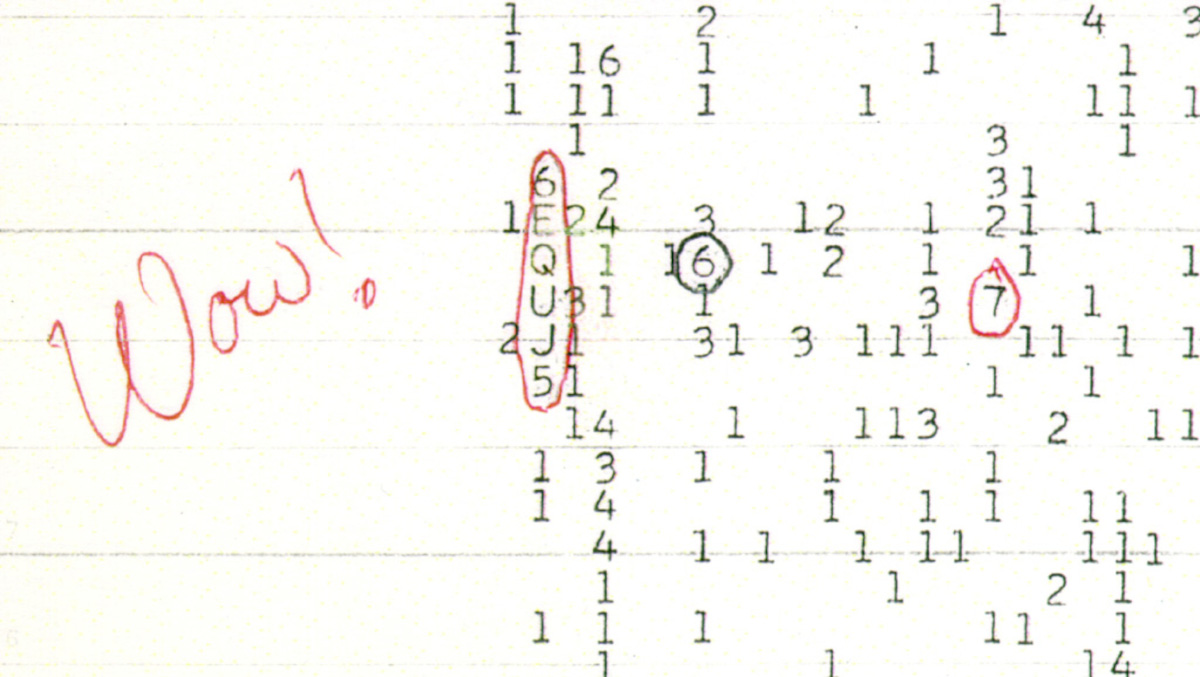
This was the case in 1977, when the famous ‘Wow!’ signal appeared, a strong radio transmission detected by the Big Ear telescope at Ohio State University, in the US.
The signal lasted 72 seconds and appeared to come from the Sagittarius constellation, but it was never repeated and, despite healthy debate, it’s never been proven what the anomaly was.
If we found a similar signal tomorrow – perhaps one with some kind of information attached – it would be exciting, but it would also raise questions, Diamond says.
“Say it happens to be a radio signal or a laser pulse, but it’s from a planetary system that’s 10,000 light-years from here. That means that transmission left that planet 10,000 years ago.
"Is that civilisation even around today? We’re not going to have a phone call or a conversation with a civilisation that is that far away.
“It’s more interesting to think about the discovery of a technological civilisation in a planetary system that’s tens of light-years away.
"Then you could theoretically have a conversation, but it would take a long time for each transmission and response.”
This kind of interstellar radio chatter is the extraterrestrial scenario we are currently best prepared for.
In 1989, researchers drew up what are known as the SETI post-detection protocols, a series of non-binding guidelines governing how the international scientific community should respond if ET does phone home.
The protocols have just been updated – coincidentally, they were endorsed by the International Academy of Astronautics the same week that Spielberg’s new film was released.
But don’t grab your tinfoil hats just yet: the update was mainly intended to reflect the ways the world has changed since 1989.
Today, the internet, social media and AI all mean that a discovery – or a false positive – could become global news before researchers have a chance to study and verify it.
“Verification is really important. The first priority is to get another research group using independent equipment to repeat what you’ve done – repeat the observation,” says Prof Michael Garrett, director of the Jodrell Bank centre for astrophysics at the University of Manchester.
Garrett is also chair of the International Academy of Astronautics SETI Committee and one of the researchers who led the update of the SETI protocols.
“If the observation stands up after independent verification, then we should be contacting an international body like the United Nations,” he says.
The new protocols state that other international organisations should also be notified and that nobody has the right to respond to a signal – that any reply should be the result of international coordination.
This also speaks to a long-gestating question around SETI and what happens if we’re contacted by another civilisation: how do we reply, if at all, and who speaks for Earth?
Texting ET
Researchers usually default again to international bodies like the UN for coordinating any response to a signal from outer space. Part of the issue is cultural and political.
How do we best represent our species? Should the nations who are technologically equipped to send the message get to design it?
In NASA’s various probes and transmissions into space, we’ve sent photographs of animals, architecture and childbirth, greetings in dozens of languages, DNA structures, the sounds of whale song, thunder and laughter, plus the music of Beethoven and The Beatles.
“One of the great challenges of creating interstellar messages is finding a format that will be intelligible to an independently evolved civilisation,” says Dr Douglas Vakoch. “We can be sure that aliens won’t speak English or Mandarin or Swahili.”
Vakoch is a psychologist, astrobiologist and president of METI International, a non-profit research organisation dedicated to sending intentional messages to nearby stars. METI stands for Messaging to Extraterrestrial Intelligence, and the practice is controversial.
Stephen Hawking famously warned against proactively broadcasting to the stars in case it alerted an advanced, unfriendly race to our presence.
Nevertheless, in 2017, METI International created a mathematical and scientific tutorial that was transmitted to Luyten’s Star, one of the nearest stars known to have an Earth-like exoplanet orbiting within its habitable zone.
The message was designed to help any potential recipients decode and translate musical compositions sent later. So far, there’s been no reply.
“Even as we transmit to stars in our own galactic backyard, the distances are immense,” Vakoch says.
“Our message to Luyten’s Star, travelling at the speed of light, will take over 12 years to arrive, and the reply would take another 12 years to reach Earth. Not exactly a snappy dialogue!”

Vakoch says our highest priority should be deciding what not to say to an alien civilisation. “For example, we shouldn’t make threats. If we want to be trusted, we should certainly avoid lying. But does this include lies of omission?”
“That’s one of the criticisms of NASA’s Golden Record, sent onboard two Voyager spacecraft in 1977. By including only pictures of Earth that were deemed to be positive, while avoiding any suggestion of war or poverty, critics argue that we were being dishonest.”
Read more:
Closer encounters
What about the Hollywood version of alien contact, where it’s not the ultimate long-distance relationship, but a much closer encounter?
Alien visitation is much less likely than a faint and distant signature, but researchers – like the rest of us – have thought about what it would look like and what it would mean.
Loeb says it would be something like the ultimate blind date. Success depends very much on the dating partner.
“The first thing we will immediately worry about is the threat, the level of risk, because it’s all about survival, right? So when you go on a blind date, you want to know the other person is not a serial killer.”
He doesn’t expect little green men to walk out of a spaceship.
“I would bet that it’s not a biological creature, but rather some technological system with artificial intelligence. When you make an interstellar journey, you need a system that is autonomous, that has its own brain.
"And given that biological brains are difficult to maintain across billions of years or tens of thousands of light-years, I would think that it makes sense to send robots with AI.”
Whatever shows up, we’d better hope it’s benevolent, Diamond adds.
“Their technology is going to be so far advanced beyond ours that it would be absurd to think we could do anything about it. We have no technology that they wouldn’t have mastered.
“So I would encourage governments and military types to understand that. They’re going to know how to handle anything we might send their way to try and do harm. Please don’t waste your time or resources doing that.”
Interstellar ice-breaking
Assuming our new friends haven’t vaporised our coolest landmarks, the next job would be communicating with them – while also keeping a safe distance to avoid contamination with alien biology that our immune systems have no hope of fighting.
That is unlikely to be straightforward.
“Understanding an intelligence that evolved on another world will be immensely challenging,” Vakoch says.
“If they live in the depths of the ocean, where light from their sun can’t penetrate, they might flash messages to one another, like Humbolt squid, which use bioluminescence to modulate patterns on their skin.
"On a perpetually noisy planet [for example, somewhere with fierce winds or incessant volcanic eruptions], communicating by sound becomes more difficult, so species evolving there might more likely use visual communication.”
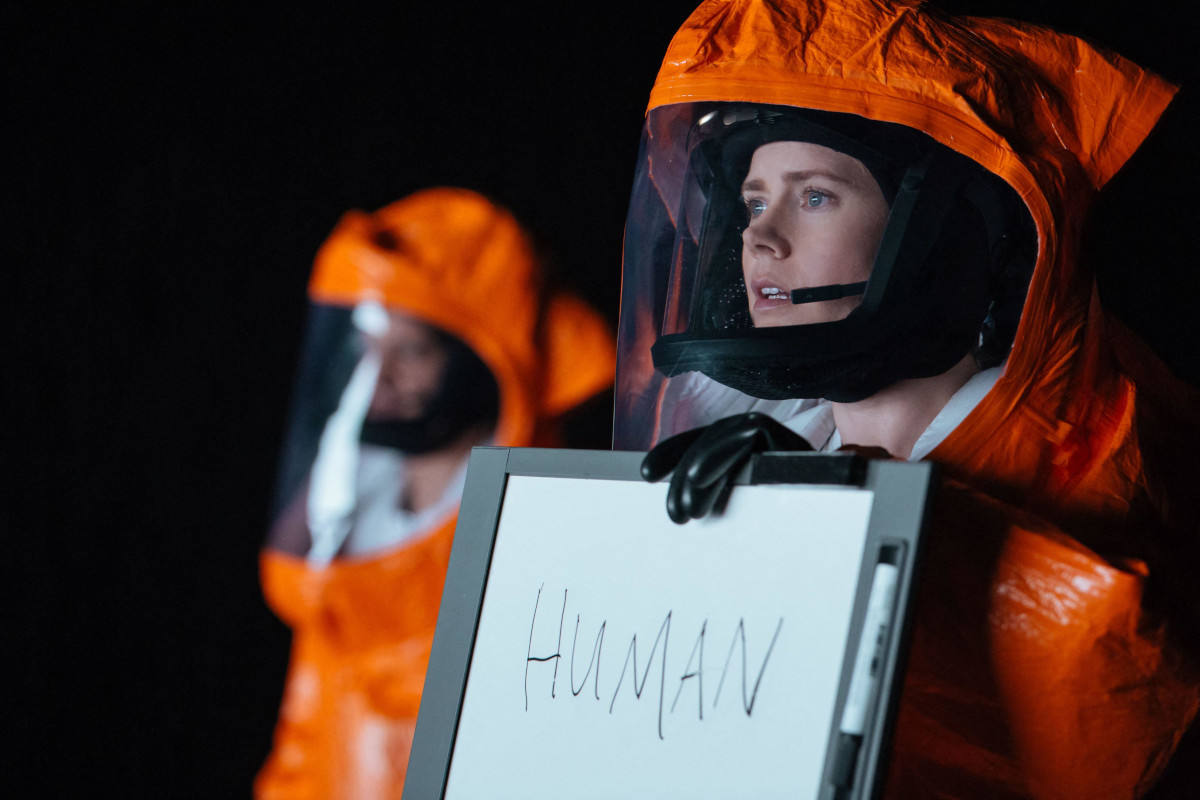
This is where physics and astrobiology might give way to more Earthly pursuits, like anthropology.
To understand alien lifeforms, Vakoch says we’ll be repeating the process that generations of anthropologists have gone through when trying to comprehend another culture.
“By immersing themselves in the daily lives of another culture, these anthropologists come to understand not only what these people are talking about, but what they value. These are the specialists we’ll seek guidance from if alien contact is face-to-face.
“In the more likely scenario that we make contact through radio signals detected by astronomers, we’ll rely on anthropologists who specialise in archaeology.
"But rather than trying to reconstruct a civilisation separated from us by thousands of years, as archaeologists do, SETI scientists will try to reconstruct alien civilisations separated by trillions of miles.”
Read more:
- What do aliens look like? Animals on Earth may hold the answer
- Dr Douglas Vakoch on sending messages into space for aliens
The global reaction
Then there’s the human response.
It’s another thing scientists want to account for if we accept that alien contact could happen at any point: how we – as a global civilisation and as eight billion individuals – will react to the news that we’re not alone in the cosmos.
It would be a moment as humbling, as awe-inspiring and as terrifying as Copernicus telling the world that the Earth was not the centre of the Universe.
Some believe it would have massive consequences for organised religion, for example. That the discovery of life beyond our atmosphere could trigger mass waves of both religiosity and nihilism, simultaneously.
“I had a visit by some theologians to my office at Harvard,” Loeb says.
“They asked me what impact will be on religious beliefs if we discover extraterrestrials. And my response was that I have two daughters and when the second was born, it didn’t take away any of the love that I have for the first.
"Thinking that God is like a single parent who cannot attend to two children or more is a very limited view of God. They seemed happy with that.”

On the individual level, most experts agree that we would see the full spectrum of human emotion and reaction, including ignorance.
“There will be people that are really excited,” says Dr Andreas Schwarz, a crisis communications researcher at the Ilmenau University of Technology, in Germany.
“There will be people who are very curious. There will be people who don’t care. There will also be people in a state of fear.”
Schwarz is well placed to speculate. His work looks at how news about serious SETI work and speculative UFO stories are reported, plus how information spreads on social media.
After the comet 3I/ATLAS entered our Solar System, he studied reactions on social media and found a considerable number of people on social platforms who were concerned about what was going on.
Yet algorithms favour fear and concern and often amplify content that spreads misinformation.
That said, in the event of genuine contact, Schwarz says that we possibly overestimate how quickly people panic, even if an alien mothership is breaking through the clouds.
“When we look at crisis situations and disasters, most of the time, we don’t see panic. Sometimes we have the opposite problem: that people do not care enough.
"When people are warned of a hurricane or a tsunami, a lot of them just stay at home.”
Planning for guests
So how should governments and the institutions of humankind prepare for alien contact? Right now, we have the SETI protocols that offer a guide for what to do if we’re contacted by aliens.
There is no playbook, no contingency planning for if they pay us a visit.
This is, in some ways, surprising. Governments and researchers regularly plan for ‘black swan’ events – high-impact, unpredictable occurrences. Contingency plans exist for nuclear war, terrorism, pandemics, solar flares and asteroid impacts.
“As a crisis communications scholar, I would say, yes, we should have contingency plans for these kinds of [alien] scenarios,” Schwarz says.
“It shouldn’t be the most important topic, because the world has many other problems, but we could develop scenarios that are based on the criteria of likelihood and severity.”
These kinds of plans would give directions for things like the continuity of government, public communication priorities and military readiness. “Plus operational resources, moving people from here to there, shelters and evacuation plans,” Schwarz says.
He adds that for any of those plans to be effective, researchers need more funding to ensure that any contingency strategies are evidence-based.
Loeb has taken it upon himself to make a start on those preparations.
After 3I/ATLAS, he created a scale that ranks interstellar objects between zero (meaning it’s a rock or another natural object) and ten (meaning it’s technological and a potential threat to humanity).
“We have to consider black swan events,” Loeb says. “They are low probability, but they would have a huge impact on society, so they have to be treated seriously.
"Right now, we’re not prepared. It’s really important to understand what these objects are by collecting as much data as possible, then assessing the risk and acting accordingly.”
A new world
One final thought experiment is to imagine whether alien contact will bring humanity together or deepen our divisions. Would we recognise ourselves as one civilisation, rather than a litter of squabbling cultures?
Again, the answer probably depends on the nature of the discovery.
On the one hand, maybe an alien spaceship in the skies above us would bring better cooperation and coordination among the peoples of Earth.
“Encountering a radically ‘Other’ intelligence will hold a mirror up to ourselves, letting us understand what we have in common with this alien lifeform, as well as appreciating what makes us distinctly human,” Vakoch says.
“Advanced extraterrestrials may be more powerful than us, they may be wiser than us, but they’ll never be more human.”
But it could also go the other way. “According to the Realpolitik school of thought, countries will have a strong desire to gain a monopoly over any information streaming to Earth from an extraterrestrial civilisation,” Vakoch says.
“The competitive edge gained through messages from societies that are thousands or millions of years more advanced than us could be tremendous.”
Read more: