
Stressful things happen. Trains get cancelled, dinners get spoiled, kids kick off and people get sick. Life is littered with challenging events, and while we may be able to side-step some, many are unavoidable.
Studies show that most days, most people feel some degree of stress.
The experience is now so common it has become embedded in modern life, where it can manifest as feelings of anxiety, irritability and overwhelm. Some people have difficulty concentrating. Others have problems sleeping.
When stress persists for long periods of time, it can make health problems, such as depression and hypertension, worse, and gnaw away at the body, creating a low-grade inflammation that raises the risk of developing heart disease, type 2 diabetes and other conditions.
So, wouldn’t it be good if we could stop the feeling of stress before it starts? Or, at least, reduce it so future challenges become more manageable and less… well, stressful?
Fortunately, there are lots of things we can do to help stress-proof our bodies. Most of us know about the importance of eating well, exercising regularly and getting enough sleep, but there are other things that we can do too.
As scientists learn more about stress, they are discovering alternative, additional, quirky ways of building resilience to it. Here are seven of the most promising.
1. Seek out the awesome
Have you ever stopped in your tracks by the beauty of nature or the vastness of the night sky? Or been stirred by a piece of music or a work of art? If you have, then you’ll know the feeling of awe.
According to psychologists Prof Dacher Keltner and Prof Jonathan Haidt, awe is the feeling we encounter when we are confronted with something vast or unfathomable. It’s an emotion that combines reverence and wonder with an added pinch of fear.
Philosophers have pontificated about it for millennia, but in recent years, scientists have become able to produce it, measure it and assess its effects.

They’ve found that awe makes people more generous and creative, and that people who experience awe report feeling happier, less depressed and more connected to others.
Awe also activates the calming parasympathetic nervous system and lowers levels of pro-inflammatory molecules.
This may help to explain why people who experience greater levels of awe on a daily basis report lower levels of stress in their life, even when other positive emotions, such as happiness and pride, are accounted for.
In a 2021 study, Keltner and colleagues allowed participants to gaze over San Francisco Bay and the Golden Gate Bridge from the top of the 60m (197ft) Campanile clock tower on the UC Berkeley campus.
Compared with control participants, who climbed the tower but weren’t allowed to look out, those who drank in the awesome view reported feeling less stressed and preoccupied by their everyday worries.
They also had less activity in their sympathetic nervous system, which promotes the fight or flight response. Their stresses hadn’t gone away, but the physiological reaction the stress provoked was less intense.
Scientists think this effect occurs because awe forces us to rethink the size and importance of ourselves and our problems. Stress melts away when perspectives shift, and we realise we are effectively small drops in an infinite ocean.
So deliberately seek out and immerse yourself in awesome experiences, and tomorrow’s stresses might just feel more manageable.
2. Hug your (imaginary) friend
Social support is incredibly important. Friends don’t just make us feel good – people with stronger social ties tend to be healthier and live longer than people who are more solitary.
Social connection can also make challenging tasks feel less daunting.
A lovely example of this is a study where backpackers who were about to climb a big hill were asked to estimate its steepness. Those who stood with a friend at their side judged the hill to be less steep than those who were alone.
Physical touch, such as hugs and hand holding, can be an important part of this support.
In another study, people were told they were about to receive an electric shock. The fear-related regions in the brain were less activated in participants who were allowed to hold their partner’s hand than in those who either held a stranger’s hand or faced the threat alone.

Remarkably, the supportive person doesn’t always have to actually be there.
In 2016, Prof Beate Ditzen from the University of Zurich, in Switzerland, and Prof Markus Heinrichs from the University of Freiburg, in Germany, set up an experiment where participants spent five minutes imagining their partner’s voice or touch.
As a control, a third group were told to imagine using a printer.
Then they performed a stressful task, during which they had to give a speech and count backwards from 2083 in jumps of 17.
Those who spent time imagining the sound or touch of their partner were more enthusiastic about the task and found it less stressful than those who pictured a printer.
Specifically, the greatest benefits were in the group who imagined a hug or a back rub.
The duo concluded that, in this situation at least, imagined touch support is an effective way to buffer against stress.
So, if stress is looming, and you don’t have a friend to give you a hug, try imagining that hug instead. If nothing else, it’ll help to take your mind off things.
3. Be less ready
Deliberate deep-breathing techniques are a popular way to help manage existing stress.
By boosting the activity of the body’s ‘rest and digest’ system, and dampening the activity of its ‘fight or flight’ system, breathing exercises have been shown to lower blood pressure, decrease heart rate and reduce levels of the stress hormone cortisol.
Now, a recent study suggests that the same methods could help to prevent stress from building in the first place by reducing your brain’s urge to prepare for disaster.

Dr Dongtao Wei from China’s Southwest University and colleagues got participants to engage in either slow or fast breathing – specifically, six or 14 breaths per minute.
This was followed by a visual cue indicating that they either would or might be shown a negative image, such as a road accident. Breathwork changed the way they reacted to these threats.
“Slow breathing seemed to help people stay calmer when they were facing uncertainty,” says Wei.
It also altered patterns of brain activity. Fast breathing increased brain oscillations known as beta waves, while slow breathing decreased them. This is significant because beta activity has been linked to mental effort and arousal.
“In simple terms, this suggests that slow breathing may reduce the brain’s tendency to become hyper-alert and over-engaged when facing uncertainty,” says Wei.
When something feels threatening, slow breathing may help prevent the brain from getting stuck in a state of over-readiness.
Wei recommends using slow breathing frequently, not just when you already feel overwhelmed. “It can be especially helpful in those moments when your mind starts running ahead of you, or any time you find yourself caught in ‘what if’ thinking.”
Breathing gives people an easy and immediate way to influence the mind and body at the same time. “We often think stress starts in the mind, but it also lives in the body,” says Wei. “Breathing may be one of the simplest ways to speak to both.”
Read more:
- The simple habit elite snipers use to crush stress in seconds
- Should I start EFT tapping?
- Experts have found the one emotion that causes procrastination – and how to stop it
4. Prioritise playtime
We encourage our kids to play around, but we don’t often allow ourselves the same pleasure. We should, because playfulness can also help build resilience to stress.
Dr Xiangyou ‘Sharon’ Shen from Oregon State University, in the US, developed a scale to measure playfulness. The 19-item questionnaire assesses qualities such as how fun-seeking and spontaneous people are, as well as their ability to be mentally creative.
In a study of 503 adults conducted during the pandemic, she found that participants who were more playful were more creative in responding to the limitations of lockdown.
For example, they were better at rejigging their schedules to fit in key activities, which they then enjoyed more and were more immersed in.
Playful people didn’t perceive the world as being less stressful, but they were more optimistic. “It wasn’t like they wore rose-coloured glasses that made everything more positive,” says Shen. “It was more like a rose-coloured spotlight.”
They were also able to navigate stress more easily, leading Shen to describe playfulness as a “character strength for promoting individual flourishing.”
So, how can you be more playful? Playfulness is part who we are and part what we do. It’s an innate personality trait that we all have to some degree, but it’s also a behavioural approach that can be brought to different situations.
This means we can all choose to be more playful.
Busting out the board games is one option, but playfulness is about more than Battleships or Monopoly. “Play is something that fundamentally happens in the mind,” says Shen. “It’s about adopting a flexible and curious approach to life.”
In other words, playfulness isn’t necessarily about what you do, but how you do it. From chatting about your day to reading an article in a science magazine, unleashing your mind to wander in unexpected directions is the essence of playfulness.
5. Drop some binaural beats
Everyone has a piece or style of music that they find calming, but Prof Frank Russo and Dr Danielle Mullen, from Toronto Metropolitan University, in Canada, have shown that music designed to manipulate brain waves in a particular way can reduce anxiety.
“Twenty-four minutes of this music is the sweet spot,” says Mullen, “long enough to meaningfully shift anxiety, but not so long that listeners need to carve out a large block of time.”
In unpublished work, they’ve also found that the same music reduces cortisol levels and improves heart rate variability (the variation in time between consecutive heartbeats that’s another way of measuring stress).
Building on this, Russo thinks that listening to their music could help to build resilience to stress. “We haven’t tested this yet,” he says, “but you could imagine integrating this kind of approach into high-stress jobs, for example.”

This isn’t any old music, however. It has two specific components.
The first is a playlist, bespoke to each individual, comprising a series of increasingly soothing three-minute tracks that are “ambient, filmic, broad, with a lot of synth, piano and nature sounds,” says Russo. “The kind of music you might hear in a wellness retreat.”
The second is a ‘binaural beat’ which is overlaid on top. Tones of subtly different frequencies are played into each ear, prompting the brainstem and cortex to activate in the 5Hz range.
“We know for sure that adding these binaural beats does something above and beyond the music on its own,” says Russo. The brain eases into a more relaxed state and benefits how people feel.
For now, the work is experimental – but watch this space. In the meantime, if you want to try binaural beats for yourself, search ‘theta band binaural beats’ and enjoy.
6. Find a pooch
Dogs are used as therapy animals with good reason. Pups offer non-judgemental companionship and brilliant cuddles. Hanging out with them can reduce anxiety, lower blood pressure and heart rate, and boost levels of the feel-good brain chemical, oxytocin.
Spending just five minutes with a therapy dog has been shown to reduce markers of existing stress in healthy adults.
In the longer term, research shows that dog owners often have lower levels of cortisol than non-dog owners, and that sometimes, dogs are even better than close friends at lowering stress levels.
But what of their ability to guard against future stress? Once again, dogs don’t disappoint. In 2017, different scientists from Toronto Metropolitan University set up an experiment to find out whether spending short bursts of time with a therapy dog could help cushion subsequent stressful events.
61 university students were allowed either 10 minutes sitting with a therapy dog, or 10 minutes sitting on their own. Shortly after, they were all asked to perform a stressful mental arithmetic task.
Physiological stress levels were assessed by measuring their galvanic skin response (similar to the technology used in lie detectors), revealing a weaker stress response in those allowed doggy time. They felt more positive, too.
According to the authors, this is the first study to show that interacting with a dog for as little as 10 minutes can make subsequent challenges less stressful.
7. Rethink stress
Many of us know someone who, inexplicably, seems to glide through stress like a swan through water. Work piles up and the washing machine breaks down, but they don’t just deal with life’s challenges; they seem to positively thrive on them.
Part of the reason for this could be the way they think about stress.
The work of Prof Alia Crum from Stanford University’s Mind and Body Lab reveals that when it comes to stress, there are two types of people: those who view stress as a negative, debilitating force, and those who view stress as a positive, enhancing force.
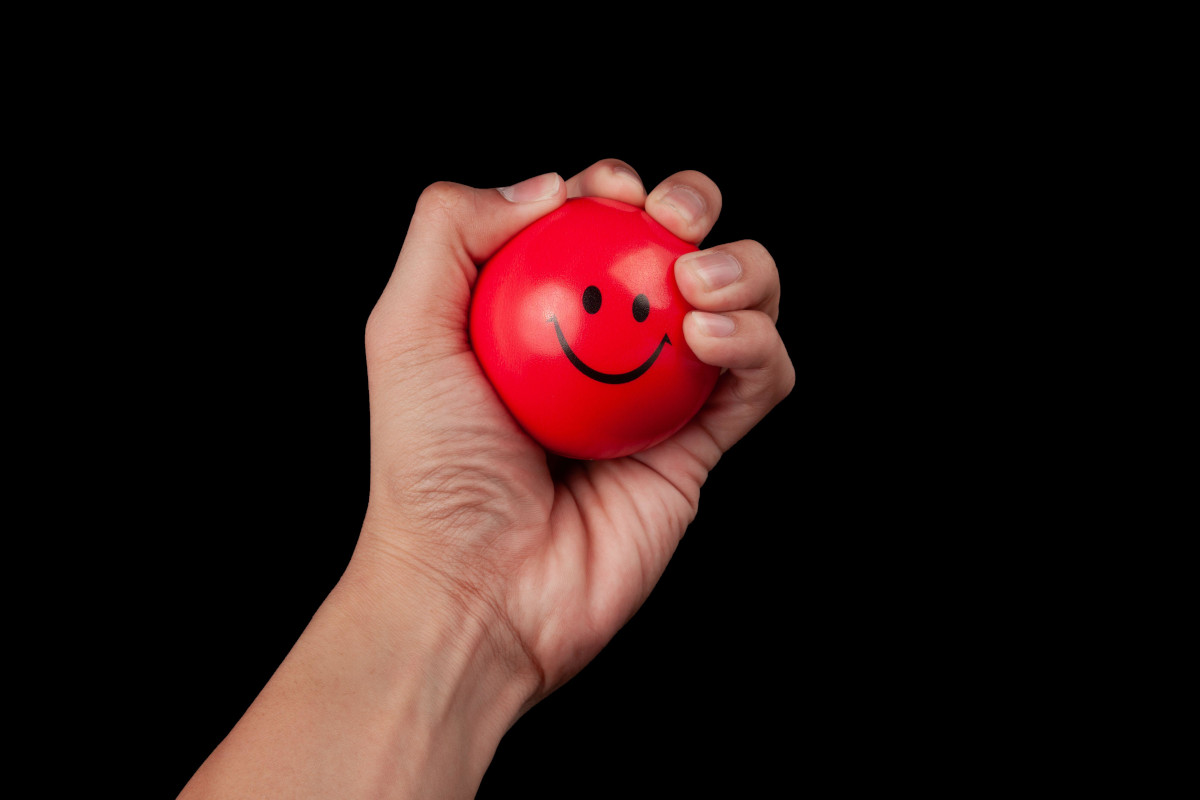
In one study, where she asked participants to give a public speech, those who naturally had a ‘stress is enhancing’ mindset showed a more balanced hormonal stress response than those with a ‘stress is debilitating’ mindset.
The way they thought about stress positively influenced the way their bodies responded to it.
Critically, for those who view stress as debilitating, it’s possible to change the way you think about it.
In fact, while chronic stress can be damaging, short bursts can be beneficial. Acute stress primes your body to navigate uncertainty by spurring the release of energy, which can sharpen your mind and reinvigorate your body.
Crum set up an experiment where she manipulated people’s thoughts about stress. Over 100 participants watched one of two films that described stress as either enhancing or debilitating. Then they performed a stressful task that involved speaking in public and – you guessed it – mental arithmetic.
Those who heard that stress is helpful ended up performing better. They had healthier patterns of hormones and felt more positive. They were also better at thinking flexibly under pressure and screening out the negative aspects of the task.
Cumulatively, this suggests not just that our mindsets are malleable, but that adopting a positive mindset about stress can help us to deal with future challenges.
Read more:
