
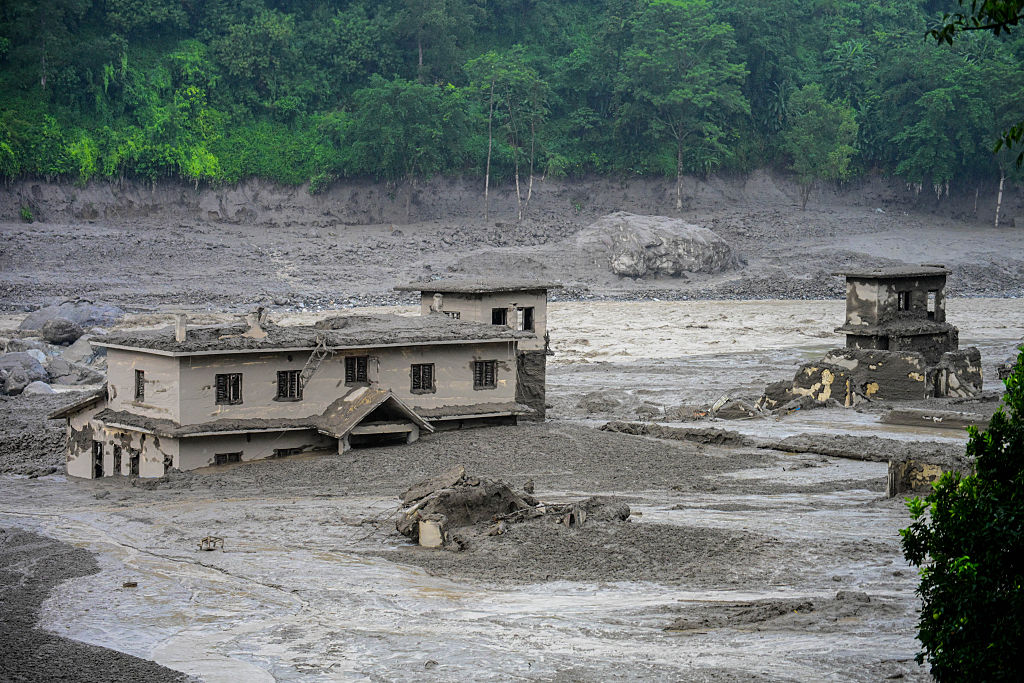
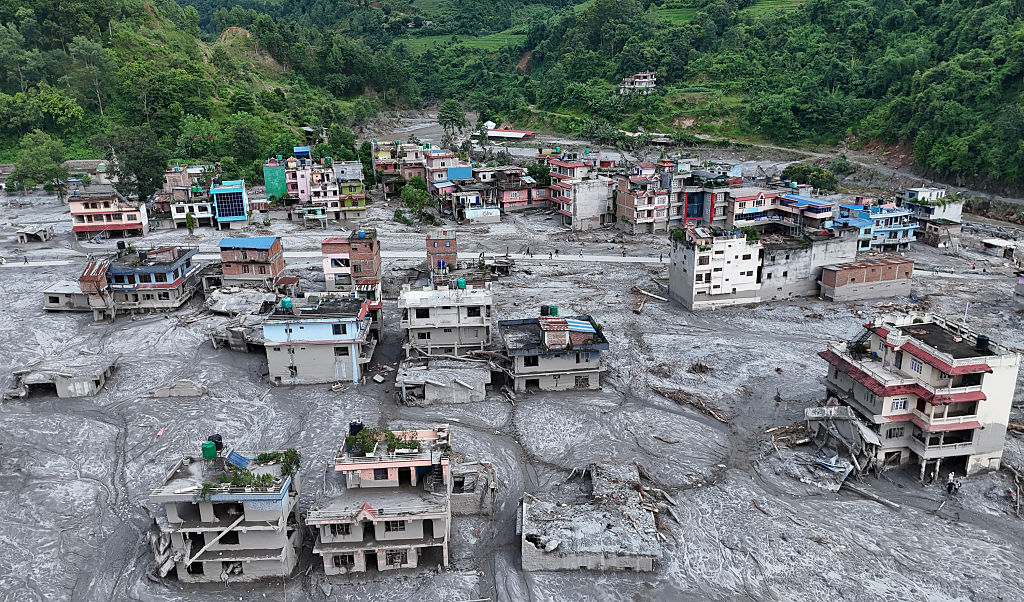
Late last month, a wall of water, mud and debris – likely triggered by a glacial collapse high in the Himalayas – tore through villages and hydropower sites along the Nepal-China border. At least 1,399 people are known to have died after the flash flood, with 5,200 more still missing.
The disaster may be a warning of what’s to come. Experts say it’s a matter of when, not if, another deadly ‘tsunami from the sky’ strikes one of the world’s icy mountain regions – including in the US.
In fact, just last year, Alaska’s Tracy Arm fjord was hit by a landslide-triggered wave taller than the Eiffel Tower.
The 481-metre (approx 1,578 feet) ‘mega-tsunami’ – the second-highest ever recorded – struck at 5:26am, before tourist ships had entered the area. Had it happened just a few hours later, the consequences could have been devastating.
The only people known to have been nearby were three kayakers camping along the fjord, who had an extraordinary escape.
“We scrambled out of our tent and were stunned to find our entire camp obliterated by a tsunami,” they later wrote on a GoFundMe page set up to replace their lost equipment.
The trio survived the wave and were later spotted by a passing yacht, which brought them to safety.
They were lucky to escape – but some scientists warn it’s only a matter of time before someone isn’t.
Prof Bill McGuire, a climate scientist and professor emeritus at University College London, says glacier collapses pose a growing danger to communities below ice-covered mountain regions.
“The event isn’t only a sign of the times, but a pointer to the future,” he says. “It is a threat that is only going to get bigger as the planet gets hotter.”
And it’s not just people who live in these mountainous regions who are at risk. Tourists, including those aboard cruise ships, could also find themselves in the path of these disasters.
So which places are most vulnerable – and is there any way to know when the next one will hit?
Read more:
- Mapped: The US landslide hazard zones now threatening 6.5 million Americans
- You’ll never guess which country is leading the world on sustainability
- Experts just found an enormous volcano lurking under England
Why the US can expect more mega-tsunamis
Although a landslide is suspected of triggering the flash flood in Nepal, scientists don’t yet know whether climate change or regional warming played a role.
“It is not obvious that this is the case, and it will take some time to figure out,” says Patrick Lynett, a professor of civil and environmental engineering at the University of Southern California.
“Potentially, changes to the glacier conditioned the area for a landslide, or it may have just been a massive landslide with a glacier sitting above it.”
That uncertainty reflects just how complicated these disasters can be. Climate change is only one factor among many, says Alton Byers, a research scientist and mountain geographer at the University of Colorado Boulder’s Institute of Arctic and Alpine Research.
“They are certainly related to the impacts of a warming planet and cryosphere,” he says. “But they’re also influenced by the dynamic geology of mountains, gravity, tectonic activity, and people settling in floodplains.”
But elsewhere, scientists have found a clearer connection between a warming climate and these extreme events. Alaska’s Tracy Arm mega-tsunami last year is one example.
“After some detailed work it became clear that the rapid retreat of a glacier set the scene for the huge slide and the following mega-tsunami," says Lynett.
There are several ways warming can increase the danger. McGuire says rapidly melting glaciers can destabilise mountain slopes, while rising temperatures can thaw the permafrost that helps hold them together.
Put simply, permafrost is a combination of perpetually frozen ground, rock, soil, debris and ice found in high-altitude alpine regions.
In Alaska, McGuire adds, rapid ice loss can also remove enormous amounts of weight from the crust below, allowing faults to move and potentially increasing the risk of earthquakes. “In a circular manner, quakes caused by ice loss have the potential to trigger glacier collapse and breach meltwater lakes.”
All of this means glacier collapses are becoming a growing threat to people living downstream of high mountain regions, McGuire says, particularly where there are large amounts of snow and ice. “This includes Alaska and some of the Rockies, the European Alps and – especially – the Himalayas.”
Similarly, Lynett expects events like Alaska’s mega-tsunami to become increasingly common.
“Tracy Arm-type events will continue to happen, seemingly at an increasing rate, in fjords and other water bodies with rapidly retreating glaciers.”
Read more:
- Deadly ’fire thunderstorms’ are forming across the US. And cities may be powerless to stop them
- How to survive the apocalypse, according to the world’s best doomsday preppers
- Chance of mega earthquake hitting California now at a ’historic high’, experts warn
The cruise ship question
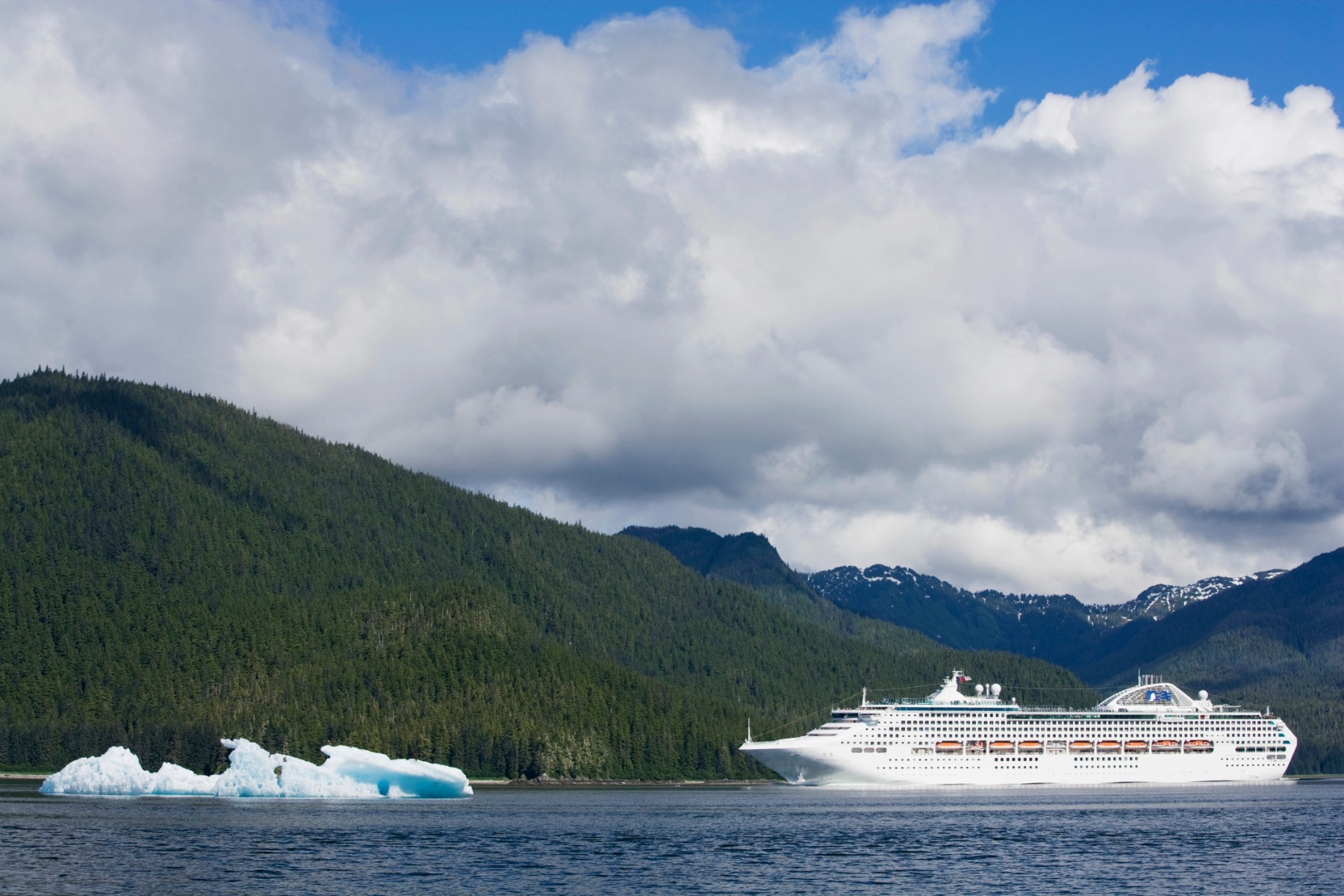
Alaska’s fjords may be remote, but they’re far from empty. Every year, cruise ships carry thousands of tourists through waters surrounded by steep mountains and retreating glaciers.
Dr Tom Robinson, senior lecturer at the University of Canterbury, New Zealand, and an expert in disaster risk, says that Alaska’s main threat comes from tourists exploring these areas.
“We got lucky last year that there wasn’t anyone in the Tracy Arm at the time, but it could have been very different,” he says.
Cruise operators appear to have taken notice. At least three cruise lines adjusted their summer 2026 itineraries to avoid Tracy Arm, with ships either dropping the fjord from their routes or diverting elsewhere.
Similar events “can and will happen again”, Byers says.
“If cruise companies are stopping cruises in high-risk areas, then they’re doing the absolutely best thing they can to avoid a future catastrophic event,” he says.
“Authorities there need to start developing effective and locally appropriate early warning systems.”
But avoiding every potentially dangerous fjord isn’t necessarily a realistic solution. Alaskan ship tours thrive for good reason: travellers love them, and the tourism they generate creates jobs, breathing life into local economies.
“We can’t just turn that off,” Robinson says. “It’s also possible to argue that it’s important for people to see these landscapes and the effects climate change is having on them as a way to promote greater action to limiting climate change.”
The challenge, then, is finding ways for people to visit these landscapes without exposing them to unacceptable levels of risk. And that isn’t easy when disasters can unfold with little warning.
“Once they’ve started, a cruise ship cannot turn or move fast enough to avoid them,” explains Robinson.
Robinson says there are ways to help reduce potential fatalities: better understanding of where hazards occur, limiting the size or number of ships in a fjord, and working with cruise companies to ensure they understand the risks and have proper plans in place in case of an emergency.
Byers points to cellphone-based early warning systems, coupled with well-publicised emergency escape routes, citing the tsunami early warning systems on Hokkaido island in Japan.
Experts can also use satellites and ground-based sensors to check whether hillslopes are moving, says Robinson. Last year, the village of Blatten in Switzerland was able to use such monitoring to evacuate before a major landslide.
Satellites aren’t a silver bullet, though. Most major failures, like in Nepal, occur with very little warning. “In heavily glaciated regions like Alaska, some glaciers can move several metres a day, which would completely mask any much smaller movements of rock that might signal a potential landslide,” says Robinson.
In other words, while scientists are getting better at identifying where the danger lies, knowing exactly when the next mountainside will collapse is a much harder problem.
Read more:
