
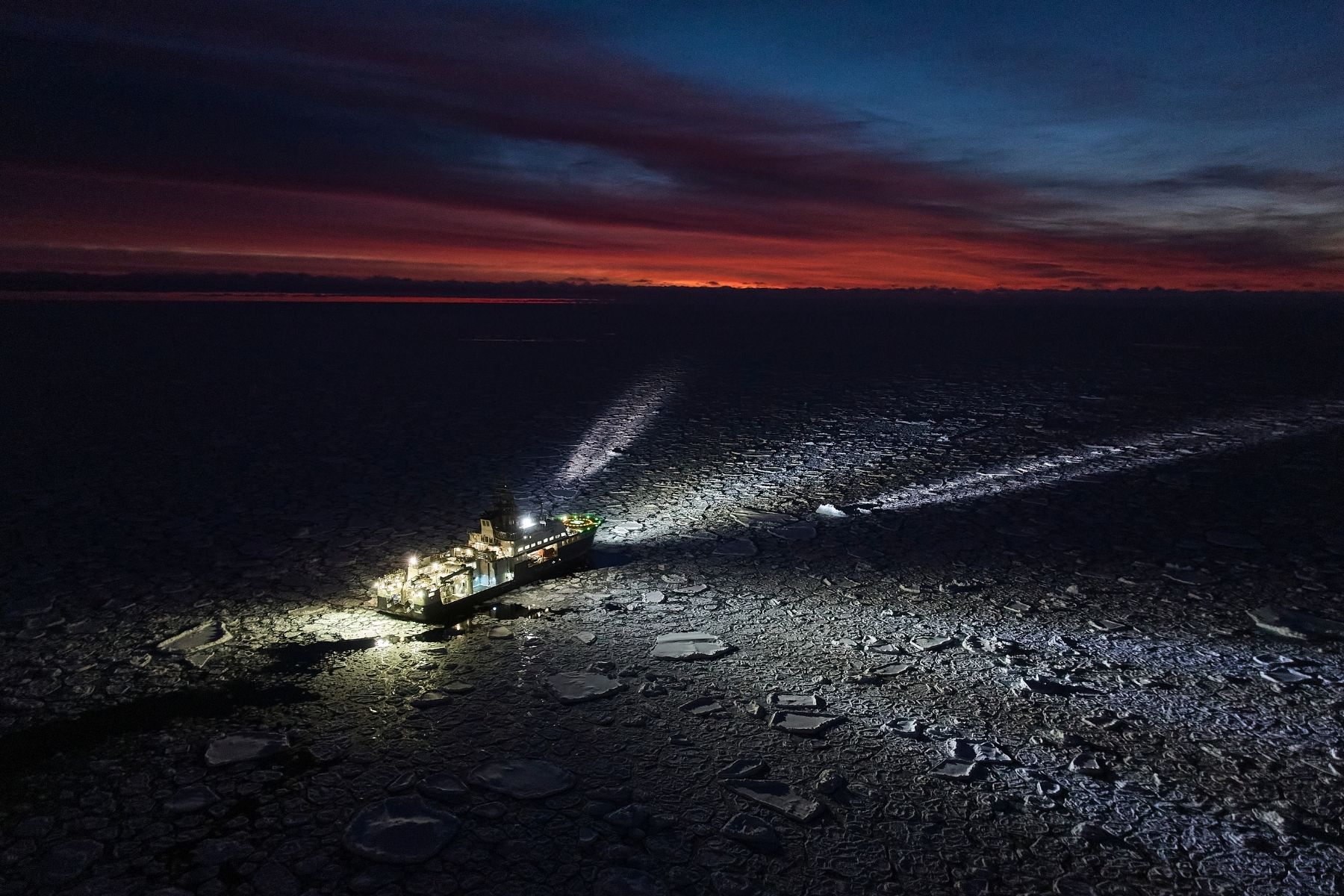
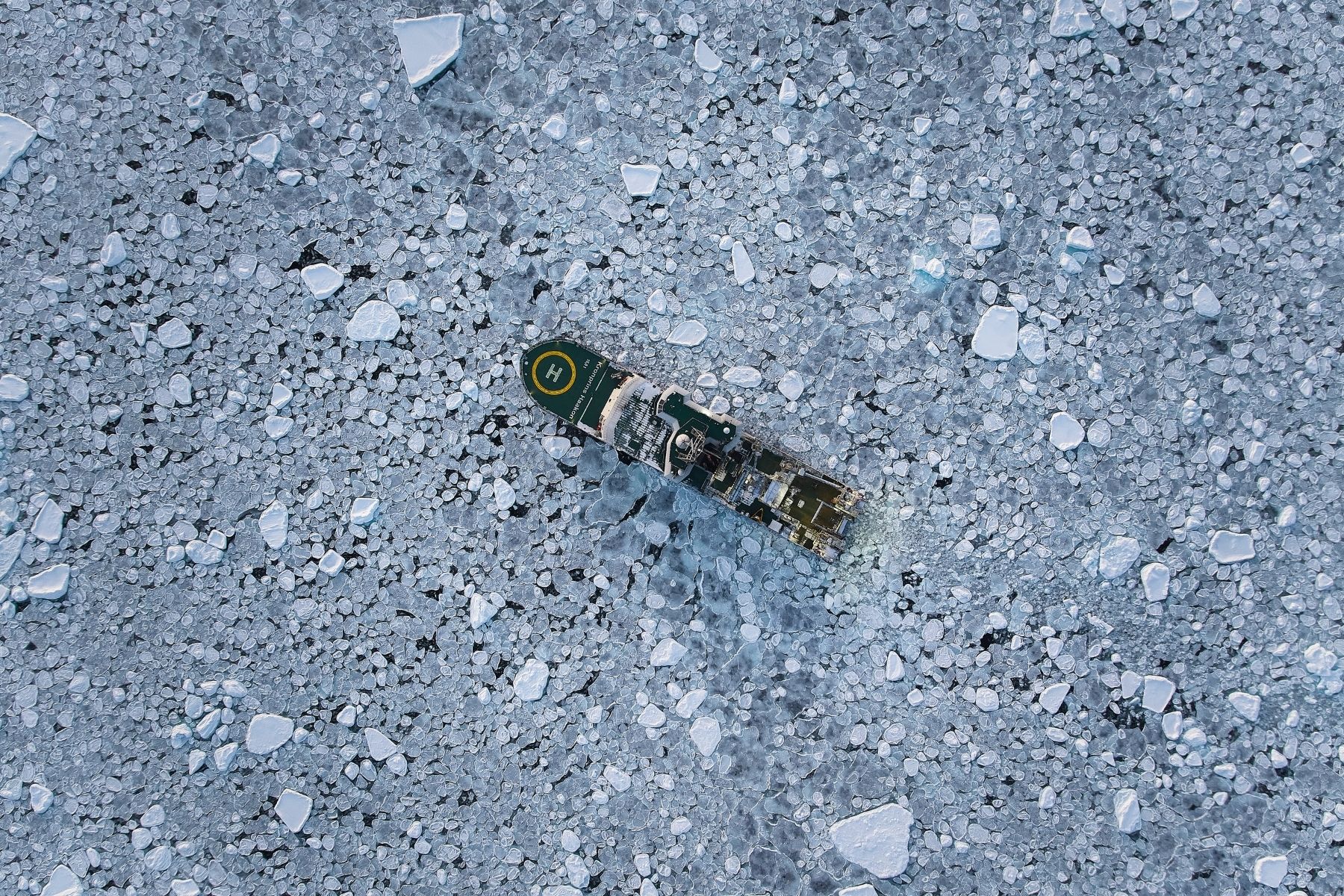
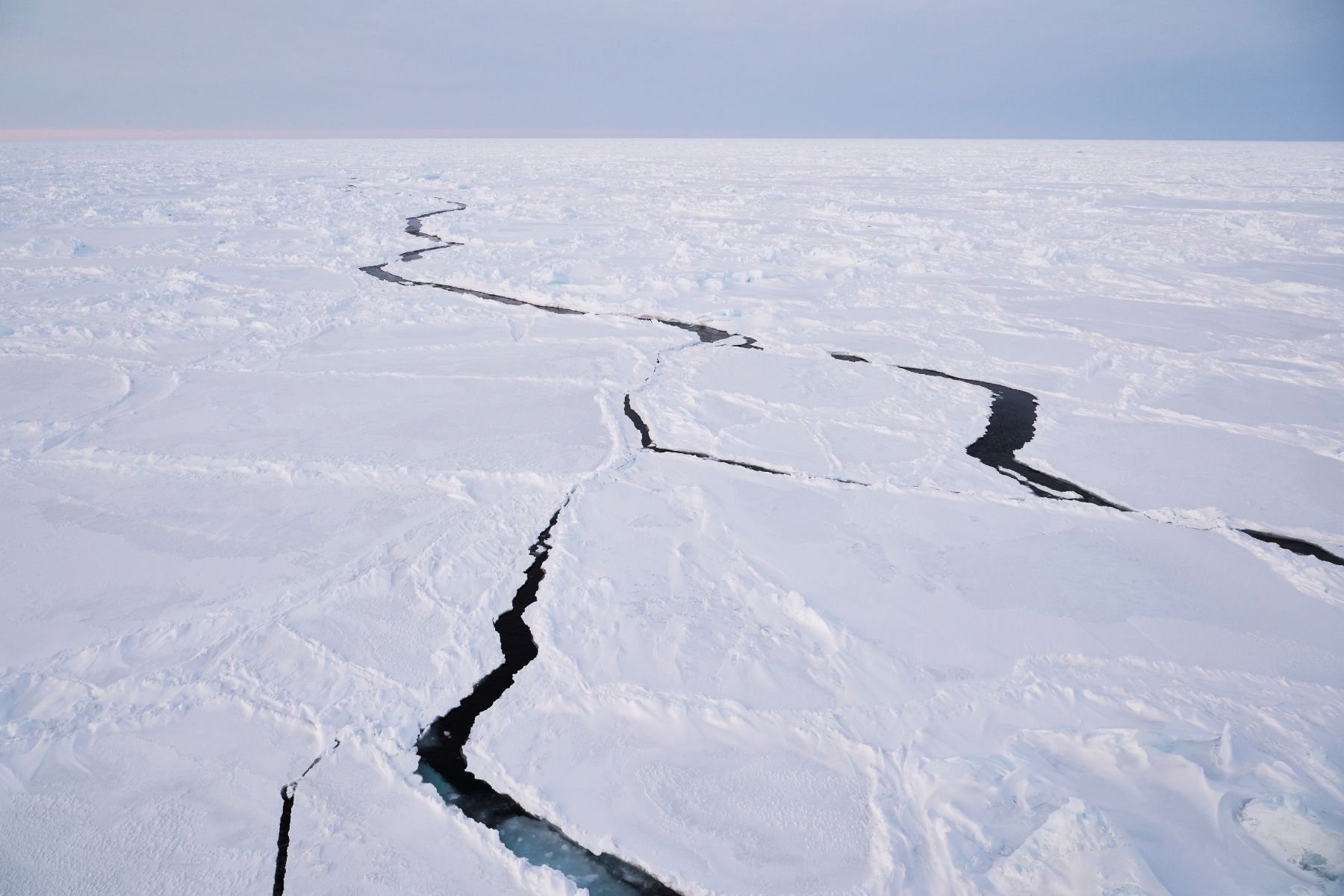
Looking out from the bridge of the Norwegian polar research vessel Kronprins Haakon (see main image), dense pack ice extends into the darkness in every direction. To the east, a narrow strip of purple paints the midday sky just above the horizon.
It’s the first sign of daylight here in three months. Research ships rarely venture into this region – 1,000km (621 miles) north of the Arctic Circle, in the Greenland Sea – during polar night.
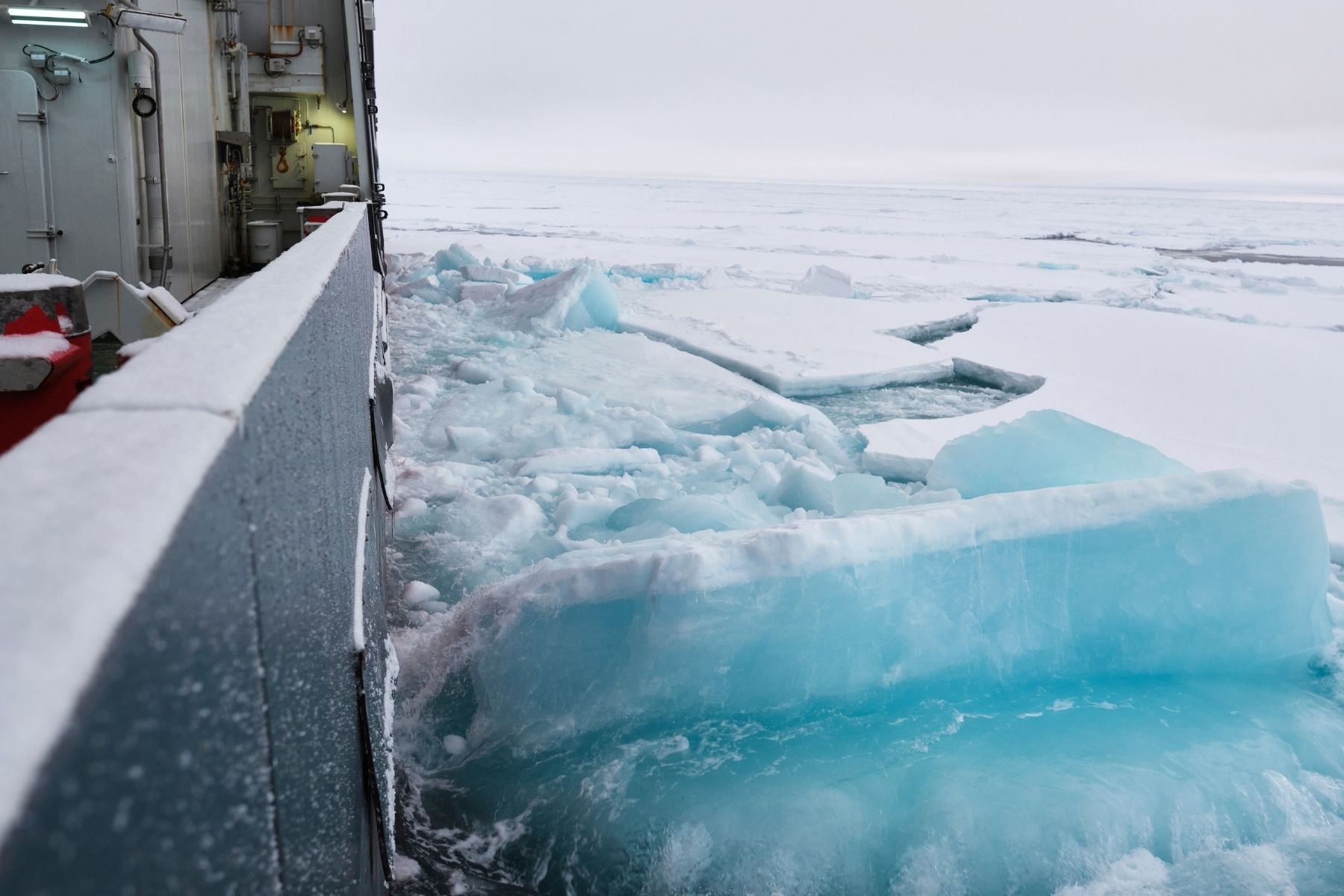
Temperatures fall below -30°C (-22°F) and ice floes more than a metre (3.3ft) thick make it almost impassable.
It’s February 2025, and the expedition I’ve joined is collecting critical data on the ocean circulation along Greenland’s east coast.
Underneath the icebreaker I’m travelling on, the waters flowing deep below the ice and further out to sea feed a sprawling web of currents that run all the way across the Atlantic Ocean.
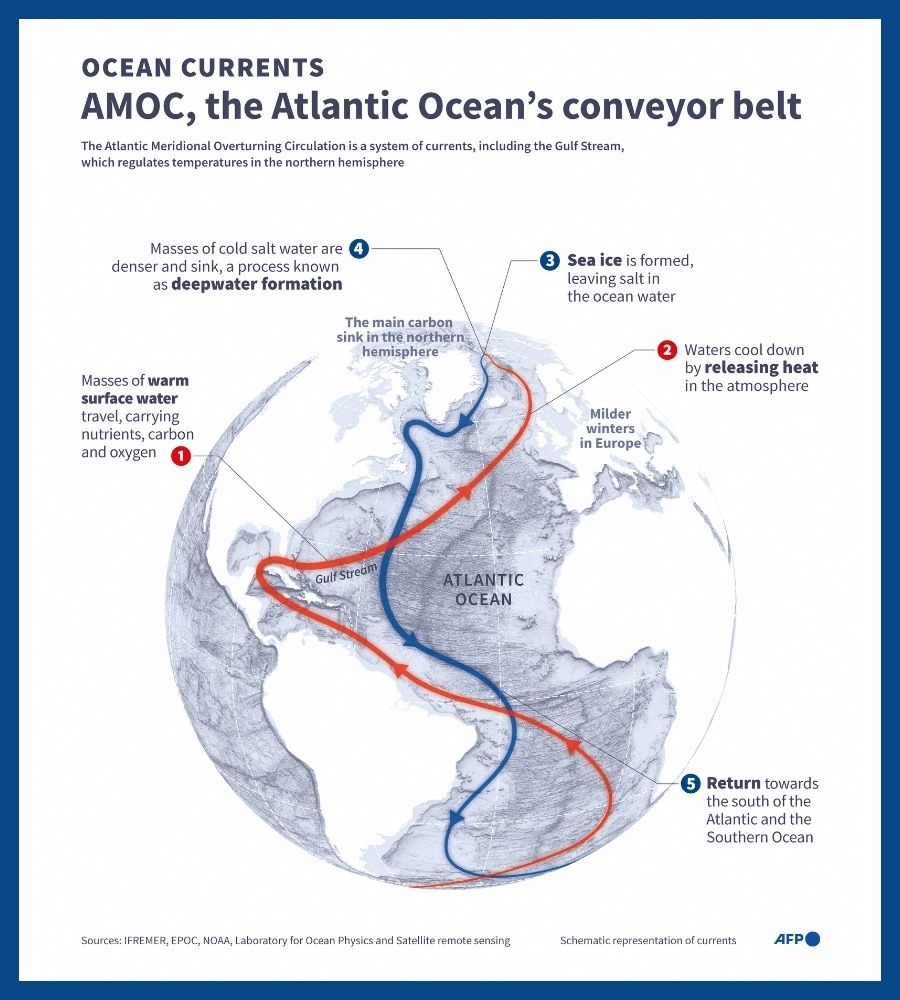
Known as the Atlantic Meridional Overturning Circulation (AMOC), it plays a central role in controlling the Earth’s climate, transferring heat from the tropics to the north.
This system helps power the Gulf Stream and is credited with regulating Europe’s temperatures, as well as being a key player in global climate stability.
One of the drivers of global ocean circulation, including the AMOC, is the sinking of dense water masses near the poles.
The Nordic Seas, which connect the Arctic and Atlantic oceans, are one of the primary areas where dense, deep waters form due to surface heat loss in winter. These waters eventually spill into the abysses of the North Atlantic.
But ocean warming and freshening of the subpolar seas near Greenland, caused by melting ice and increasing rainfalls, is making it harder for surface waters to sink.
As CO2 emissions continue to rise and climate change accelerates, scientists are more and more concerned that the AMOC is slowing down – and that it could weaken by up to 50 per cent by the end of the 21st century.
What’s worse, this vital current system might be nearing a tipping point. Beyond this point, a rapid decline could potentially lead to its collapse – and the effects could be widespread.
Researchers want to get a better handle on what collapse could look like, how likely it is and when it could happen. Which brings us to the expedition on the Kronprins Haakon.
The scientists onboard the ship are hoping to get some answers before it’s too late.
Meanwhile, other researchers are racing to answer a fundamental question: if atmospheric CO2 levels don’t fall quickly, are there any viable options for society to prevent a worst-case scenario?
It’s a question that’s already inspired proposals for more radical – even extreme – measures.
A giant oceanic heat pump
The surface currents of the AMOC bring sun-warmed, salty water from the equatorial Atlantic to the high northern latitudes. Here, the water cools down, becomes denser and sinks into the deep sea.
It then flows southward and resurfaces again near Antarctica, completing the loop.
The northward transport of warm currents brings heat to Europe. It’s why winters in the UK are much milder than in Labrador, in Canada, which lies at a similar latitude but has a subarctic climate.
In fact, without the AMOC, Europe’s climate would be a lot chillier – dropping to cold extremes as low as -20°C (-4°F) in Western Europe.
The return flow of the AMOC in turn traps huge amounts of atmospheric CO2, which dissolve in the cold waters near Greenland, before being carried down into the deep sea. It also supplies oxygen to life in the darkest depths of the ocean.
Global warming, however, could jeopardise the stability of the current system, as climate models indicate. That’s because quickly rising air temperatures reduce the amount of heat escaping from the ocean into the atmosphere in winter.
As a result, the surface water in the subpolar North Atlantic and the Nordic Seas is getting less dense, making it less likely to sink.
Meanwhile, meltwater from Arctic sea ice and the Greenland ice sheet increases the buoyancy of the surface ocean, hampering deep-water formation (the process where cold, salty and dense water sinks and drives the current along).
The big risk will be if these changes accelerate unpredictably, which could lead to an abrupt decline or ‘tipping’ of the circulation.
“A weaker AMOC means that less salty water from the tropical Atlantic is reaching the north,” says Prof Henk Dijkstra, a physical oceanographer at Utrecht University in the Netherlands. “Hence, the density of the surface waters near Greenland decreases even further.”
It’s a vicious cycle that could push the system to the brink of collapse.
Read more:
- You'll never guess which country is leading the world on sustainability
- A vast lithium reserve may be hiding beneath the US – enough to last centuries
Worst-case scenario
The impacts of an AMOC collapse would be dire, to say the least.
It would affect global climate, weather patterns and sea levels: Northwestern Europe could experience extremely cold winters not seen since the last ice age, while the accumulation of heat in the tropics and changes in the monsoon cycle could result in severe droughts in Africa and Asia.
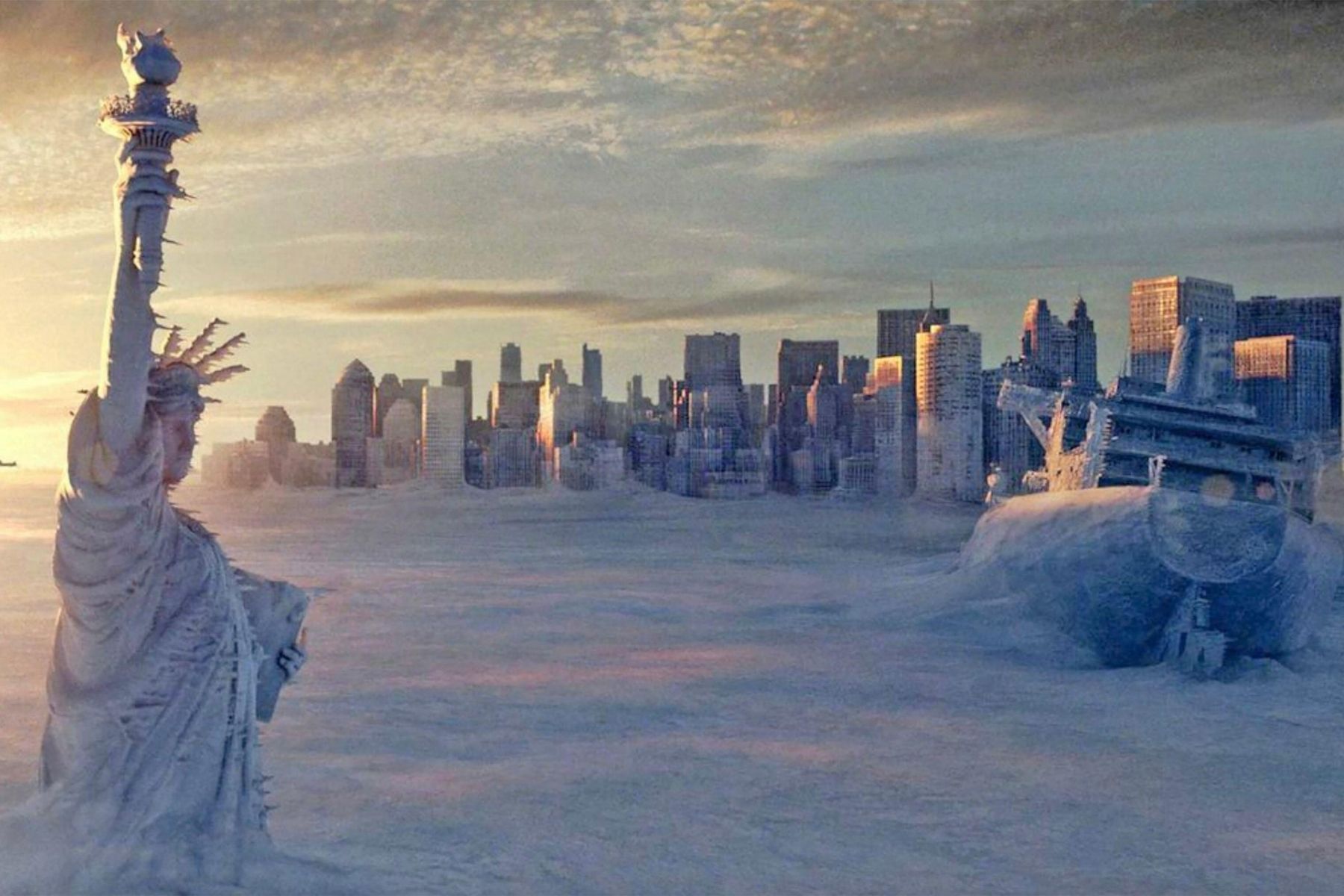
A disrupted AMOC is what inspired the glacial New York City imagined in the 2004 sci-fi disaster film The Day After Tomorrow – but, in reality, the effects on the US would be very different.
The Eastern US is expected to see a dramatic surge in coastal flooding, displacing communities and destroying habitats.
Meanwhile, Iceland – whose economy and food sector would be particularly at risk – has classified a potential collapse of the AMOC as a threat to its national security.
What’s more, it’s likely the upshot of all this would be even more global warming.
At the same time, open questions on the fate of the AMOC remain: have the currents already lost strength? Do computer climate models, which project a future weakening, capture all the relevant ocean processes in sufficient detail?
One of the regions where researchers have very limited information on how the AMOC is evolving – especially during winter – is the ice-choked waters of the Greenland Sea. That’s what brought the Kronprins Haakon out here in the first place.
In fact, it’s possible there’s an overlooked mechanism here that could actually stabilise the AMOC and curb its decline.
Prof Kjetil Våge, a physical oceanographer at the University of Bergen in Norway and chief scientist of the expedition on the Kronprins Haakon, thinks that processes in the Arctic region, which are poorly resolved by climate models, could be a factor in where the AMOC is headed.
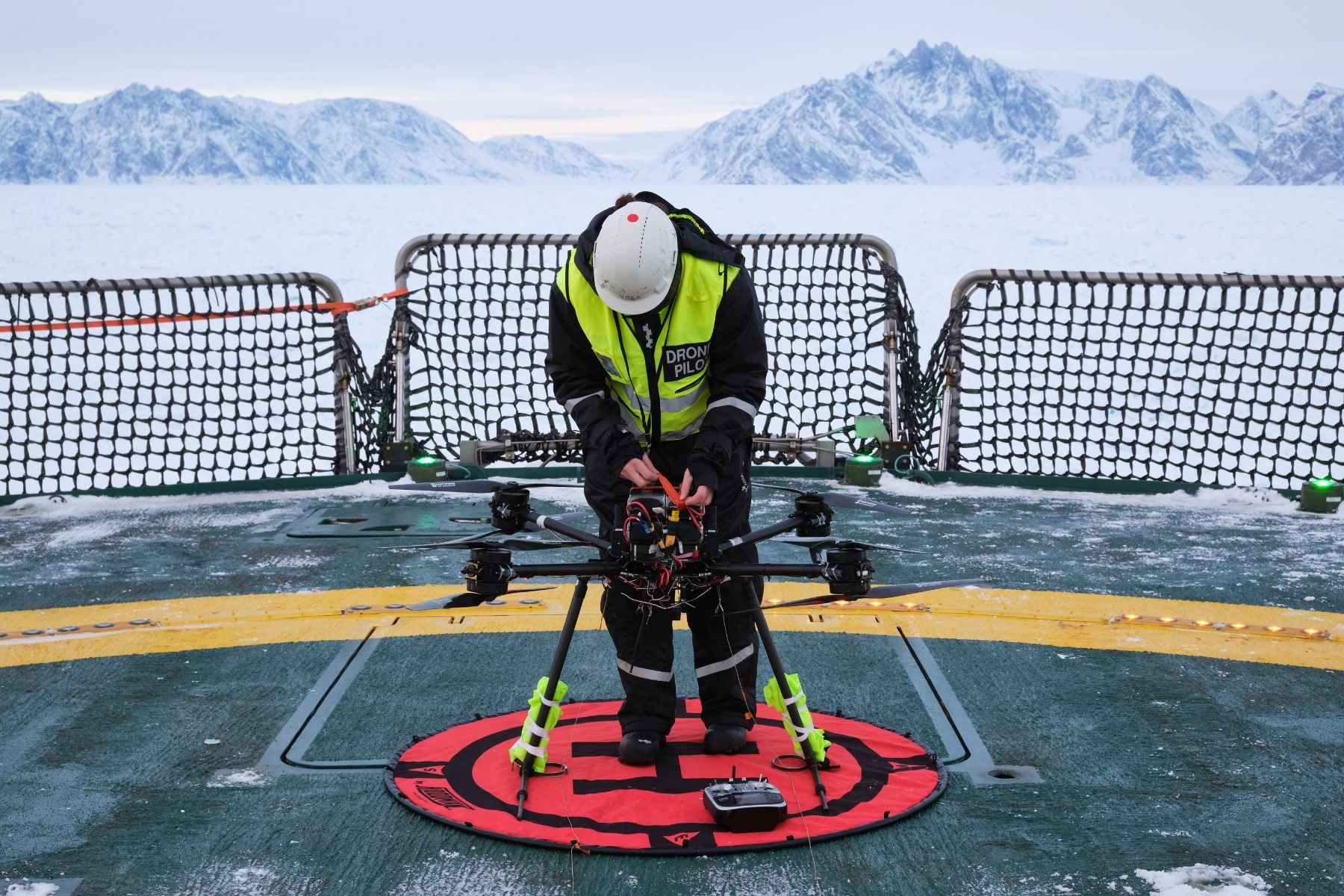
With the help of drones and underwater robotic gliders, Våge and his team measured the temperature and salinity of the East Greenland Current. Below a layer of cold, fresh polar water, this current carries warmer, salty Atlantic water along the coast.
“The East Greenland Current is a major source to the deep return flow of the overturning circulation,” says Våge. As Earth warms, sea ice in this region is decreasing.
Based on pilot data from a previous study, Våge believes that stronger heat loss during winter from the growing ice-free area could actually enhance dense water formation.
“This could add some resilience to the overturning in the Nordic Seas,” he says – and prevent the AMOC from slowing as much as often feared.
Putting a date on decline
But others aren’t so optimistic. According to a recent study by Dijkstra and his colleagues using an Earth system model, the AMOC is already approaching a tipping point.
In their simulations, the currents slow down rapidly within a century after crossing it.
The effects are dramatic:
Arctic winter sea ice extends as far south as the latitude of London. In some coastal regions in the North Atlantic, sea levels rise by over 0.7m (2.3ft). There are major disruptions to rainfall patterns in the Amazon Basin.
Dijkstra cautions that there will be enormous challenges as society is forced to adapt to the extreme changes that will occur in the event of a collapse.
His model runs show a decrease in annual mean temperatures by 10–15°C (18–27°F) in Scandinavia and Western Europe.
“I’m more pessimistic than some years ago, when I thought the system was much more stable,” he says. “But that’s maybe not the case.”
Other research findings also suggest a substantial weakening of the AMOC in the future, but the timing and extent vary depending on the model and the underlying CO2 emissions.
A study published in 2025 reported that, in high emission scenarios, a tipping point will be triggered by the mid-century – with a total AMOC collapse after 2100.
In contrast, researchers from the University of Exeter concluded in 2024 that a complete shutdown is unlikely. Instead, strong winds in the Southern Ocean, which drive upwelling of Atlantic deep waters near Antarctica, would still maintain a weak AMOC, even in the worst of cases.
But even a loss of just 50 per cent of today’s strength would likely cause major climate upheaval.
A glimpse back in time demonstrates that the threat is real. Analyses of glacial ice cores and marine sediments have revealed abrupt shifts in AMOC strength between cold and warm phases throughout Earth’s history.
For example, a pre-print study (that hasn’t yet undergone peer review) by researchers at University College London indicates that during a warm phase about 400,000 years ago, melting of the Greenland ice sheet triggered a weakening of the AMOC by about a third, causing severe cooling of the subpolar region.
Now, research based on ocean age tracers (man-made gases that allow scientists to estimate deep-water formation) suggests that the AMOC is indeed losing strength.
According to the study, water masses in the North Atlantic have become ‘older’ over the past 30 years, an indicator that the transfer of surface waters to the deep ocean is weakening.
Suspiciously cold waters
Then again, direct observations haven’t shown a weakening of the currents, yet.
Concerned by past AMOC swings, scientists started monitoring the Atlantic Ocean in the early 2000s to track changes in the circulation as the planet warms up.
These observations have shown significant fluctuations, but so far no clear evidence that the AMOC is slowing down.
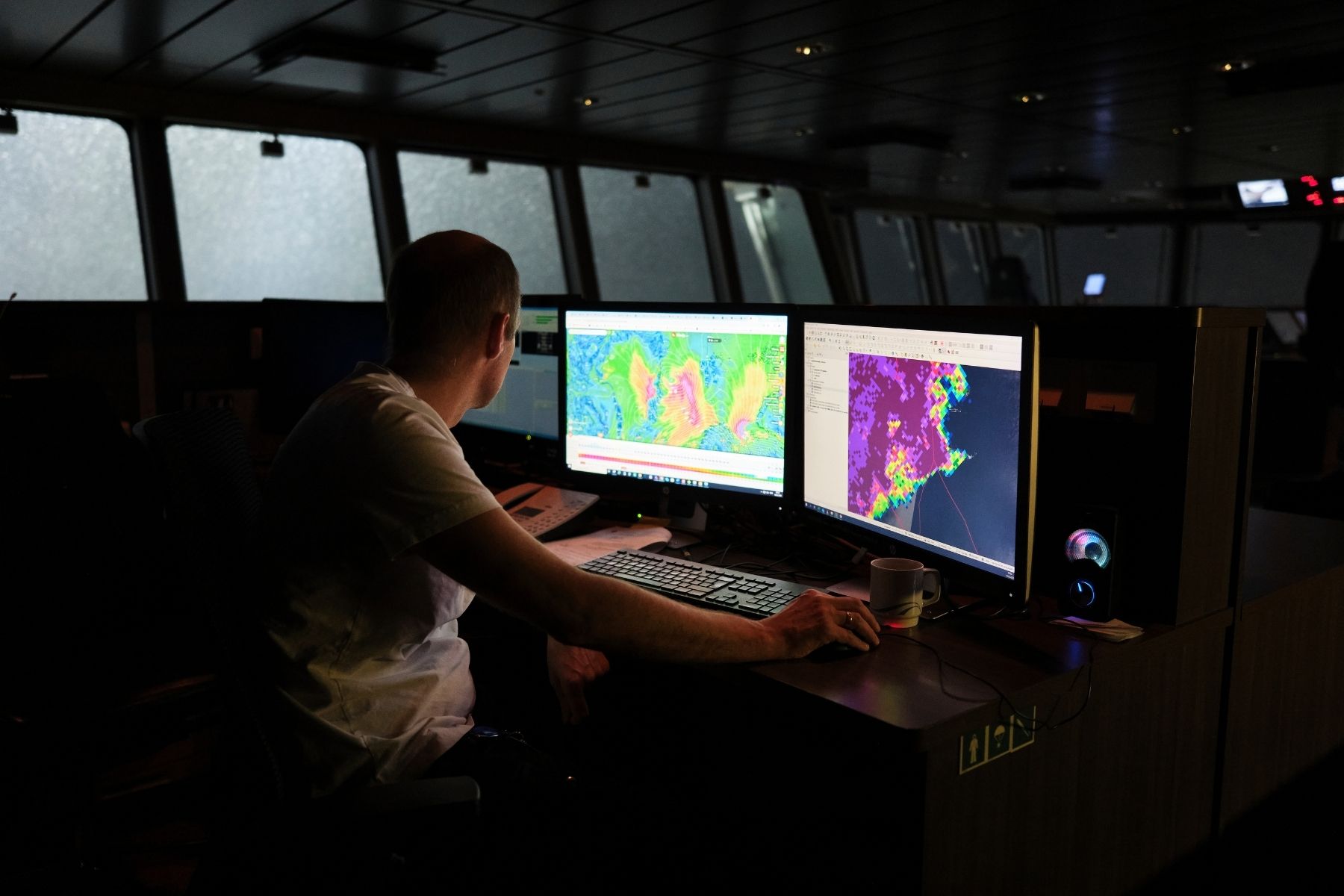
Identifying definitive change is tricky because of the large natural variability of the currents, says Eleanor Frajka-Williams, a physical oceanographer at the University of Hamburg, in Germany.
“A common view of the overturning circulation is that of a conveyor belt, like in a supermarket, where everything moves with the same speed. However, data from the subtropical and subpolar North Atlantic show that’s not the case, at least not on human timescales.”
Other studies have found the AMOC to actually have a stable circulation over the past decades.
But while there’s no clear answer on how far along any weakening to the AMOC is, many still think the outcomes aren’t worth risking.
“I’m not convinced that an AMOC collapse is so imminent,” says Frajka-Williams. But the costs to monitor it are minuscule compared to what the impacts would be, she says.
“If you have a 5 per cent risk that your house is going to burn down, that risk still seems pretty big. You’re going to insure your house.”
Read more:
- What was the first ever 'sea' actually like?
- Deadly 'fire thunderstorms' are forming across the US. And cities may be powerless to stop them
Drastic solutions
Navigating in the dark of the polar night, between open sea and heavy pack ice over the shelf, the scientists onboard the Kronprins Haakon think the East Greenland Current could hold the answers.
In addition to their survey by ship, they are also collecting long-term data on the current flows of the Greenland Sea using instruments deployed in 2024. These will be retrieved in summer 2026.
Covering two full winters, these records will help Våge’s team assess whether loss of sea ice could contribute to the stability of the AMOC in a warming climate.
If these results show that the processes happening deep below the ice really are self-stabilising, it could mean collapse isn’t as likely.
What if, however, the AMOC won’t stabilise?
With CO2 and other greenhouse gases building up in the atmosphere, global warming is on a trajectory well beyond the 1.5–2°C target set by the 2015 Paris Agreement.
This increases the risk that critical components of the climate system – including the AMOC – are entering perilous territory.
It’s for this reason that technological fixes are increasingly being considered, to avoid catastrophic tipping points from being triggered.
These highly controversial geoengineering ideas range from injecting sunlight-reflecting particles into the atmosphere to cool the planet to sucking CO2 molecules out of the air and storing them underground – and even alkalising the oceans with crushed rock to increase marine carbon storage.
Then there’s the idea of raising massive seafloor barriers (for example, in Greenland’s fjords), to brake the flow of glaciers into the ocean and keep out warm water, which could otherwise melt them from below.
Another involves putting up 100m (328ft) high underwater curtains to protect glaciers from warm currents and reduce ice loss.
Obviously, the costs, technical and logistical challenges, and required materials for these constructions in remote areas would be massive.
The schemes would also likely have a negative effect on marine ecosystems, fisheries and tourism. That’s why many researchers consider blocking glaciers and other polar geoengineering concepts unfeasible and dangerous.
A giant dam between two oceans
Yet for Dijkstra it’s at least worth investigating how the Earth’s system responds to such interventions using computer models. “Because it tells us whether we understand the system well enough,” he says.
It would also help to identify the least harmful actions that – should climate change spiral out of control – could buy humanity some time.

In a modelling study, published in April 2026, he and his colleagues explored the effects of one such ‘last-resort measure’ designed to prevent an AMOC collapse: the construction of an 80km (50-mile) wide dam across the Bering Strait that separates Alaska and Siberia.
Through this narrow and shallow marine channel, water from the North Pacific flows into the Arctic Ocean. It eventually finds its way into the Labrador Sea and the Greenland Sea.
Because Pacific water is relatively fresh, it inhibits deep water formation in these areas and makes the current sluggish.
But that hasn’t always been the case. Earlier work suggests the AMOC was stronger during the Earth’s ice ages, when falling sea levels created a land bridge between Asia and the Americas, and the Pacific was cut off from the Arctic.
Dijkstra and colleagues looked at how artificially closing the strait now would affect the AMOC in scenarios where the North Atlantic is warming and freshening.
Blocking the inflow of less salty Pacific water through this bottleneck via the Arctic Ocean – while the overturning circulation was still sufficiently strong – increased the salinity in the subpolar Atlantic.
“This stabilises the AMOC,” says Dijkstra.
But when the currents had weakened too much, they observed the opposite effect.
Now, the closure prevented relatively fresh Atlantic water (diluted by glacial melt, for example) from escaping into the Pacific, lowering the salinity in the Atlantic even more and thus further weakening the circulation.
In other words, the timing was crucial to how effective the closure was.
Although the Bering Strait is narrow and only 50m (164ft) deep, building a dam from Russia to the US would not just face immense political obstacles.
It would also have major effects on ocean chemistry and marine life, which support indigenous communities in the Bering area.
From an engineering perspective, though, Dijkstra thinks it’s possible. He points out something similar exists already: the 33km (20.5-mile) long Saemangeum Seawall in South Korea, the world’s largest human-made dyke.
Elsewhere, however, other researchers warn of radical geoengineering as a distraction from what should be the priority for humanity: drastically reducing CO2 emissions.
“The solution for the AMOC is going to be the same as for other impacts of climate change that we’re facing,” says Frajka-Williams.
“We know how to fix the problem. It’s just being able to do that in the current political climate seems very difficult.”
Read more:
