It takes a certain amount of bravery to embark on a weight-loss journey. For most people, eating more healthily and doing more exercise is a radical change from their daily routine – and one that is, statistically, unlikely to result in permanent weight loss.
For instance, according to one major study, only around one in five people who lose weight through dieting manage to keep it off in the long term. For the other four, the weight eventually returns.
That's one reason why glucagon-like peptide-1 agonists – better known as GLP-1 drugs – have generated so much excitement. By reducing hunger and helping people feel full sooner, they make it far easier to stick to a calorie-controlled diet than relying on willpower alone.
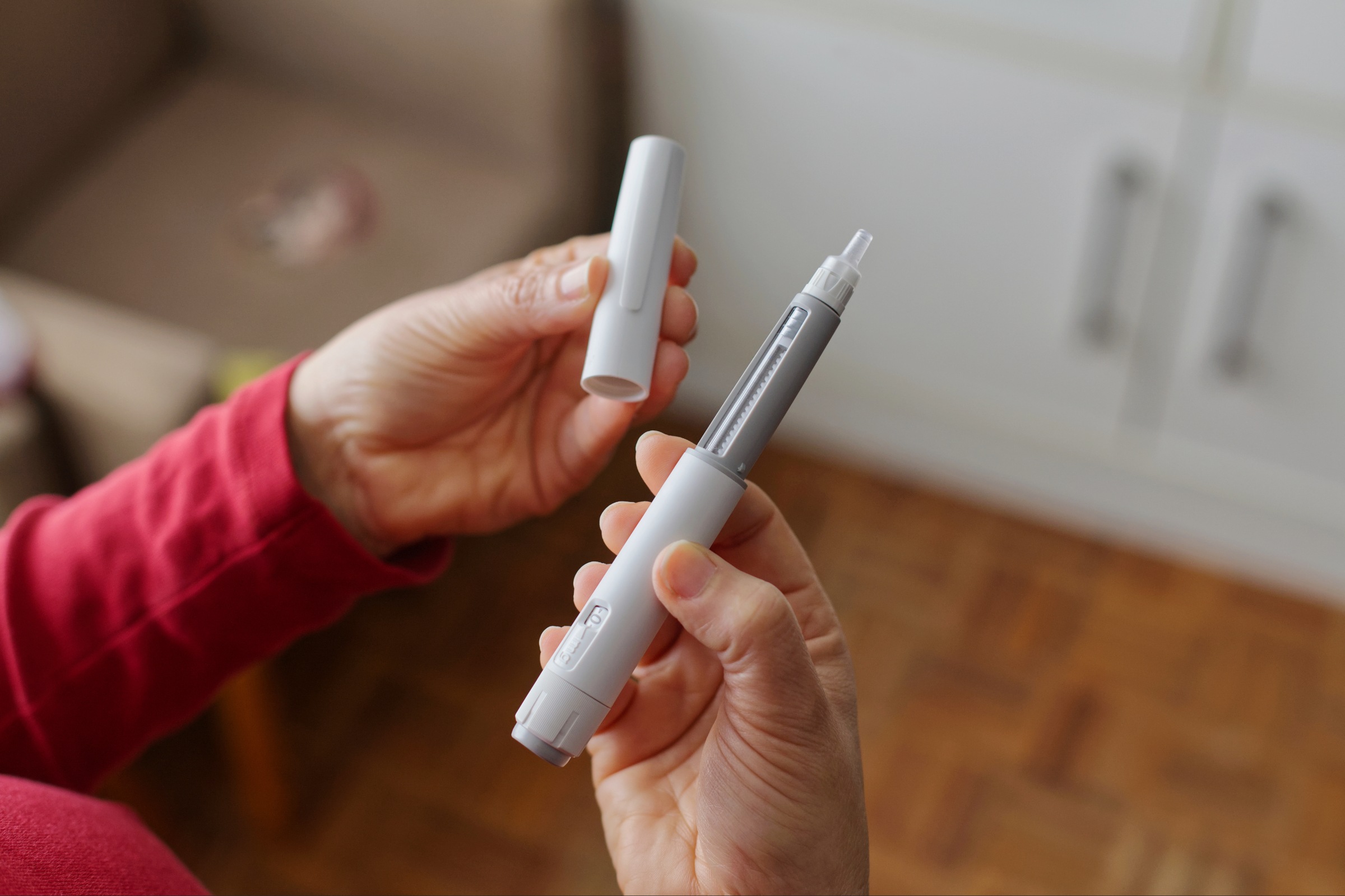
And the results, as you may have heard, can be staggering. In one recent trial comparing the two leading GLP-1 drugs, people taking tirzepatide lost around 20 per cent of their body weight on average, while those taking semaglutide lost around 14 per cent.
But the phrase 'on average' is doing a lot of heavy lifting here. Those headline numbers mask a huge range of outcomes: nearly one in five people taking tirzepatide lost 30 per cent or more of their body weight, while others barely responded at all.
So why does the same drug transform one person while doing almost nothing for another? The reasons are more surprising – and often more controllable – than you might think.
Why some people don't respond to GLP-1s
Put simply, there's no single reason why some people don't respond to GLP-1 drugs. Instead, it tends to be the result of a mix of biology, behaviour and circumstance, says Prof Roy Taylor, emeritus professor of medicine and metabolism at Newcastle University.
In some cases, the issue isn't that the drugs fail – it's that people stop taking them before they can take effect. That's often because the side effects become too difficult to tolerate.
Nausea, diarrhoea and vomiting are among the most common complaints, and for some people they can be severe. During one clinical trial published in The New England Journal of Medicine, 74.2 per cent of participants placed on GLP-1s experienced such symptoms, while 4.5 per cent stopped participating because they were so severe.
Doctors need to be straight with users that such side effects are likely, says Taylor. “If this is not explained – and especially so if people are taking these drugs without medical supervision, as many people are – then this is a really potent issue.”

Genetics may also play a role. A study recently published in Nature of nearly 28,000 people taking GLP-1 drugs found that some carried a genetic variant that made them more likely to experience nausea and vomiting.
These kinds of findings are unsurprising, argues Taylor. “Any drug has variable effects depending on an individual’s genetic makeup,” he says. “We’re all victims of the marvellous polygenic inheritance that we individually have.”
Even so, if taken at an appropriate dose for the patient, and with careful guidance from a clinician, says Taylor, GLP-1s should be able to overcome any genetic obstacles.
Read more:
- 'A really substantive jump': The most powerful weight-loss drug ever tested has arrived
- How the new generation of GLP-1s will change weight loss forever
- 'There's going to be a lot of unexpected babies': the side effect of GLP-1s nobody is talking about, according to a Cambridge professor
What you eat counts
Another, more avoidable, factor compromising the effectiveness of the drugs may be the food patients eat while taking them.
To lose weight predictably and keep the weight off after the drug regimen is concluded, patients are often told to keep to a healthy diet. If they insist on eating calorific foods, then the impact of GLP-1s will, unsurprisingly, be marginal.
Research suggests the same applies if they don’t also exercise. A study in 2024 found that people taking GLP-1 drugs lost more weight, and were more likely to keep it off in the long term, when they combined treatment with supervised exercise than when they relied on the drugs alone.
Recent research also suggests that sex influences how well GLP-1 drugs work. A study published in Diabetes Care found that women lost more weight than men while taking the drugs – possibly because women naturally produce more of the body's own GLP-1 hormone (the same one the drugs are designed to mimic), and oestrogen increases the body's sensitivity to insulin.
For his part, however, Taylor doesn’t believe gender plays a decisive role in GLP-1 effectiveness. “I wouldn’t be surprised if it was slightly less effective in men,” he says, but it’s likely to play “only a minor role”.

Sleep deprivation, too, could play a part, with one study finding that it exerts a “mild, but discernible effect… [on] GLP-1 concentrations in healthy men”.
But, again, Taylor cautions against drawing a clear line between a lack of sleep and the innate effectiveness of weight loss drugs.
“The effect of sleep on the body in terms of metabolic effects is trivial,” he argues.
Sleep deprivation in heavy individuals is often caused by their weight – the accumulation of fat around the throat, for example, triggering snoring or even, in some cases, sleep apnoea – rather than the other way around.
“If a person injects the GLP-1s consistently, there will probably be just an improvement in sleep,” Taylor says.
Improving the odds
How might prescribing clinicians adapt to these factors, both real and perceived? For an unfortunate minority, the evidence suggests that no variation in GLP-1 dosage will make a difference.
But for those individuals experiencing difficulties from factors within their control, there is hope. First, says Taylor, the patient must be told how GLP-1s work and that they will, most likely, feel nauseous at first – but, crucially, that this feeling will fade the longer they’re on the drugs.
“Individuals vary in their response to drugs,” says Taylor, but it’s the doctor’s responsibility to “ensure that people are aware of what’s about to happen.”
Read more: