Oprah Winfrey used to consider GLP-1s a “gift”.
Having long struggled with dieting, the talk show star announced in 2023 that she had begun using the drugs – officially ‘Glucagon-like peptide-1s’ but better known to the public through brand variants like Mounjaro and Ozempic – to achieve her optimum weight.
It worked, but after about a year, Winfrey stopped, eager to see if she could keep the weight off without pharmacological assistance. That decision saw her regain 20lbs (approx 9kg).
Winfrey’s experience mirrors that of thousands of others who cease using GLP-1s. Some, like Winfrey, may stop using them to prove to themselves that they can keep the weight off without medical intervention.
For many others, it feels like more of a functional necessity, either because GLP-1s cost too much to keep using, or because the side effects – which can include nausea, constipation, diarrhoea and dehydration – are simply too much to bear.

There are odder reasons still, says Prof Roy Taylor, an emeritus professor of medicine and metabolism at Newcastle University. Patients can, despite it being the drug’s primary mode of action, mourn the loss of their appetite.
Others have been pressured by jealous partners into ending the drug’s use because the weight loss makes them “too confident” or attractive to the opposite sex.
“It sounds absolutely bizarre that someone would not want their wife, husband or partner to lose weight when it’s clearly to the advantage of their health, but it’s very human,” says Taylor.
The bounce-back
Many patients who haven’t suffered from side effects and are about to start weaning themselves off GLP-1s often report feeling in prime physical condition, explains Taylor.
This is unsurprising considering accounts of the drugs also reducing inflammation and cravings for alcohol and even illegal substances.
“With almost no exceptions, people report greater vigour [and] more ability to do their jobs, including, incidentally, policewomen, who find it easier to subdue suspects when they’re 15 kilograms lighter,” he says.
Almost everyone who comes off GLP-1s will inevitably regain some weight. Why they do so is the result of several factors.
GLP-1s work by mimicking the hormone of the same name, which is made by the small intestine and, among other functions, suppresses appetite.
Coming off these drugs restores patients’ feelings of hunger to their original levels and because of this, the pace at which weight is regained is often rapid.
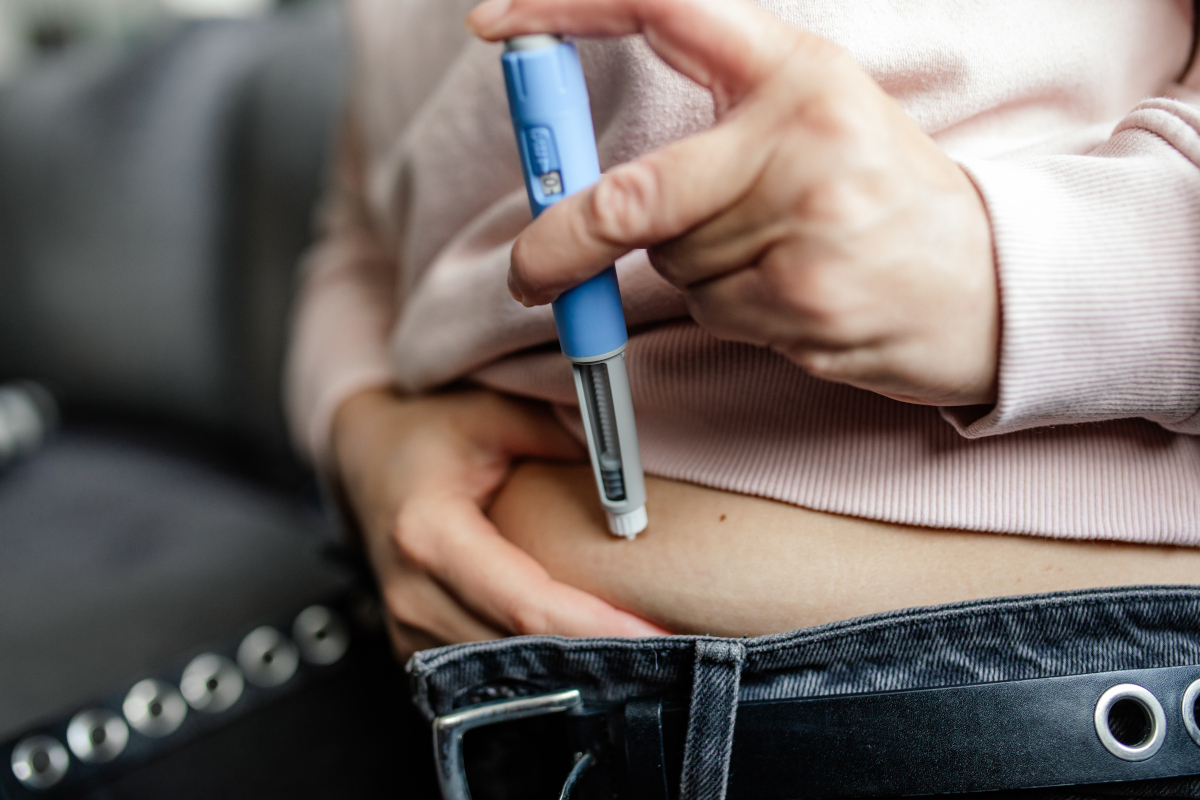
A study published by the British Medical Journal in January found that users of GLP-1s typically regain 0.4kg (approx 0.9lbs) per month, returning to their original weight within 18 months to two years.
Discontinuing newer versions of the drugs, meanwhile, can regain up to 0.8kg (approx 1.7lbs) per month.
All the other benefits of staying on the drugs, like better cardiovascular health, also appear to kick into reverse, though the speed of the weight regain in and of itself is not concerning, argues Taylor.
“I’m not aware,” he says, “of any particular disadvantages associated with a rapid gain of weight.”
Despite post-GLP-1 weight gain being generally unavoidable, though, it’s still common to keep a little of it off.
This is according to a recent meta-analysis of 48 studies from the University of Cambridge, where patients were found to keep around a quarter of the weight they lost while on GLP-1s off after discontinuing the drug.
Read more:
- Inside the radical plan to make weight-loss jabs free for everyone
- Doctors keep missing a hidden problem with weight-loss drugs, Cambridge professor warns
- The best way to come off weight-loss drugs without regaining fat
Education is everything
Another factor adding to the weight regain is a sense of ignorance, whether genuine or wilful, about how GLP-1s function and how the body will react to their absence.
“Here we have a real magic bullet that dials down appetite. But because it’s explained in terms of just providing you with a bit of a natural gut hormone for a while, it completely misses out the fact that, to sustain the benefits, changes have to happen to everyday habits,” says Taylor.
That can be hard for people using GLP-1s to accept, adds Martin Whyte, a professor of metabolic medicine at the University of Surrey, who argues that any clinician worth their salt will advise their patients that, if they don’t change their eating habits, weight regain after they stop using the drugs is inevitable.

People who haven’t had this warning, or even those who have but still end up piling on the pounds after stopping GLP-1 use, “certainly feel a sense of shame or disappointment in themselves that they could never lose weight otherwise, and that it took this injection to do what they couldn’t do.”
More generally, argues Taylor, clinicians should emulate dietary weight-loss programmes by not only educating patients about the dangers of reverting to their old ways, but also training them in how to avoid overeating.
“Education is what happens in lecture theatres, and lecturing at people is not terribly effective,” he says. “We actually need to train people… and that’s been largely missed out in relation to GLP-1s.”
How to come off GLP-1s safely
Perhaps unsurprisingly, restarting the drugs can be extremely tempting, with one recent study suggesting over 40 per cent of those who stop using GLP-1s resume within one year of discontinuation, and 58 per cent do so within two years.
So far, only a few studies have investigated their overall effectiveness under such inconsistent usage patterns (though one published in the Journal of Clinical Investigation Insight suggests they may have a decreased efficacy).
For his part, Whyte is focused on an efficient way of drawing down his patients’ GLP-1 dosages before they fully discontinue using them.
“Personally, I advise that they use GLP-1s for up to a year, or 18 months, and then gradually try to titrate down over around about three months before stopping,” he says, emphasising how this regime must be paired with consistent messaging about the necessity of maintaining a healthy lifestyle.
The effectiveness of microdosing GLP-1s to regulate weight post-discontinuation is also a promising avenue of research, says Taylor, and one that remains underexplored.
In the meantime, other potential interventions are coming to light.
For example, a recent clinical trial observed that a procedure used to improve blood sugar control in those with type 2 diabetes was effective at helping former GLP-1 users keep off the weight.
This suggests surgical alternatives may be in the offing.
Another unknown for Whyte is the potential utility of new GLP-1 drugs in pill form, and whether decreasing doses of those drugs could be used to prevent weight regain.
As far as Oprah Winfrey is concerned, at least one mystery was solved about coming off GLP-1s: it wasn’t for her. Like so many other patients, Winfrey restarted taking the drugs after a year.
“It’s going to be a lifetime thing,” she told People magazine in December 2025.
“I’m on high blood pressure medication, and if I go off the high blood pressure medication, my blood pressure is going to go up. The same thing is true now, I realise, with these medications. I’ve proven to myself that I need it.”
Read more: