
Everyone knows by now how weight-loss drugs have revolutionised the lives of people trying to slim down.
You can’t miss the hype – the endless reports about people shedding pounds with weekly injections of Mounjaro, the influencers waxing lyrical about them, even talk of the end of obesity.
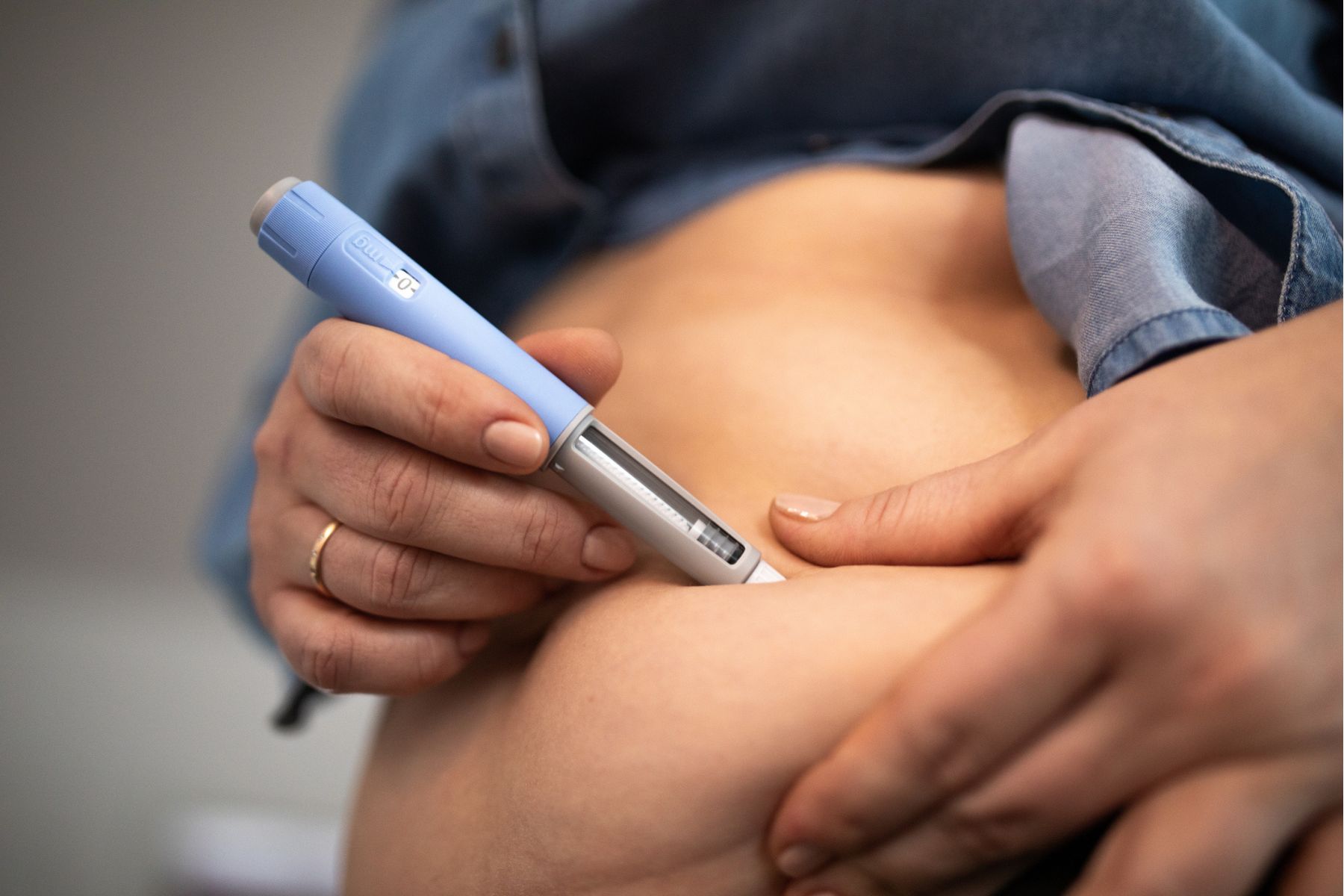
By mimicking the gut hormone GLP-1, these drugs tell your brain you have eaten enough and, as a result, help curb food cravings.
But, it seems, these medications have the potential to transform lives far beyond the eating habits they were designed for.
Studies have been looking at how GLP-1s could have wider-reaching benefits related to impulse control.
Many people taking these medications, which contain the drug semaglutide or tirzepatide and are sold under the brand names of Wegovy, Mounjaro and Ozempic, are reporting that they no longer crave alcohol, don’t feel compelled to make impulse buys, bite their nails or gamble any more.
“I think we’re still catching up on what a lot of the behavioural impacts are,” says Daniel Semenza, an associate professor in the Department of Urban-Global Public Health at Rutgers University in New Jersey, US.
It makes sense that these drugs could help with impulse control more generally. That’s because they are known to reduce persistent intrusive thoughts about eating, called food noise, an example of the mental chatter that drives urges. But the brain mechanisms involved are still not completely understood.
There has been mounting evidence in recent years that GLP-1s could help with addiction, as several studies have found that rodents hooked on alcohol reined in their binge-like drinking when given semaglutide.
Researchers are now interested in whether they could also play a role in related behaviours such as violence.
So, how far-reaching could the impact of weight-loss drugs be?
Dulling the sugar rush
GLP-1s affect the brain’s reward system, which is responsible for motivation and desire, so it’s not surprising they can impact other impulses beyond food.
When something gives you pleasure, the chemical dopamine is released in key parts of your brain that make you feel good, so your body wants more of it.
When you eat a hamburger, a small amount of dopamine is typically released, whereas when you consume alcohol, your brain is flooded with a surge in the chemical. This is why alcohol can become so addictive.
But interestingly, studies with rodents have shown that dopamine levels don’t increase if they are given a GLP-1 medication before alcohol consumption.
“GLP-1 drugs are attenuating the alcohol-induced dopamine release,” says Lorenzo Leggio, a physician and scientist at the National Institutes of Health (NIH) in Baltimore, US.
A recent case report by Hannah Kelly, a neurologist at the Vanderbilt University Medical Center, in Nashville, Tennessee, also suggests that GLP-1 drugs can blunt the dopamine response in the brain.
Kelly and a colleague wrote about a 46-year-old man who developed impulse control disorder (ICD), a condition characterised by the inability to curb impulses that can be harmful, after taking medication to treat Parkinson’s disease.
The Parkinson’s medication increases levels of dopamine in the brain as people with the disease have too little of it.
However, with more dopamine in his body, the man started having uncontrollable sexual urges, which led to an extramarital affair. He also felt compelled to shop, resulting in a $30,000 (£22,400) shopping spree.
But when the man started getting weekly injections of semaglutide to treat an unrelated condition, he found that they curtailed his impulsive behaviour.
“I think this patient really proved that it works for impulse control disorder,” says Kelly.

Leggio adds that dopamine regulation is not the only mechanism in which GLP-1 drugs can help with impulse control.
Recent research has shown that they play a role in improving emotional wellbeing, which could have an indirect impact. Not everyone drinks alcohol to feel pleasure – some people consume it to alleviate stress or anxiety.
So, if the GLP-1s are helping people to feel calmer and more positive, patients could develop a better relationship with alcohol as they won’t be reaching for a drink if these psychological triggers are dampened.
Read more:
- Inside the radical plan to make weight-loss jabs free for everyone
- Doctors keep missing a hidden problem with weight loss drugs, Cambridge professor warns
- This is the easiest weight-loss hack nutrition scientists wish everyone knew
Fewer violent urges
Weight-loss medications may also help with more complex behaviours in a roundabout way. Semenza and a colleague have just published a report in the journal Criminology examining whether taking GLP-1 drugs could help curb violence.
They examined the impact of GLP-1s on impulsivity and alcohol abuse, two of the biggest risk factors for violence, by focusing on 821 adults from a 2025 survey conducted in the US who had taken a weight-loss drug at some point.
The survey asked participants whether they had engaged in a violent crime such as threatening someone with a weapon or taking part in a physical fight in the past 12 months, as well as asking them questions that assessed their level of impulsivity and alcohol use.
The team found that the relationship between impulsivity and violent crime was reduced by 62 per cent and the link between alcohol use and violent crime was down 52 per cent for people taking these medications compared to people who had never taken GLP-1 drugs or had stopped taking them.
“What we think that means is that amongst GLP-1 users, impulsivity is not translating to violence in the same way, potentially, than it would be for people who aren’t on the drugs,” says Semenza.
This study is, however, just the first step and Semenza emphasises that more work is needed. The data they used, for example, was collected at one point in time and so didn’t allow them to tease out cause and effect.
Kelly, who wasn’t involved in the research, adds that there are so many factors that contribute to violent behaviour that looking at just two of them is not enough to suggest that GLP-1 medications are having a direct impact on violence.

Semenza and his team are now planning to do a quasi-experimental analysis that will examine different sources of data, such as medical and arrest records, to get a better idea of whether there is a connection between GLP-1s and violence over time.
If further evidence suggests that there is a direct effect, these medications could become another tool to help prevent violence.
“In broad populations, there are very few pharmaceutical interventions that we think about as an option for violence prevention,” says Semenza.
Currently, cognitive behavioural therapy (CBT) is often recommended for individuals who are prone to violence by making them think differently about situations where it could occur so they don’t act on their impulses.
It teaches them to slow down, think through the process of how they might react, and think ahead to avoid aggression.
“These interventions have been shown to be really effective if they’re done the right way, especially with people who are living in higher violence communities in the United States,” says Semenza. “But they’re expensive, it’s hard to get people to regularly attend, and they can be complicated to put out into the community.”
Semenza thinks that GLP-1s could potentially have a similar effect by reducing impulsivity and giving people more time to think about their actions, as seems to be the case with food cravings. He also thinks it is important to figure out for whom these drugs would have a big impact.
“This could be a really meaningful intervention for people who have been violent in the past and for the people around them,” adds Semenza.
Prescription expansion
There is increasing agreement among experts that GLP-1s could be as life-changing for people with impulsive behaviour as they have been for those who needed to lose weight, which could lead to prescriptions for other patients, not just for people suffering obesity or diabetes.
Kelly says there are few treatments available for people with impulse control disorder, for example, which affects 1 in 6 people taking dopamine-stimulating drugs.
With Parkinson’s patients, the usual solution is to discontinue or lower the dose of their medication, which is not ideal as they take it to control symptoms such as walking difficulties and tremors. Prescribing GLP-1s instead could change all that.
“It would be lovely if more evidence proves this correlation so GLP-1 medications can be prescribed [for impulse control disorder],” says Kelly.
If clinical trials prove that GLP-1s can help with addiction, Leggio thinks that their impact could be unprecedented.
First and foremost, they may help destigmatise addiction as they did obesity and encourage people who struggle with addiction not to be ashamed to ask for help.
“The majority of patients with addiction are not treated,” he says. “The hope is that these drugs may really shake the trees and not just prove to be effective but also increase the number of people who seek treatment.”
Read more:
