Last summer, a robot broke Usain Bolt’s 100m world record. The machine was competing in the World Humanoid Robot Games in China and shaved two tenths of a second off Bolt’s time of 9.58 seconds, which has stood since 2009.
But here’s the funny thing: the robot didn’t slow down at the finish line. It wasn’t programmed to stop, so it just kept going. Like one of its competitors, it sprinted at full speed into a cushioned wall at the end of the track, then fell in a crooked heap on its metal bottom before being stretchered, literally, out of sight.
The feat illustrates something about where we’re at in the year of our robot overlords, 2026. Droids today are capable of astonishing power and dexterity. They can outcompete the most fearsome human athletes. There are more of them than ever and they can handle more tasks than ever. And at the same time, they’re also very, very, very silly.
Social media is awash with videos of robots that look weird, move weird and are programmed to perform weird tasks. The seemingly sudden uprising is, in part, thanks to rapidly maturing technology, including AI, hardware and powerful simulations in which machines are trained.
“That suddenly means you get these much more fluid movements,” says Prof Peter Bentley, a computer scientist at University College London. “You get the ability for them to recover when they stumble a bit. They recover because they’ve done it a million times in simulation.”
But while robot capabilities are advancing at speed, their stamina isn’t. “Many robots have just minutes of running time,” Bentley says. “They can last a dance routine and that’s it.”
While our future tin can oppressors charge up for the revolution, here are some of the strangest robots to keep an eye on.
1. The synthetic sea urchin
Argus belongs to a category of robots that makes the traditional humanoid suddenly look rather unimaginative. Instead of giving a machine two arms, two legs and a head because that is what people have, its design is dictated by the environment it has to navigate.
Unveiled earlier this year by researchers at Duke University in the US, Argus sort of looks like a sea urchin crossed with the self-configuring robots from Christopher Nolan’s Interstellar. It has no front or back, but it does have 20 eyes (or sensors) and can bobble along on all manner of terrains – forest, sand, wet surfaces – steadying itself as it goes.
The idea speaks to a broader point in robotic design. Wheels, legs, wings and sensors can be arranged in any number of combinations to make sense of the job they’re built for. Using AI to help design them could make that process even stranger, moving away from the biomimicry that has defined robotics for decades.
“AI will generate new robot morphologies to fit a certain task and certain environment,” says Perla Maiolino, a roboticist at the University of Oxford. “They might be completely different from humanoids or animals or plants.”
In other words, what bots like Argus tell is that the next generation of robots may not look like anything we recognise.
2. The synth that wants to chat

If you’re worried about robots taking your job, that’s an increasingly valid concern. Take Realbotix M-Series, a humanoid bot with the face of a silicone sex doll that was deployed as a teaching assistant at a rural New York school earlier this year. It was just a trial – and that trial was hastily paused after parents complained – but it illustrates an ambition to integrate machines into the fabric of human life.
Realbotix specialises in human-like robotic heads and bodies designed for social interaction, with facial expressions and conversational AI intended to make the interaction feel natural. Yet the company’s M-Series still occupies that uncomfortable territory where a robot stops looking like a machine but doesn’t yet look like a convincing human.
It is a very different proposition compared to a factory robot. The machine’s appearance isn’t incidental to its function; appearance is part of the function. The objective is to create something people will willingly talk to.
“When you can chat with an AI, suddenly you start doing the personification,” Bentley says. “You start feeling like it must be alive.” Humanoid robotics, he argues, is beginning to experience its own version of that phenomenon: “They feel real because they’re starting to look like us and starting to move like us.”
Yet the closer machines get to looking like people, the more complicated the reaction becomes. Roboticists say that humans currently prefer robots that have recognisably human characteristics without being perfect copies – a cartoony bot like WALL-E is preferable to some uncanny valley zombie.
The M-Series is therefore probing an odd boundary: how human does a machine need to look before we want to talk to it – and how human can it look before we no longer want to?
3. The walking, talking side table
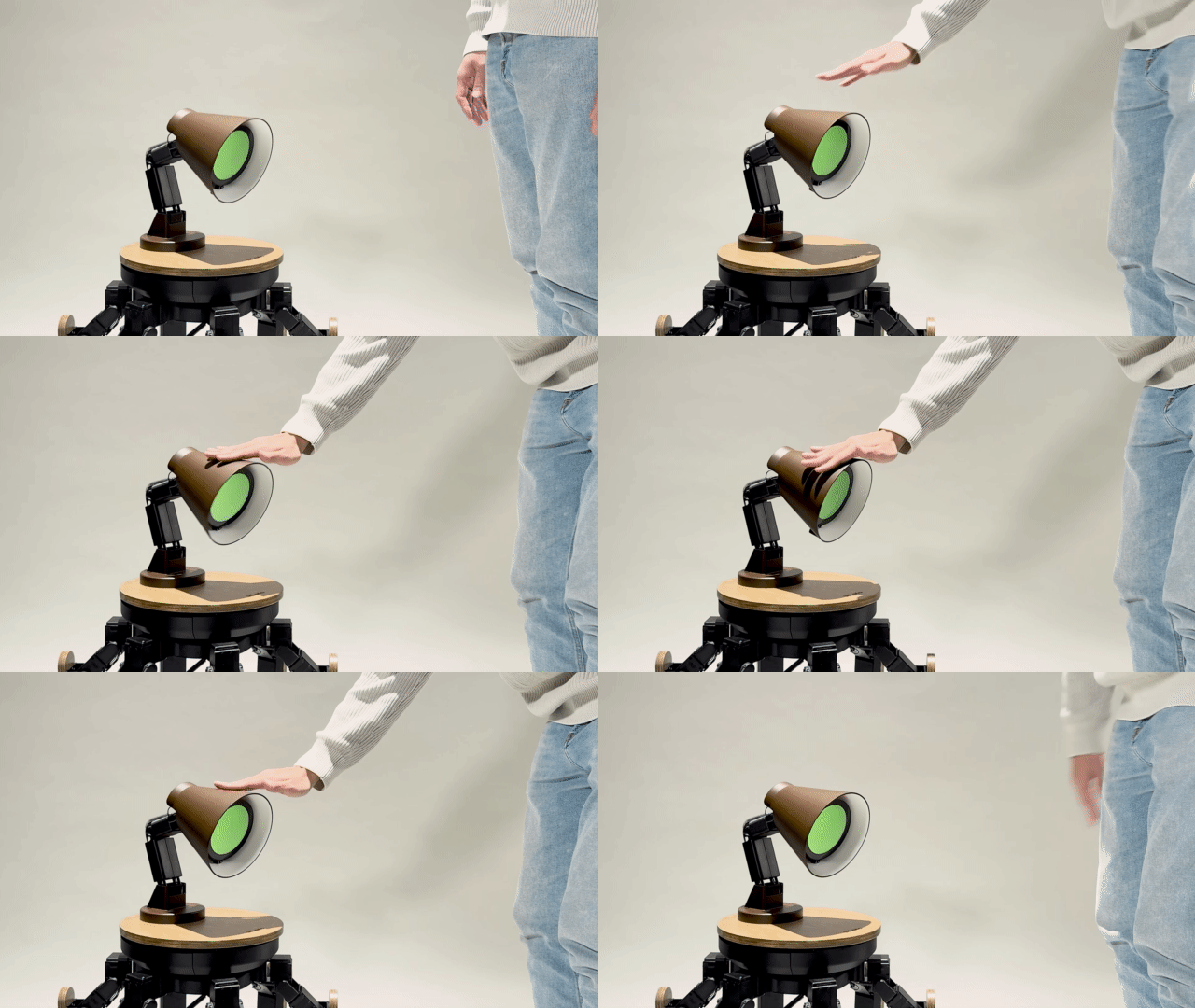
Palmimo looks less like a robot from science fiction than something a particularly imaginative child might have drawn after being told to invent an animal that could live in your lounge.
Its body is a wooden, six-legged structure topped by a round ‘face’, giving it something of the character of a cheerful mechanical insect crossbred with the animated lamp from the Pixar logo.
Palmimo is designed as a general-purpose AI robot that can be programmed for different purposes. It can see, hear, speak, move and respond autonomously. That combo is important; Palmimo isn’t just an animated object. Its creators describe it as a physical embodiment of an AI agent, capable of interacting with people and adapting its behaviour.
Its strangeness is another demonstration that robots don’t have to copy the human body. Form should follow function, Maiolino says. “Humanoid morphology isn’t necessarily the best at everything.”
Palmimo is deliberately designed to communicate, however. It makes ‘eye’ contact, responds to voices and uses its screen-like face to display expressions. Maiolino notes that facial expression is one of the fundamental ways humans communicate and that we naturally anthropomorphise robots that have features we recognise.
Perhaps that’s the weirdest thing about Palmimo: it is not trying to fool you into thinking it is human. It is trying to make a strange little machine feel socially legible.
4. The replicants with living skin
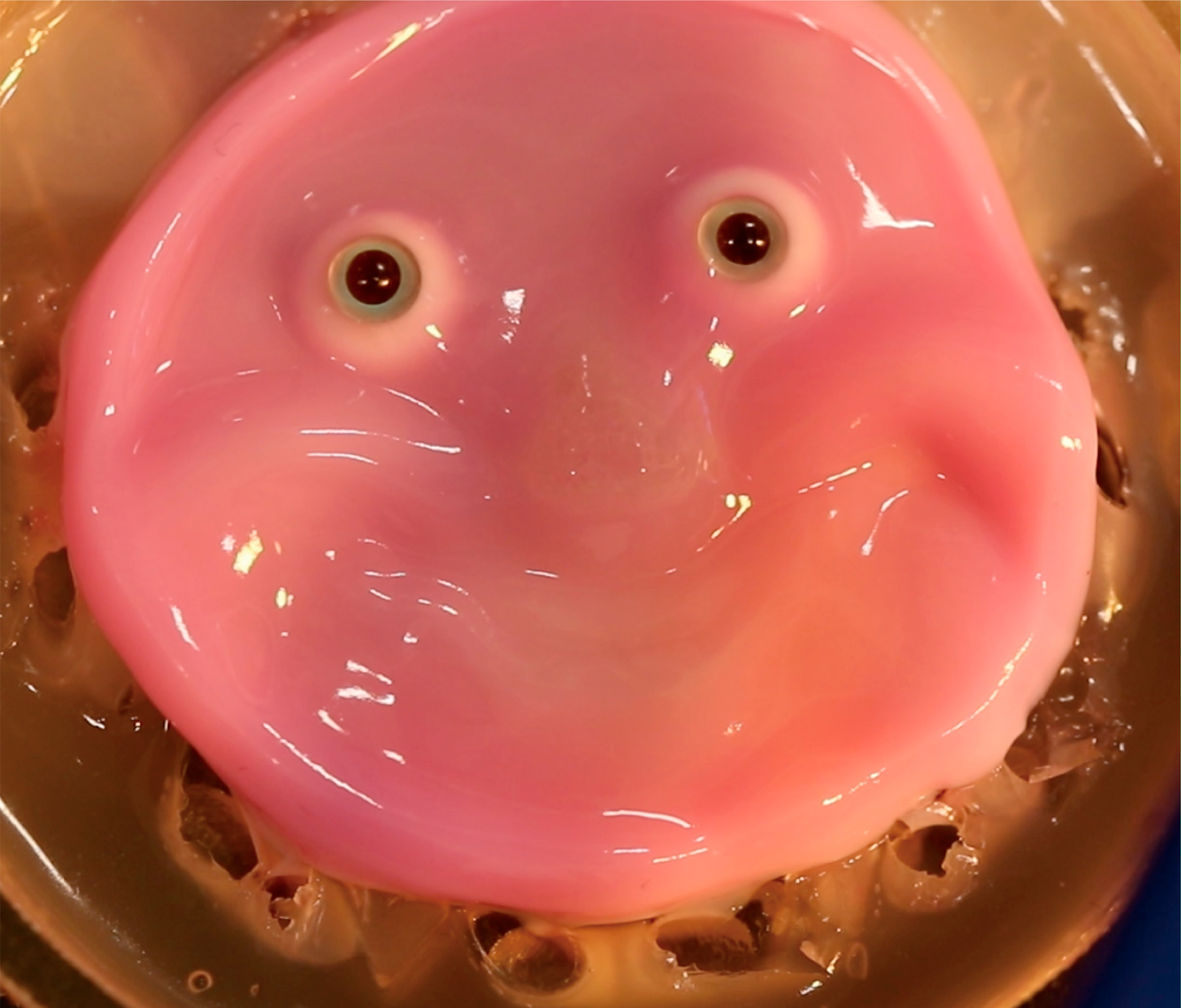
Few recently built robots are more viscerally strange than this Japanese experimental droid covered with living, lab-grown, self-healing skin. The work, from researchers at the University of Tokyo, involves cultivating human skin tissue and attaching it to a robotic structure, with the ambition of creating something that can move and eventually express itself in a more biologically convincing way.
The obvious reactions to this include: “Didn’t you see Blade Runner?”, “You must have seen Terminator,” and, simply, “Why?” But this is where the project becomes more interesting than its dystopian appearance.
Maiolino has worked on a related problem from the opposite direction: “I design technologies to give robots a sense of touch, not just on the hands but covering the whole body,” she says. A humanoid operating in a domestic environment, she argues, should be able to tell when something touches its leg or body and respond appropriately.
She also points to the emerging field of biohybrid robotics. “As well as the Japanese researchers developing skin, there are also colleagues that are working on muscle.”
There is, however, a distinction between making robot skin useful and making it look human. Bentley remains sceptical of the latter. “It strikes me that, yeah, okay, it’s cool. You could potentially do that,” he says. “But why are you doing it?”
Read more:
- Robots just held their own (very chaotic) athletic games. And the footage is jaw-dropping
- ’We’re not prepared!’: How a Harvard professor thinks humanity’s chaotic first contact would actually unfold
- AI is now deciding who gets healthcare in 6 US states – and it’s already harming patients
5. The e-kite that also swims
Hear us out: what if a bird could also be a submarine? That seems to have been the question driving the curious design of the Flapping-Wing Aerial-Aquatic Vehicle (FAAV for short). Developed by researchers at MIT and EPFL in Switzerland, the FAAV can fly through the air, dive underwater and then propel itself back through the water’s surface into flight.
It weighs less than 300g and uses flexible, flapping wings rather than conventional propellers. The design is inspired not by a steampunk fever dream but by diving birds such as loons and puffins, which have evolved for life in two radically different environments.
Its weirdness, then, is actually an engineering solution. Water is vastly denser than air, meaning the same mechanism has to behave very differently in the two environments. The robot’s wings deform underwater and recover their shape in air.
The FAAV is a particularly good demonstration of a principle. It looks strange because the problem it has been designed to solve is strange. Rather than asking how to make a conventional drone more capable, its designers started with the environment – and ended up with something that looks like neither a conventional aircraft nor a conventional underwater robot.
In robotics, weird can just mean optimised.
6. The butler bot in training
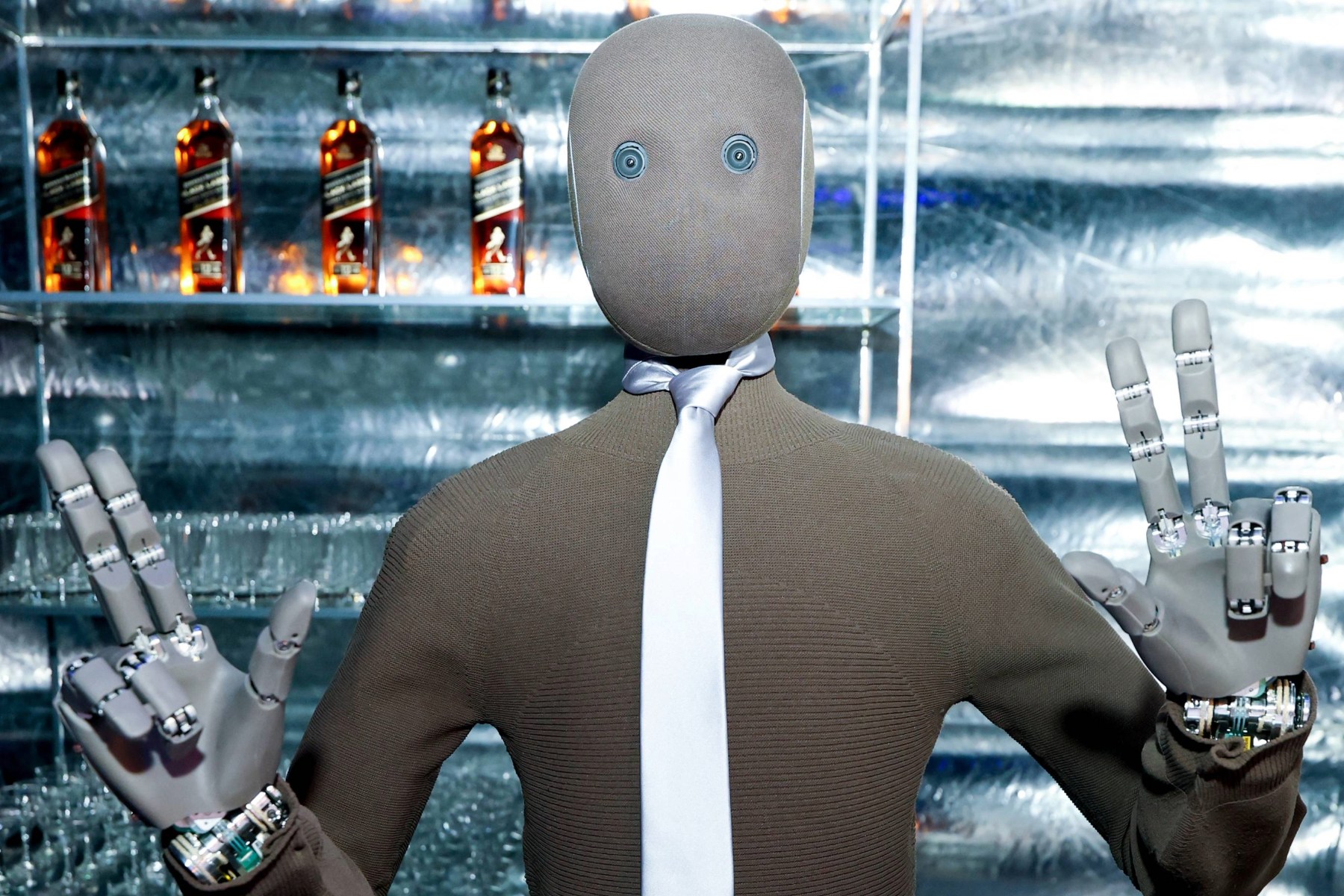
1X’s NEO is perhaps the most ordinary-looking robot on this list. It is a humanoid intended for domestic environments, with a soft textile-covered body and a deliberately approachable appearance. Unlike many research robots designed to demonstrate one spectacular capability, NEO is pitched as a general-purpose domestic machine: something that might, eventually, help around the home.
It can walk around a home, squat, sit, climb stairs, pick up and move objects, open doors, retrieve things, load objects into a dishwasher and perform other manipulation tasks. Its latest hands have 25 degrees of freedom, allowing it to handle objects with considerably more dexterity than earlier humanoids.
1X says its Redwood AI system can navigate around a home while manipulating objects and can generalise to objects and locations it hasn’t encountered before.
But there’s a catch: being physically capable of doing something isn’t the same as being able to do it autonomously. NEO currently arrives with what 1X calls ‘basic’ or ‘foundational’ autonomy. It can autonomously perform tasks within its repertoire, learn and repeat tasks, and schedule chores.
For jobs it doesn’t know how to do, however, a human 1X ‘Expert’ can remotely supervise the robot and help it complete the task. It can also be remotely controlled through an app or VR.
It illustrates something that makes Bentley sceptical about at-home robots in general. “The question is, once you’ve got half-decent humanoid robots with a half-decent battery life, what is the killer app for them?” he says. “I actually still don't know the answer.”
There are plausible answers – assisting older people, handling chores, helping people stay independently at home – but the technology has to work reliably outside the laboratory. As Bentley puts it, “For general purpose robots, the real world is still extremely complicated.”
7. The roving roboturtle
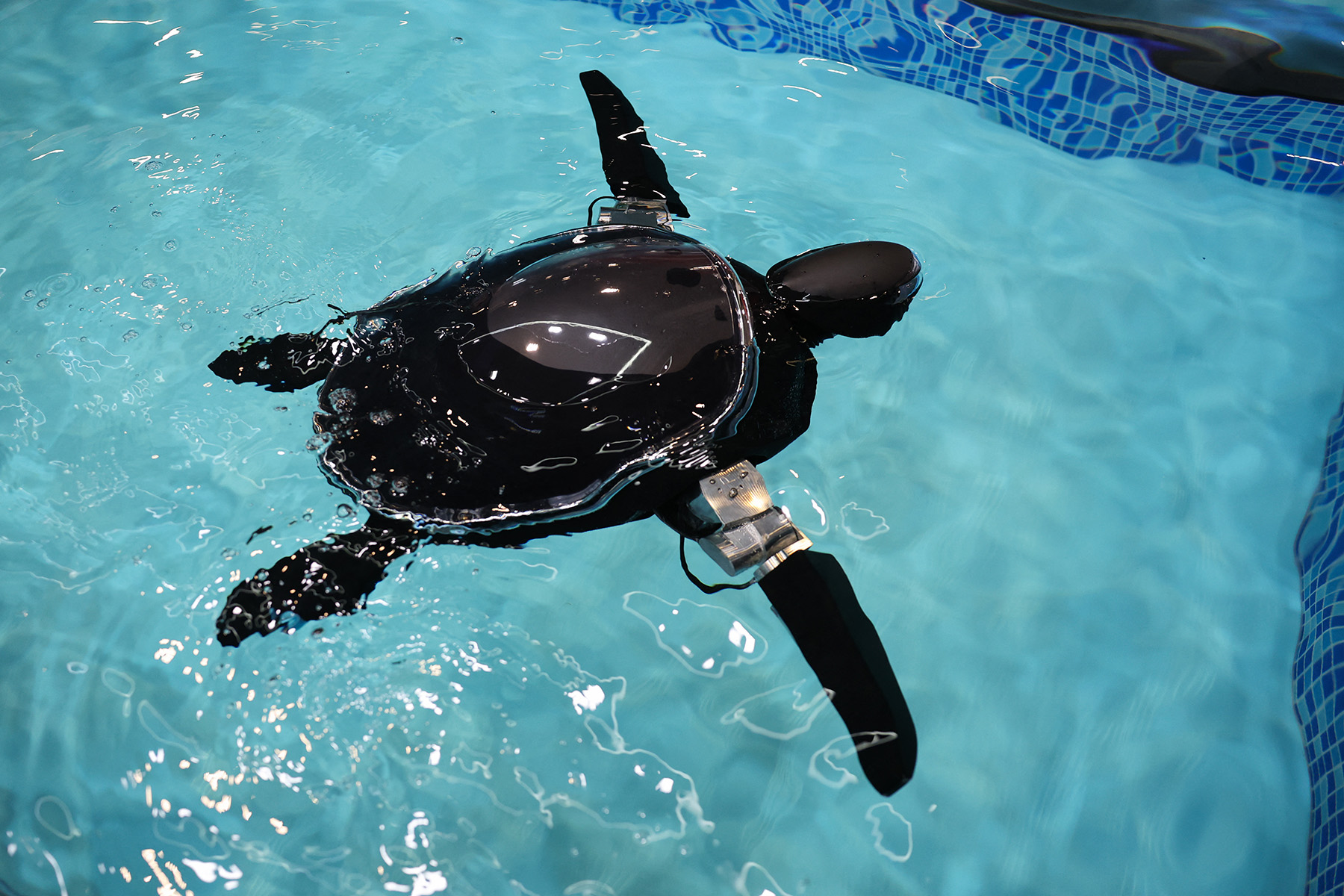
If the future of robotics involves machines designed for environments where humans struggle to operate, there is no particular reason those machines should look remotely human. Beatbot’s RoboTurtle takes the opposite approach: it borrows its basic logic from an animal that has already solved the problem of moving efficiently through water.
The robot is an autonomous aquatic machine inspired by a sea turtle, designed for tasks including water-based inspection, cleaning and ecological research. Its shape is instantly recognisable as animal-like, but that resemblance isn’t merely decorative.
Flippers make sense in water; a streamlined body makes sense in water; and a turtle-inspired form can move around an environment in ways that would be difficult for a conventional wheeled or humanoid robot.
That is the sort of thinking Maiolino believes will increasingly shape robotics. “Nature has been an amazing designer,” she says. “For underwater environmental monitoring, why wouldn’t you have a robot that looks like a fish?”
The strangest-looking robots may consequently be the least strange thing in the world. They are machines discovering that nature has already done much of the design work.
8. The backflipping factory worker
If Atlas by Boston Dynamics is familiar, it’s because it looks unmistakably like the robot imagined by science fiction for the past century. Tall, humanoid and worryingly agile, its many viral videos show it running, dancing, manipulating objects and doing better backflips than 99 per cent of the human race can manage.
But the most interesting version of Atlas is the one that is becoming less entertaining.
In 2026, Boston Dynamics moved Atlas towards production as an electric AI-enabled, autonomous industrial humanoid, with deployments planned at firms like Hyundai and Google DeepMind. The company’s stated goal is material handling and industrial work rather than viral demonstrations.
That makes Atlas a useful test of the distinction between what a robot can demonstrate and what it can reliably do.
Bentley describes that gap bluntly: “There’s a world of difference between a very carefully choreographed demonstration – where it’s been trained in simulation a million, million, million times to become really good at that thing – and doing something new.”
It’s also a question of capability versus reliability. A robot doing something once is not necessarily a robot capable of doing it safely and repeatedly in the real world without running out of battery.
C-3PO doing a backflip is one thing, but how does it handle an eight-hour workday? It looks like we’re about to find out.
9. The techno-demonic centaur
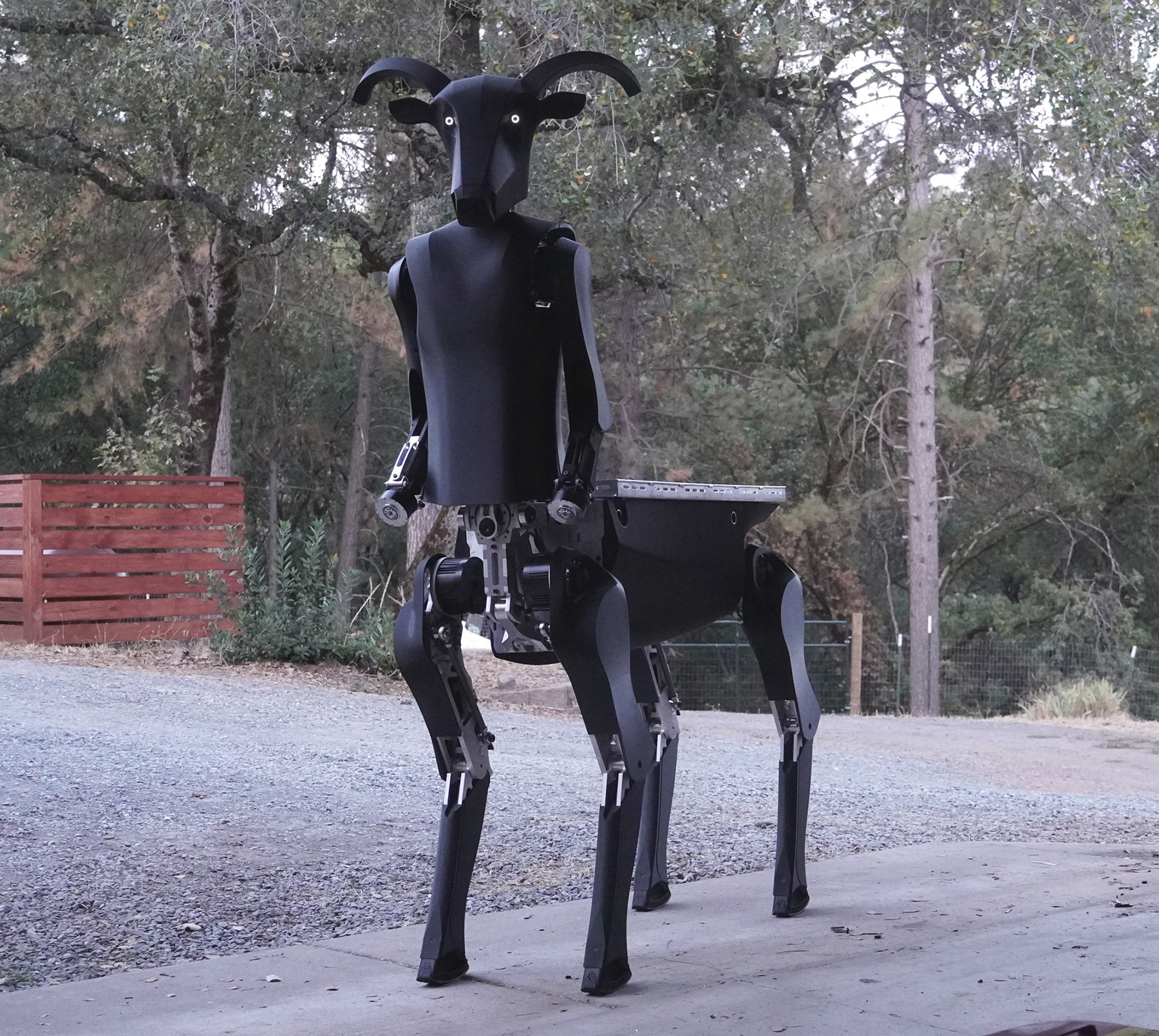
This may be the most disquieting robot on our list, partly because its design makes a certain amount of sense once you get past some terrible first impressions.
Threehalves is roughly seven-feet-tall, a four-legged ‘centaur’ with a humanoid torso and arms mounted on a mammalian quadruped chassis. The unit is topped – inexplicably – with the horned head of a satanic goat. Oh, and it’s trained to use a chainsaw.
There is a chance that this mysterious robot is not a real design but satire in robot-form. (It’s built, for instance, by a company called Satyress.) If it is real, it’s designed to be teleoperated by a human rather than acting autonomously, with the operator able to fit its arms with a range of tools, such as drills, impact guns and, presumably, medieval torture apparatus.
Satyress says the aim is to give skilled workers ‘superpowers’ in jobs where the environment itself is the danger – search and rescue in collapsed buildings, clearing forestry at the front line of a wildfire and other extreme conditions.
The strange design might actually be the point. “These robots may look weird but there is some engineering thinking behind these new morphologies,” says Maiolino.
Threehalves is a good example of the principle: four legs provide a more stable base than a biped, while the human-like upper body allows it to manipulate tools designed for people. Even the horns have a function, housing cameras that help the operator track the robot’s limbs and tools.
Still, if you found yourself trapped in an unstable building, how would you feel about this thing bursting through the door to save you?
Read more: