
From dazzling galaxies to glowing nebulae, the cosmos is filled with countless incredible sights. It’s also got some strange and downright bizarre ones too.
Case in point: the footage below. From flying cars to giant cosmic question marks, here are some of the weirdest images ever captured in space.
Gorilla on the loose
In 2016, an unexpected visitor caused havoc onboard the International Space Station (ISS) – a gorilla. Or rather, astronaut Scott Kelly dressed as one did.
The prank started with his twin brother, Mark (a retired NASA astronaut himself), who arranged for a resupply flight to smuggle a gorilla suit aboard as a joke. Scott took the assignment seriously, donning the costume to chase UK astronaut Tim Peake down the length of the station.
He then took things further, lying in wait inside a crewmate’s sleeping quarters, ready to spring out and give the unlucky astronaut the fright of their life.
“When he went to open the door, I busted out of there, and afterwards I was a little worried that I could have given him a heart attack or something,” Scott later recalled.
Still dressed as the gorilla, Scott also fronted an educational video about crying in space. (In microgravity, tears don’t stream down your face – they pool into wobbling blobs around your eyes.)
It was supposed to be a serious science lesson, but Scott spent most of it trying (and failing) not to laugh.
Sadly, every space mission must end, and the gorilla’s was no exception. Scott eventually packed the suit in with the station’s rubbish, where it burned up on re-entry into Earth’s atmosphere.
“I didn’t want to be responsible for what anyone else would do with a gorilla suit in space,” Scott joked.
Cosmic question mark
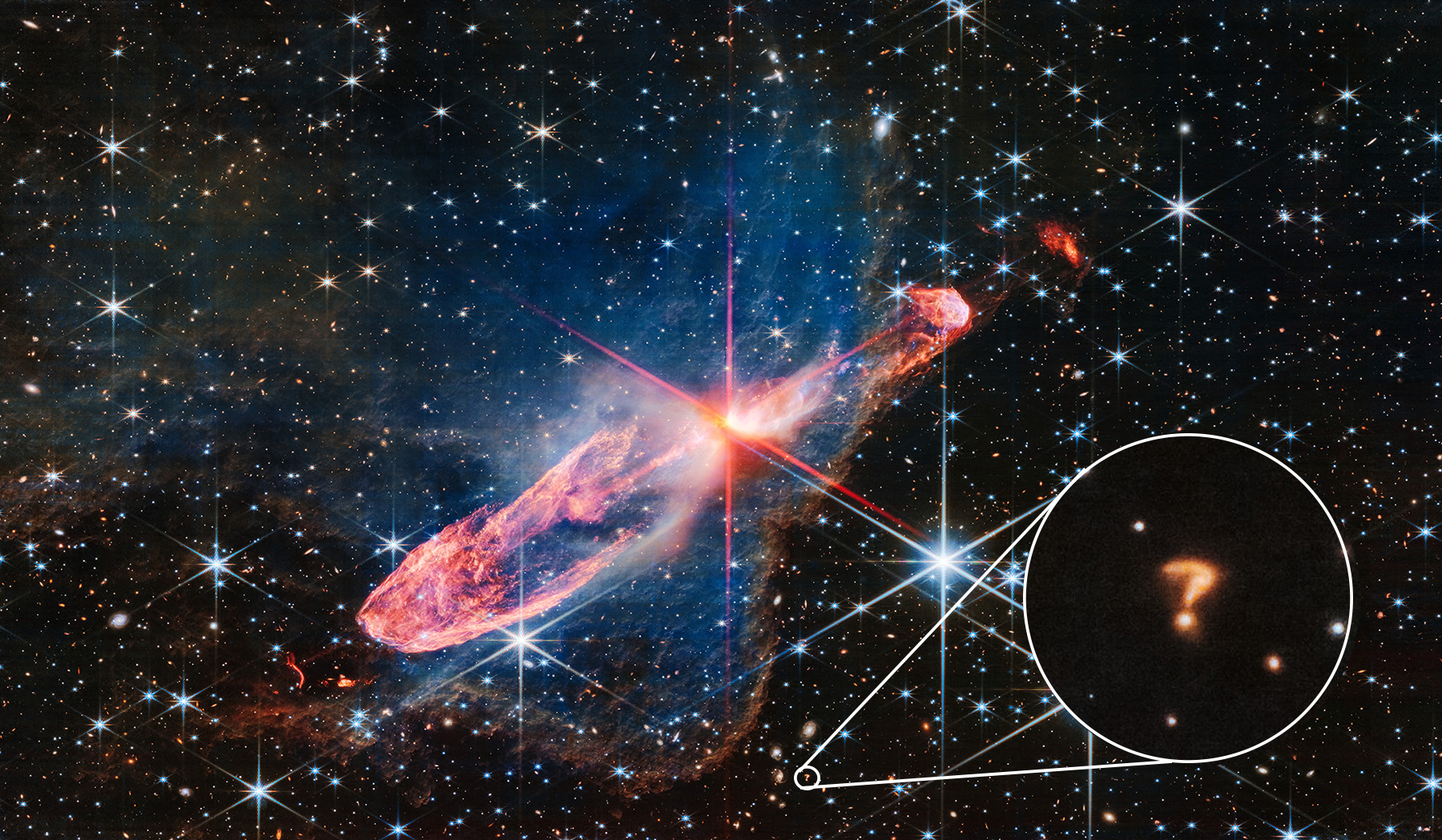
The deeper astronomers peer into the Universe, the more questions they have. Turns out, some of those questions come pre-punctuated.
Astronomers spotted the giant punctuation mark above in 2023, hiding in the background of an image taken by the James Webb Space Telescope (JWST) of a pair of young stars over 1,400 light-years away.
Fittingly, no one is sure what the cosmic question mark actually is. The leading theory is that it is a pair of interacting galaxies, where the structure forming the curved upper half has been distorted by the smaller galaxy forming the dot. For now, at least, the Universe is keeping us guessing.
Hit-and-run
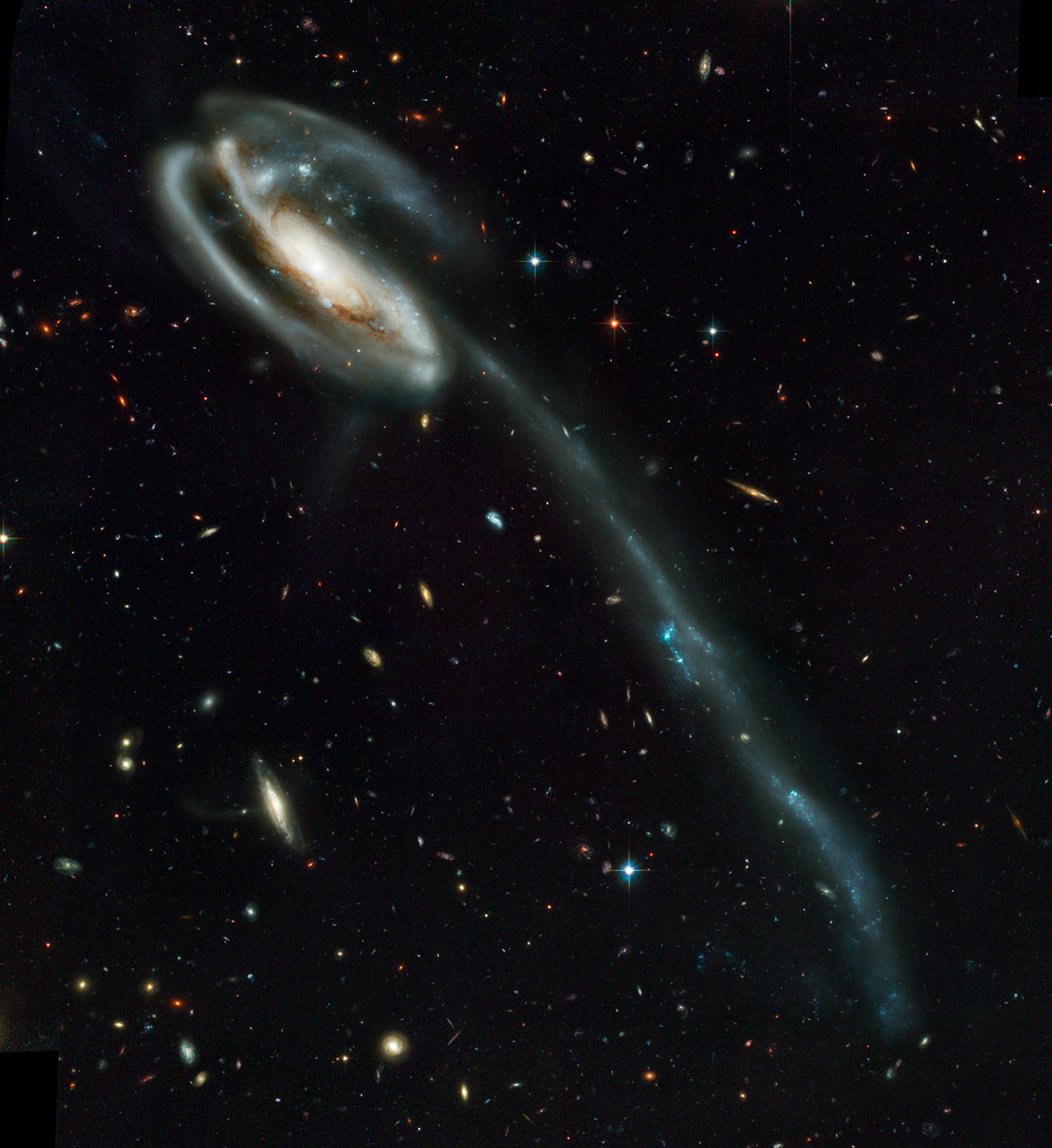
You’re looking at a cosmic crime scene – the site of a stellar hit-and-run.
Hundreds of millions of years ago, the large spiral galaxy in the top left ran over its smaller cousin. The collision stretched the unfortunate galaxy into a spectacular trail of stars around 280,000 light-years long.
What’s left of the pair is now known as the Tadpole Galaxy, though the cute name can’t hide its criminal past.
Popcorn moon
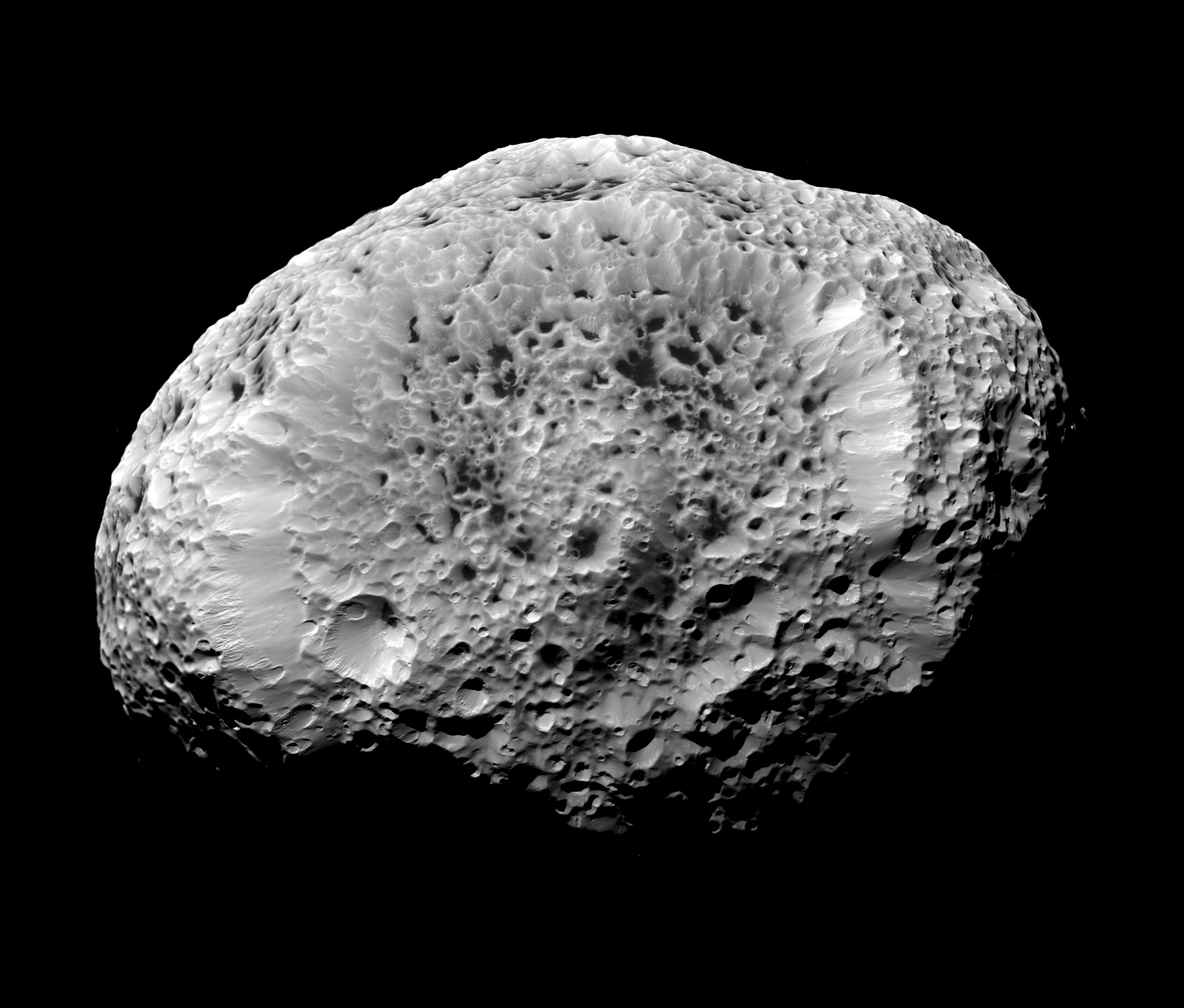
There are a lot of weird moons in our Solar System, but Hyperion is arguably one of the weirdest.
Saturn has almost 300 known moons, but Hyperion stands out for its bizarre density – or lack of it. At around 280km (174 miles) across, it’s a decent-sized chunk of rock, yet its gravity is barely strong enough to hold onto anything.
That weak grip has left its mark. Normally, when a meteor slams into a moon, the debris it kicks up falls back down, gradually smoothing over old craters.
On Hyperion, gravity is so low that the dust simply drifts off into space instead of settling. Impact after impact, the craters have piled up unfilled, carving Hyperion into its strange, spongy, honeycombed shape.
A molten galaxy
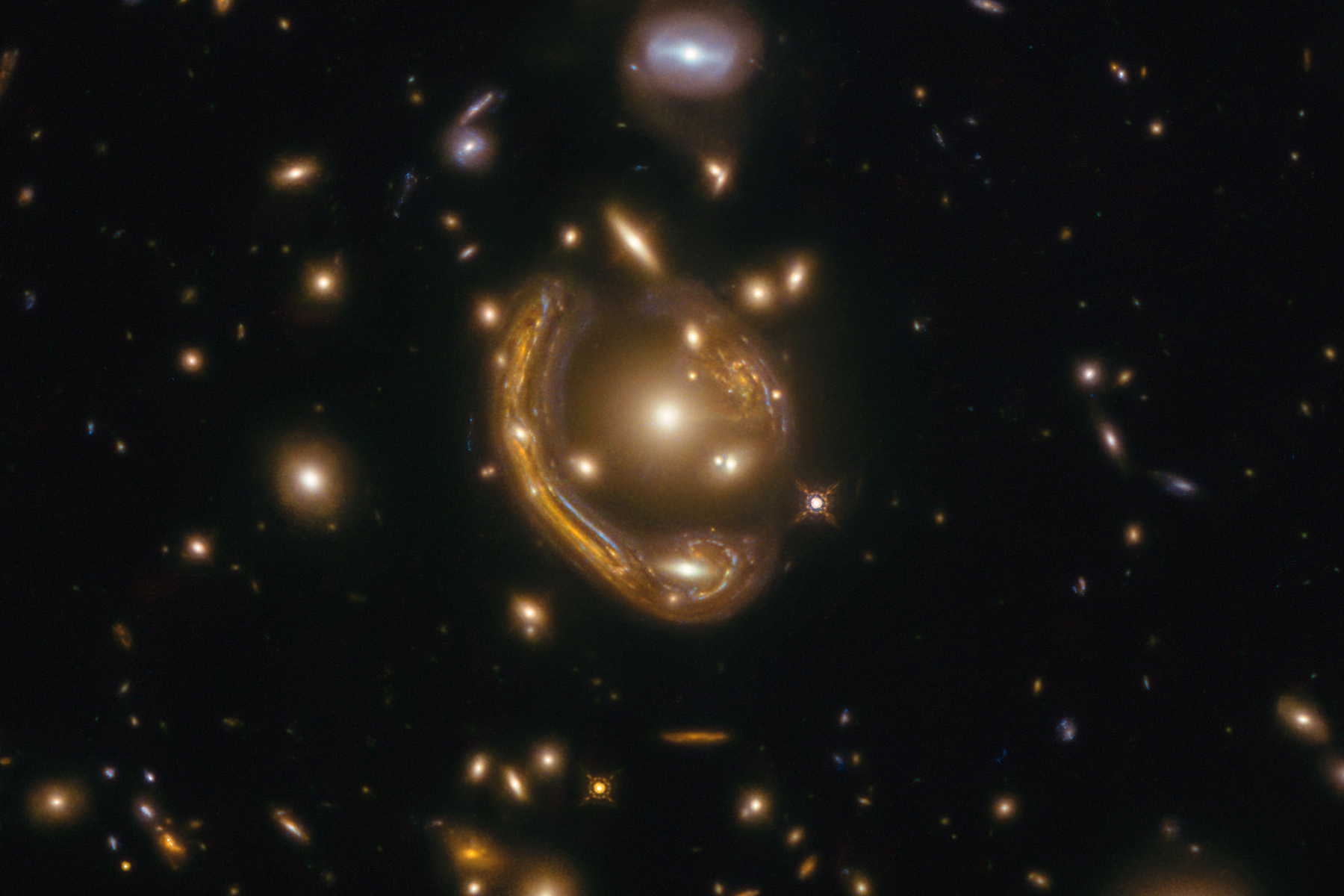
In 2020, the Hubble Space Telescope captured a distant galaxy that appeared to be melting, dripping down across the night sky.
The Molten Ring Galaxy is actually a spectacular example of gravitational lensing – a trick of gravity Einstein predicted over a century ago.
Essentially, light from that distant galaxy has to pass by a massive cluster of galaxies sitting between it and us, and the cluster’s gravity is strong enough to bend the light off course as it travels. When the distant galaxy, the cluster and the telescope all line up just right, the cluster acts like a giant cosmic lens, magnifying the galaxy behind it – though not without warping it out of shape in the process.
Such lensing can give astronomers a view of galaxies that would otherwise be far too faint and distant to see at all.
In this image, the Molten Ring has been magnified by a factor of around 20. Even though it’s over 9 billion light-years away and its image has been stretched out, it’s possible to make out the galaxy’s spiral arms.
Read more:
- 'The world isn't what it seems': 7 ways your brain is being fooled by the universe
- 30 astonishing close-up images that make the smallest things look epic
Space-age joyride
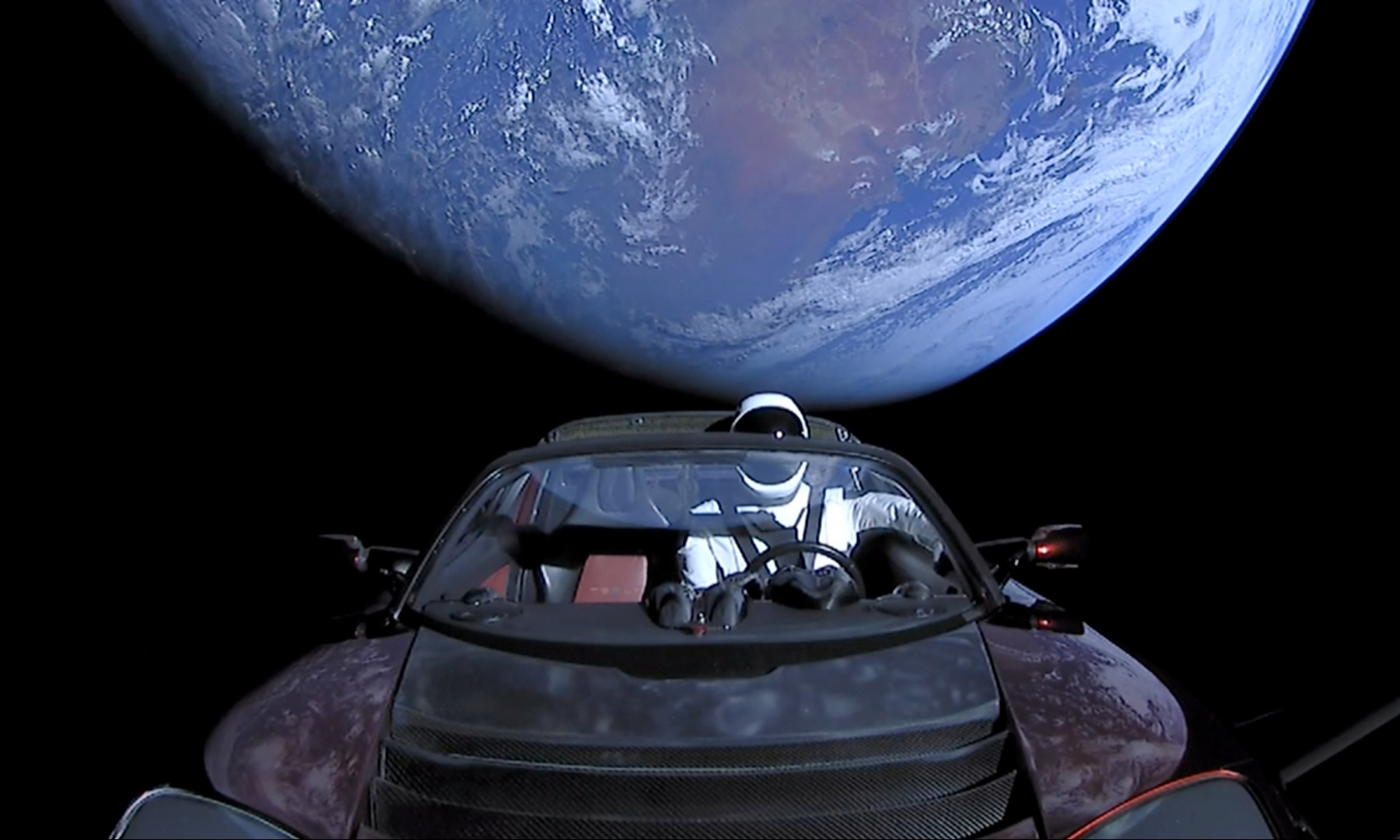
When SpaceX conducted a test launch of its Falcon Heavy rocket in February 2018, it needed something to carry on board as a payload. Because the launch was risky, the company didn’t want to risk an actual satellite worth millions of dollars.
Instead, it opted for what SpaceX founder Elon Musk referred to as “the silliest thing we can imagine” – a bright red Tesla Roadster.
The car previously belonged to Musk, who heads up both Tesla and SpaceX. Strapped into the driver’s seat was a spacesuited mannequin named Starman, after the David Bowie song, while the car’s stereo was set to loop Bowie’s ‘Space Oddity’ on repeat – a tune that, of course, no one in the vacuum of space would ever actually hear.
The dashboard flashed the words ‘Don't panic’, a wink to The Hitchhiker’s Guide to the Galaxy, a copy of which sat in the glovebox.
The car is now in orbit around the Sun and reaches a maximum speed of 121,000km/h (75,000mph).
Bubble trouble
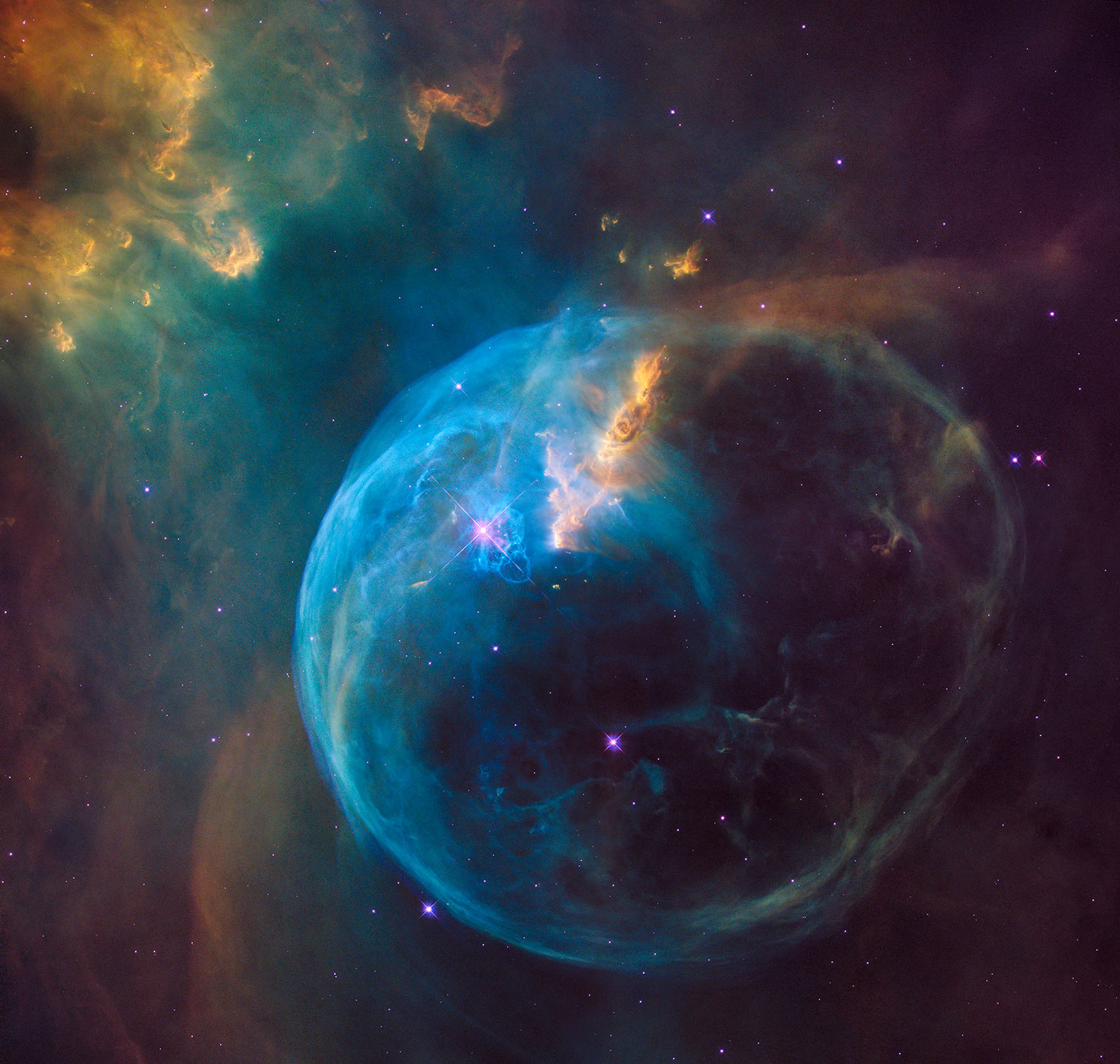
Even stars like to blow bubbles.
The stellar wind from a nearby star is blowing out at over 6.4 million km/h (4 million mph), carving out a seven-light-year-wide structure known as the Bubble Nebula.
The bubble’s colour comes from oxygen. As the racing winds slam into the surrounding interstellar material, the gas becomes hot enough to glow a bright blue.
Stellar stare-down
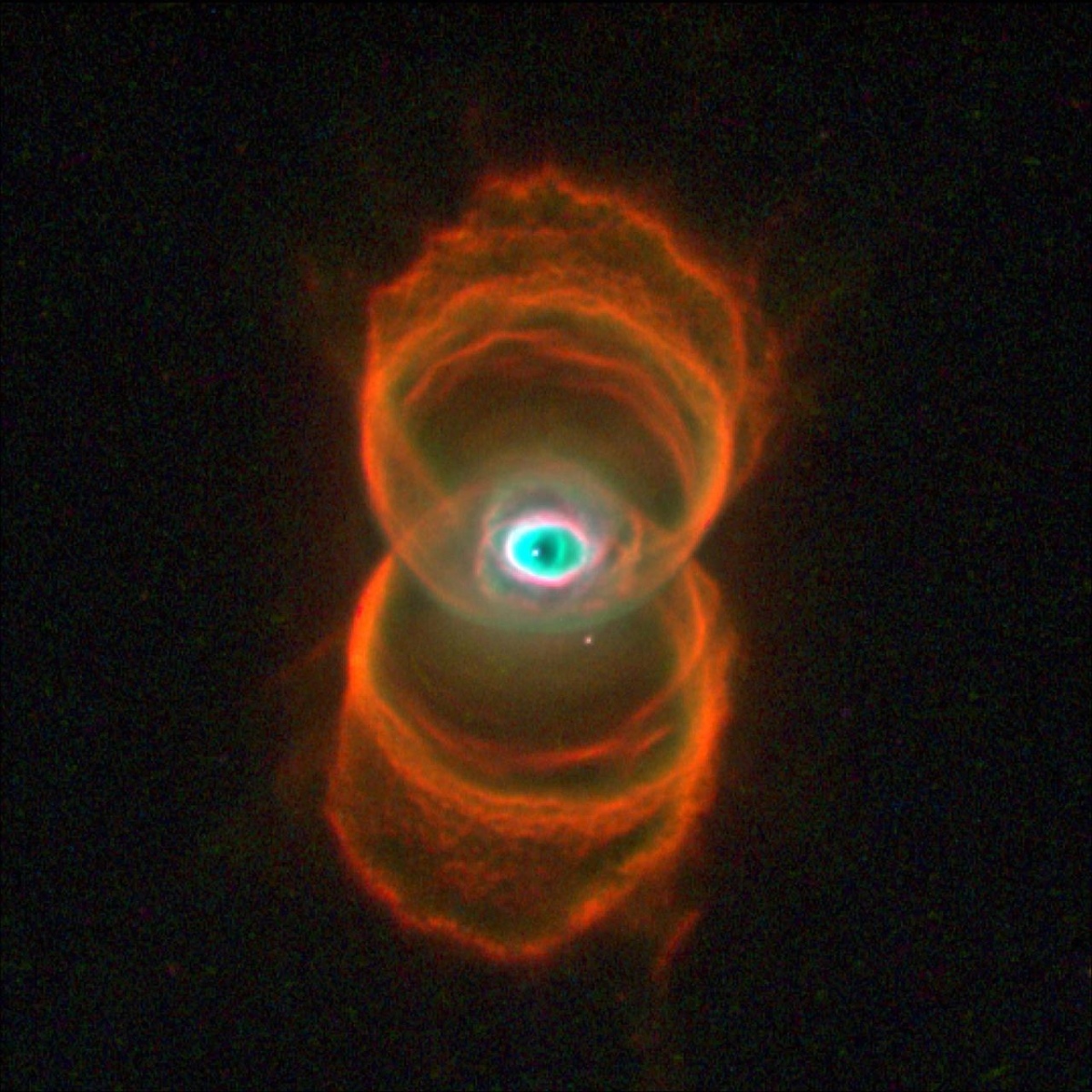
When astronomers look out at the Universe, they don’t expect the Universe to be looking back.
This eerie ‘eye’, known as the Cat’s Eye Nebula, is formed by a dying star. As the star reaches the end of its life, it sheds vast shells of gas, creating a striking hourglass-shaped structure that just happens to resemble an enormous eye.
In this Hubble Space Telescope image, rings of oxygen and hydrogen glow a vivid blue-green, lit up by the intense radiation pouring from the dying star at the centre.
Two-faced terrain
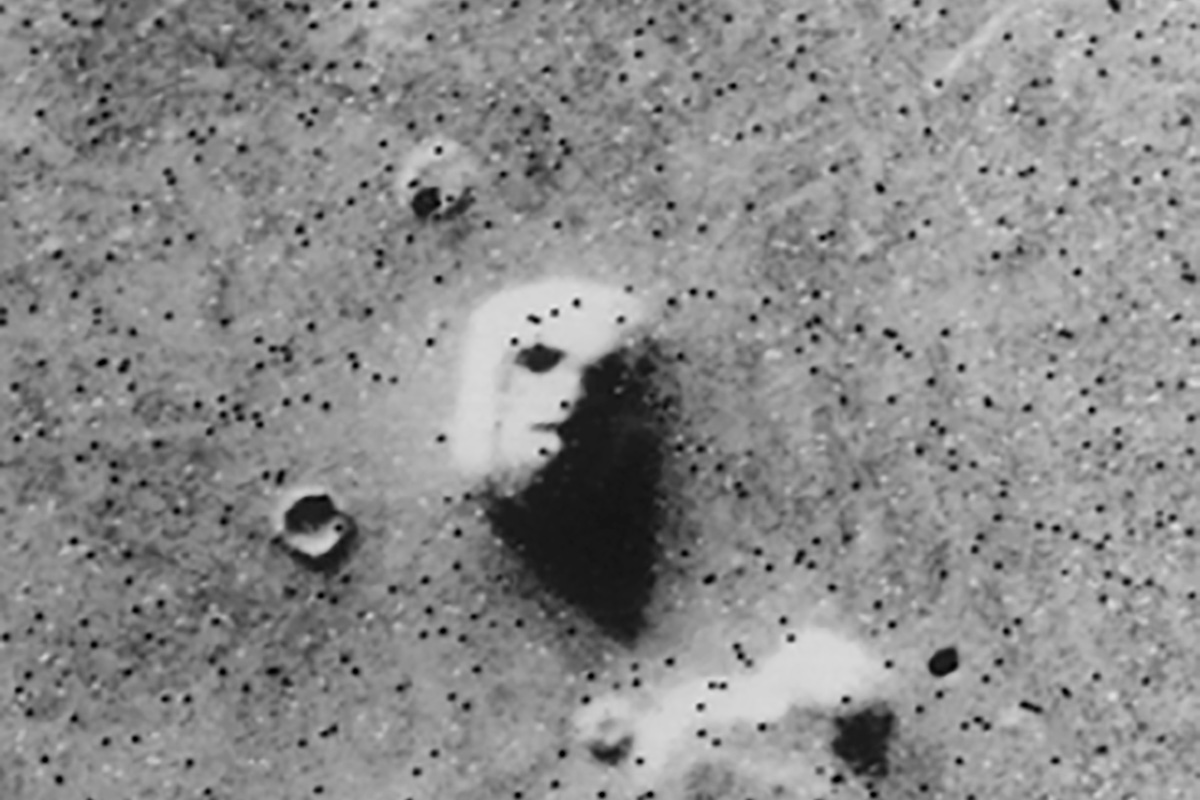
The Face of Mars is one of the most famous images of the Red Planet. Taken on 25 July 1976 by NASA’s Viking 1, it shows what appears to be a humanoid face staring out from the Martian surface.
There have been a host of wild theories about alien races building huge structures on the surface of Mars, but the actual cause is something much more human.
The ‘face’ is an example of pareidolia, where our brains are so hard-wired to recognise and read faces that we start to see them in all manner of inanimate objects.
The region has been imaged many times since, including at times when the Sun wasn’t casting such stark shadows. In these, all trace of the face completely disappears, showing it to be no more than a normal hill.
Echoes through eternity
In 2002, astronomers noticed a previously unremarkable star had suddenly brightened, briefly blazing 600,000 times brighter than our Sun before fading away just months later.
That flash of light is still travelling outward today, more than two decades on, rippling through a vast cloud of dust surrounding the star – V838 Monocerotis, roughly 20,000 light-years away. As the light spreads, it illuminates dust that has never been lit before, briefly revealing structures normally hidden in total darkness.
Astronomers have kept a close watch on this ‘light echo’ ever since, returning to photograph it again and again. Stitched together, those images form a time-lapse unlike almost anything else in astronomy.
Read more:
- ‘Very, very exciting!’: The Large Hadron Collider could be about to break the laws of physics, say experts
- 15 of the most mind-blowing photos taken this century (so far)
Upside-down lightning
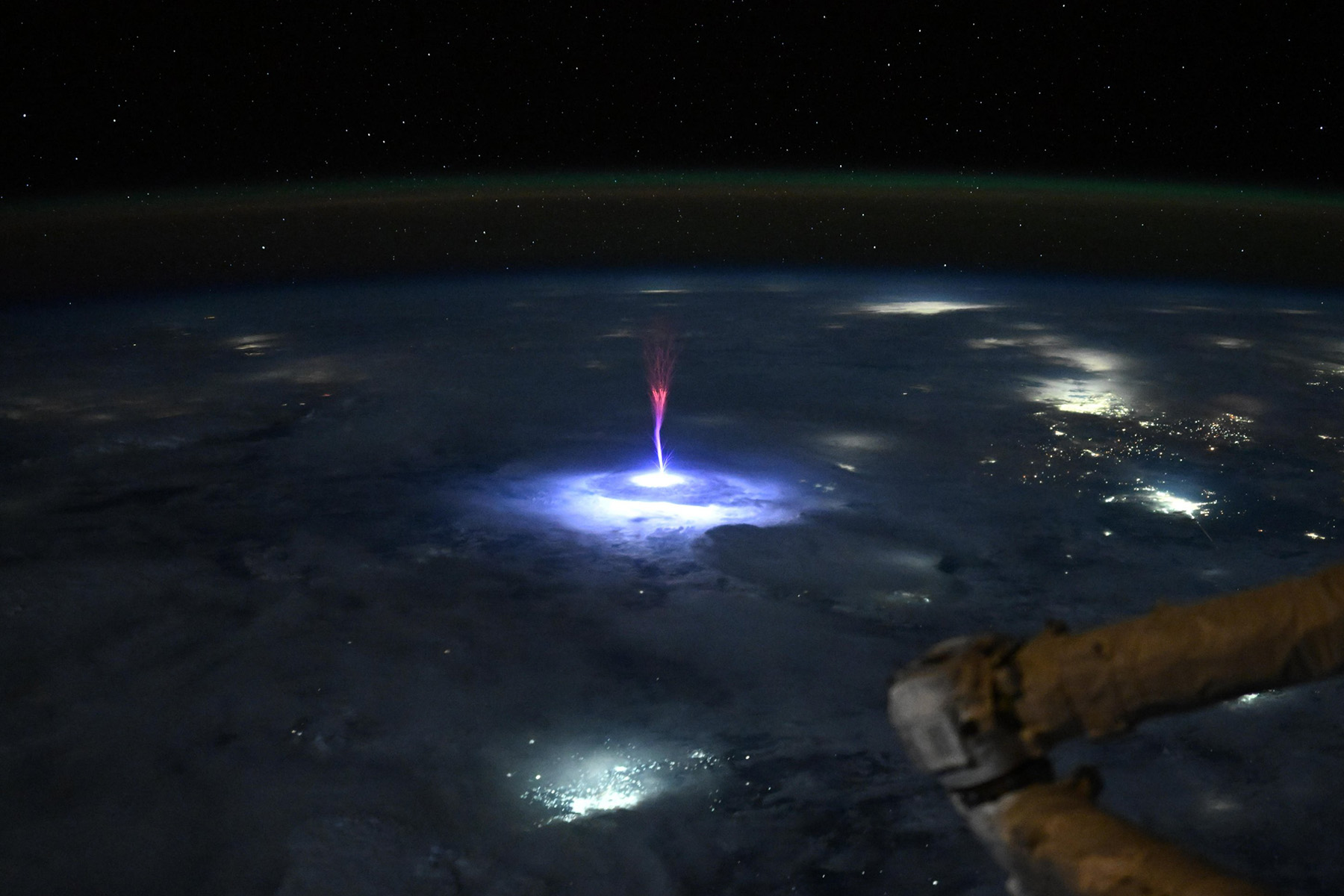
Don’t worry! There isn’t some mystic portal opening above our planet. Instead, this image – taken aboard the ISS – captures a very rare phenomenon known as a gigantic jet.
Such jets are a type of transient luminous event (TLE) – bright flashes of lightning triggered by intense electrical activity in the clouds below.
This jet occurred during a 2025 thunderstorm. Regular lightning strikes down from the clouds to the ground, lighting the clouds up from below – but this jet did the opposite, reaching up and forking out into the upper atmosphere instead.
Gigantic jets only last a fraction of a second and are very difficult to see from the ground. The bright red flash at the top of the jet comes from excited nitrogen in the upper atmosphere, the same gas that sometimes gives aurora its ruddy hues.
One giant leap for balloonkind
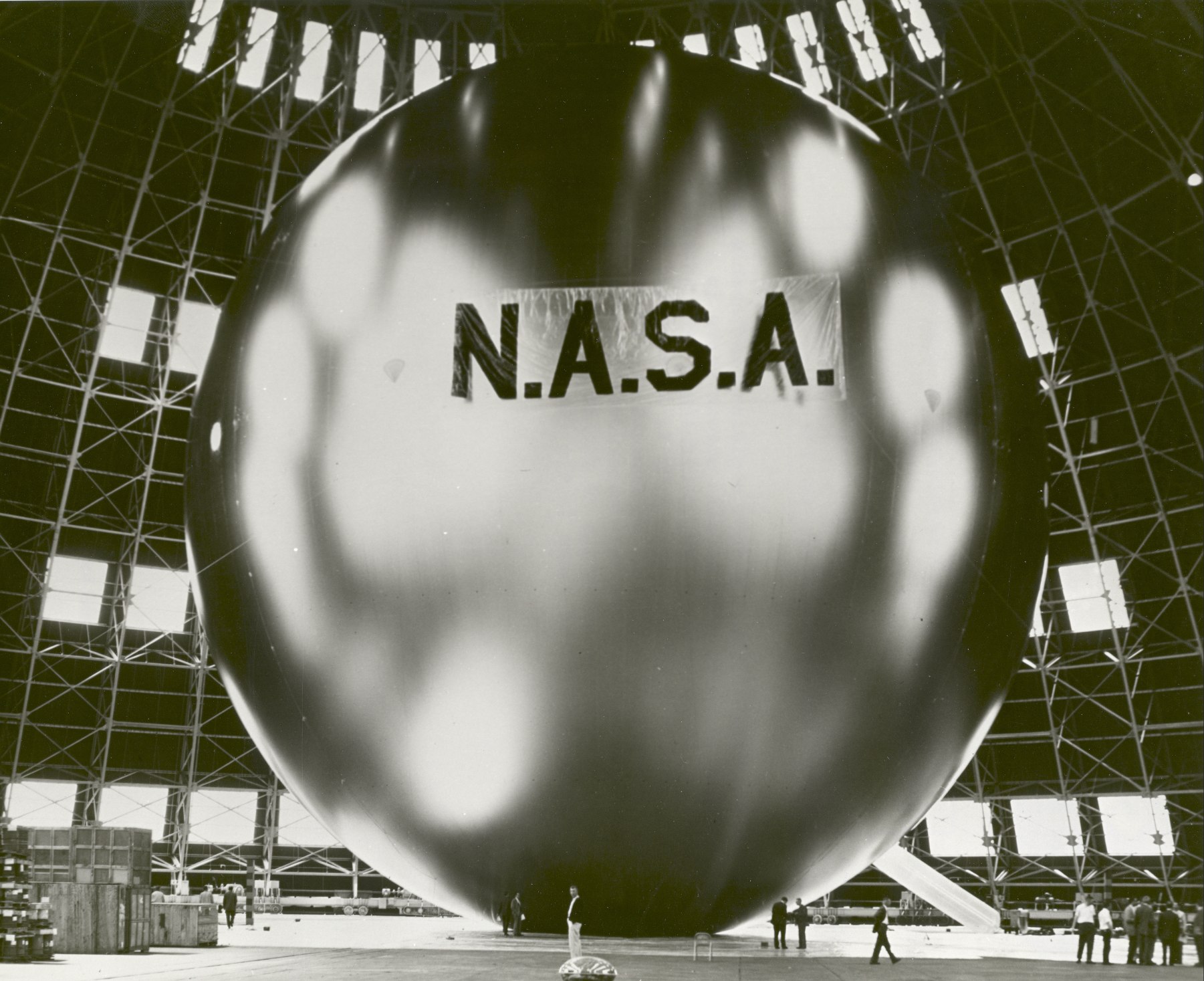
It’s only when compared with the tiny forms of the humans running around underneath it that the true scale of this huge space balloon really becomes apparent.
Dubbed Echo 2, the balloon was a massive 41m (135ft) wide rigid structure made of specialised polyester film and aluminium foil. It was filled with a lighter-than-air gas, meaning that when NASA launched it in 1964, the balloon floated up out of the atmosphere to an altitude of over 1,000km (620 miles).
It was so large that it was easily visible to the naked eye during the five years it remained in orbit.
The balloon itself didn’t carry any instruments other than a beacon to track its position, as there was no way to track its motion through the heavens. Instead, NASA used its reflective surface to bounce communication signals from space to the ground before more sophisticated techniques were developed.
Cackling clouds
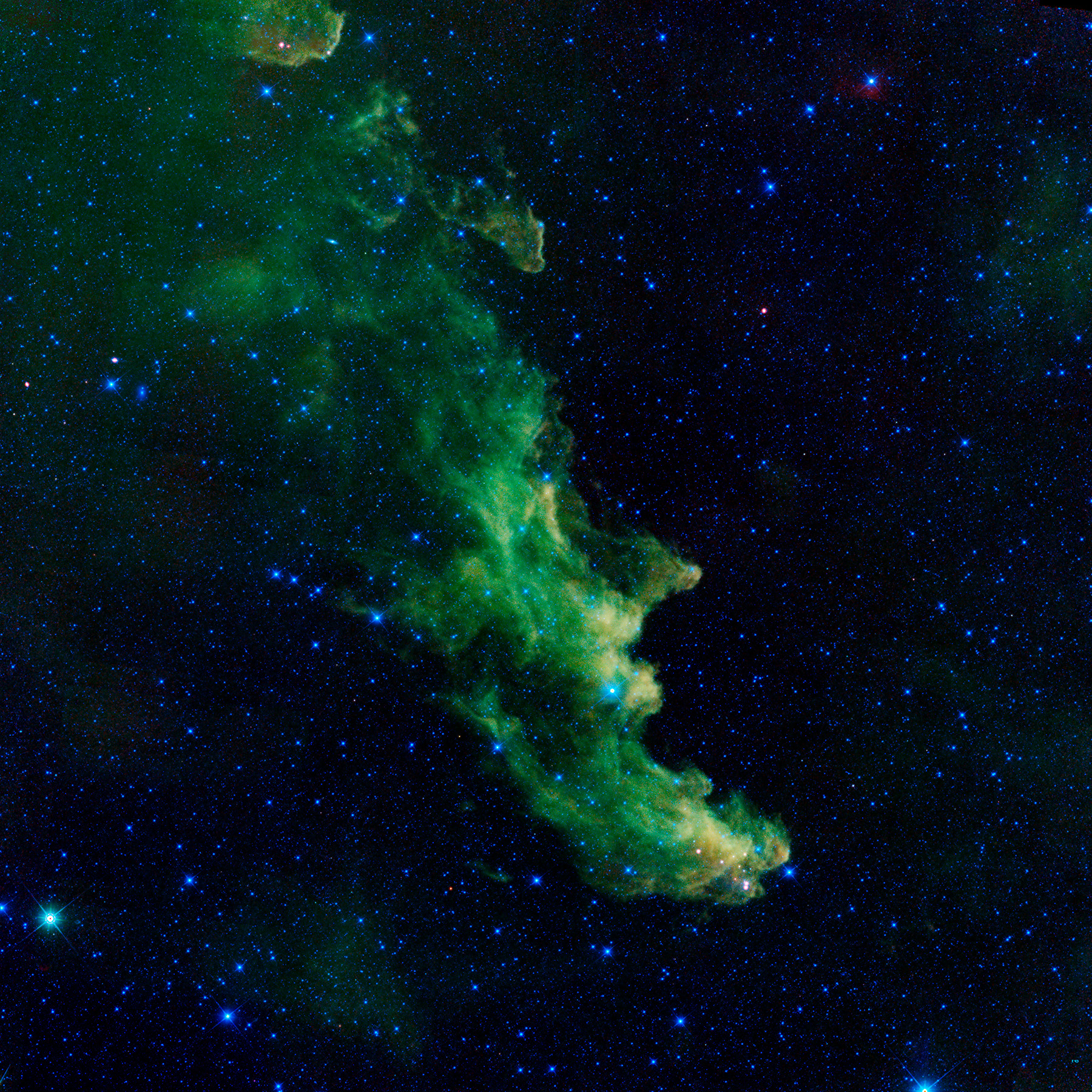
Look carefully into the night, and you might just be able to spot a ghostly visage.
It’s not hard to see where the Witch Head Nebula gained its name. The cackling face is around 900 light-years away, created from the wisps of gas left over from a long-dead supernova.
Why the ghostly green glow? Answer: the gas itself isn’t warm enough to shine on its own. Instead, it’s lit up by nearby Rigel, one of the brightest stars in the sky and part of the neighbouring constellation of Orion.
Tycho’s big bang
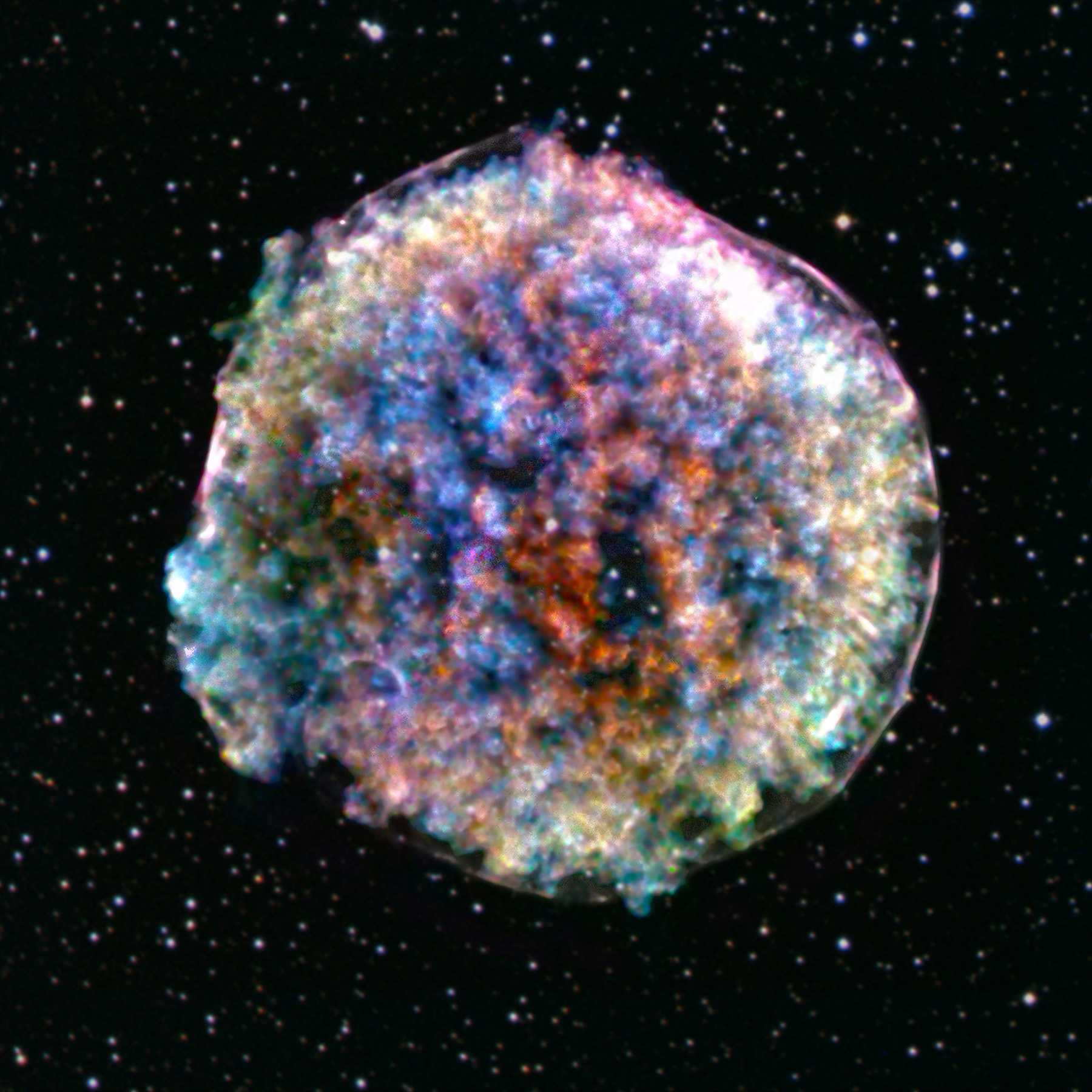
This weird, knobbly object looks more like something you’d view with a microscope than a telescope.
In fact, it’s the aftermath of one of history’s most famous stellar explosions: the bubble is the expanding debris from a supernova first witnessed by Danish astronomer Tycho Brahe in 1572.
The explosion was a ‘Type Ia’ supernova, where a white dwarf pulls material from a neighbouring star until it reaches a critical mass and explodes.
More than 450 years later, the debris is still racing outwards at over 5,000km/s (3,100 miles per second). As it ploughs into surrounding clouds of gas, the resulting turbulence causes the material to bunch into dense clumps, creating the bubble’s strange, textured appearance.
Shell shocked
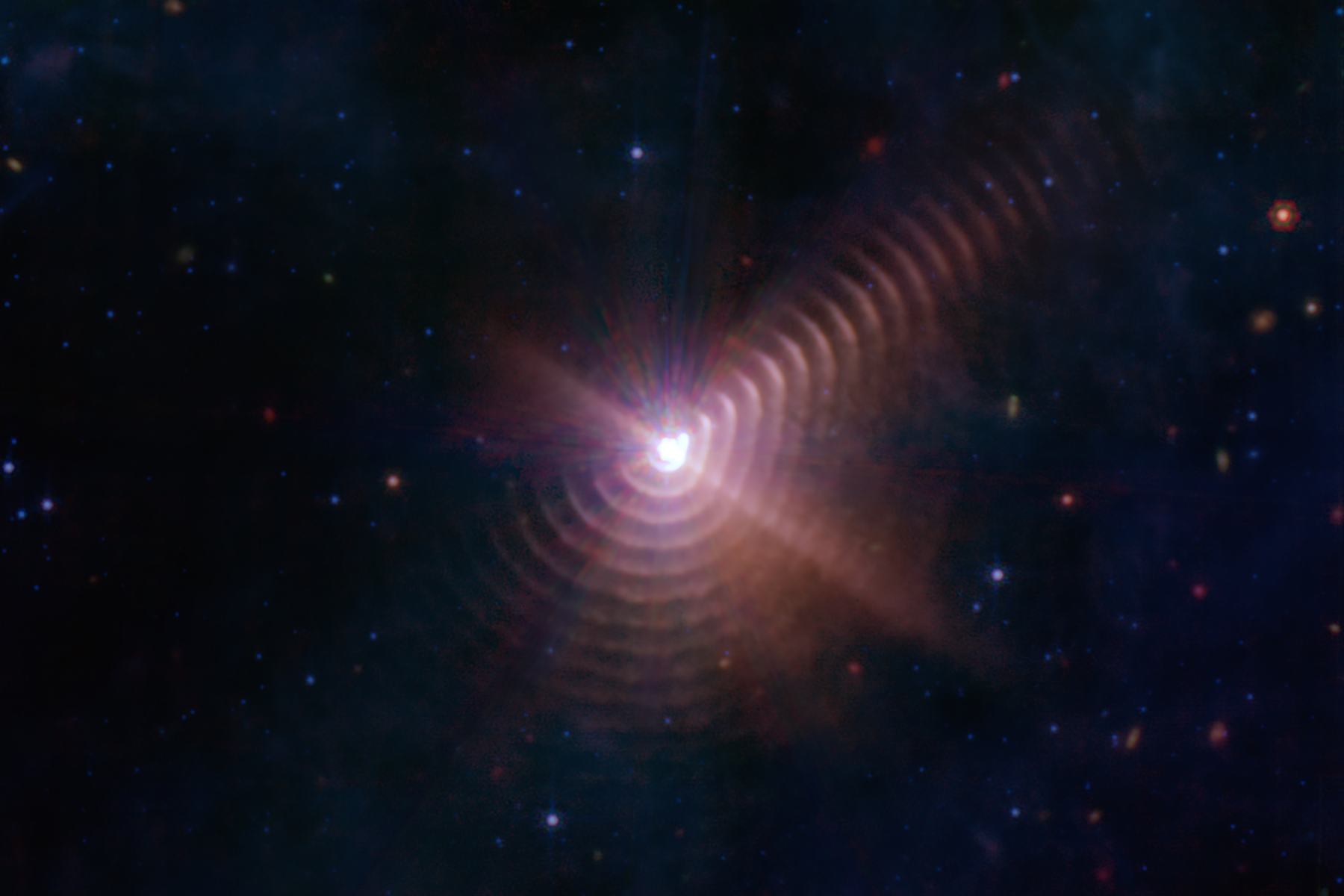
When astronomers first saw this image of Wolf-Rayet 140 – a pair of massive stars locked in orbit around each other – taken by the JWST in 2022, they assumed something had gone wrong with their camera. Surely nothing could cause those strange, perfectly stepped rings.
It turned out, however, that this is genuinely what the dust around the binary star system looks like.
That dust? It’s a by-product of the stars’ orbit, which brings them close together once every eight years. Each time they swing past one another, their stellar winds collide and compress, throwing off a fresh ‘shell’ of dust that expands outward into space like a smoke ring.
This image captures 17 of those layers, each marking one close encounter between the stars. Together, they preserve more than 130 years of the system’s history, illuminated by the very stars that created them.
The Un-ringed planet
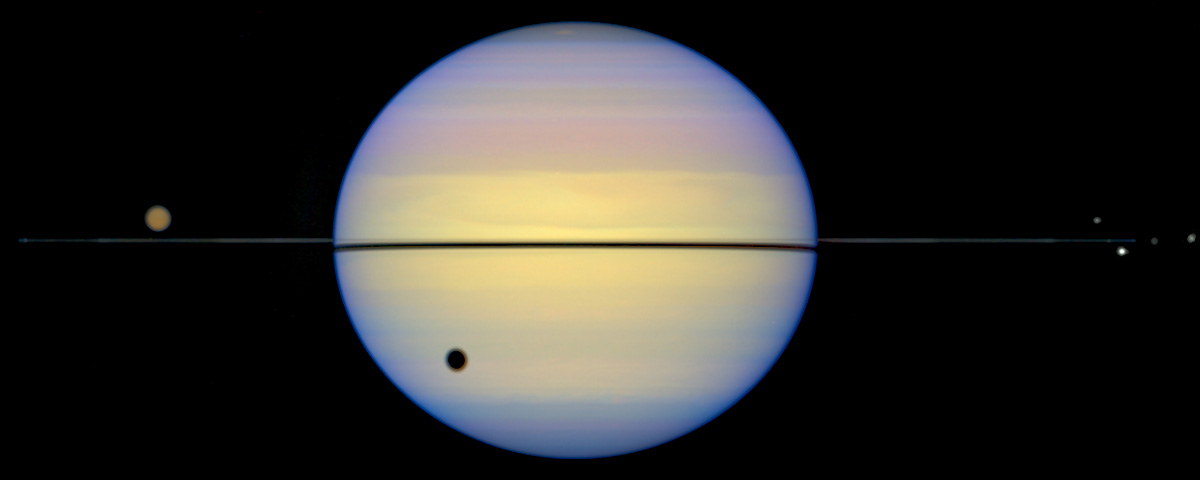
Saturn makes a strange sight when it’s robbed of its most famous feature – its rings.
Normally, we can see the rings because the planet is tilted at 26.7°. However, every 13 to 16 years, Earth and Saturn are positioned such that we’re looking at the rings edge-on – as happened most recently in March 2025.
Although the rings are 282,000km (175,000 miles) wide, they are only around 10m (33ft) thick, meaning they completely disappear.
Here, Hubble is barely able to make out the rings, though their shadow still casts a dark band across the planet.
Ravioli moon
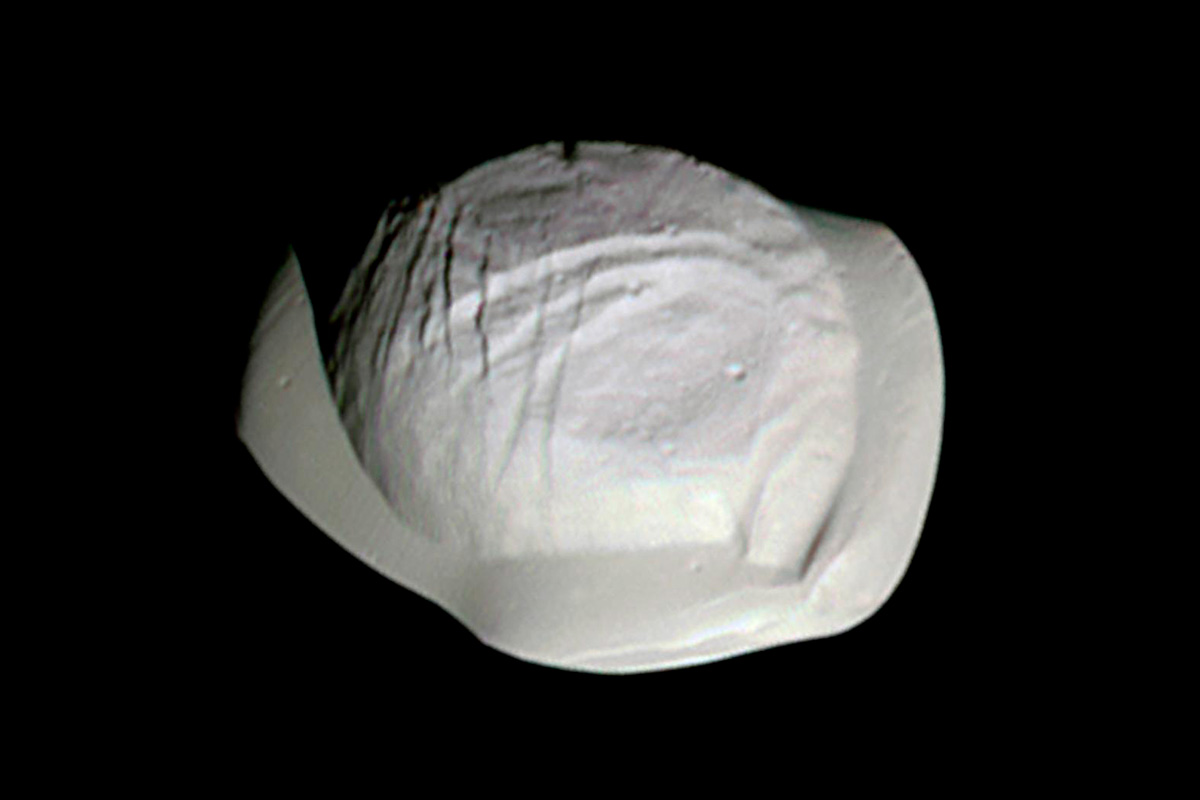
Despite what it looks like, this isn’t a piece of space ravioli. It’s Pan, one of Saturn’s many moons, captured in close-up by the Cassini spacecraft in 2017.
Measuring just 35km (22 miles) across, Pan orbits inside Saturn’s rings. It is a shepherd moon, meaning it helps clear out one of several gaps found in the rings.
Exactly how Pan came by its skirt – known as an equatorial ridge – is a mystery. The leading theory is that dust and debris swept up from the rings piled up right around its equator, building the ridge we see today.
Bubbles within bubbles
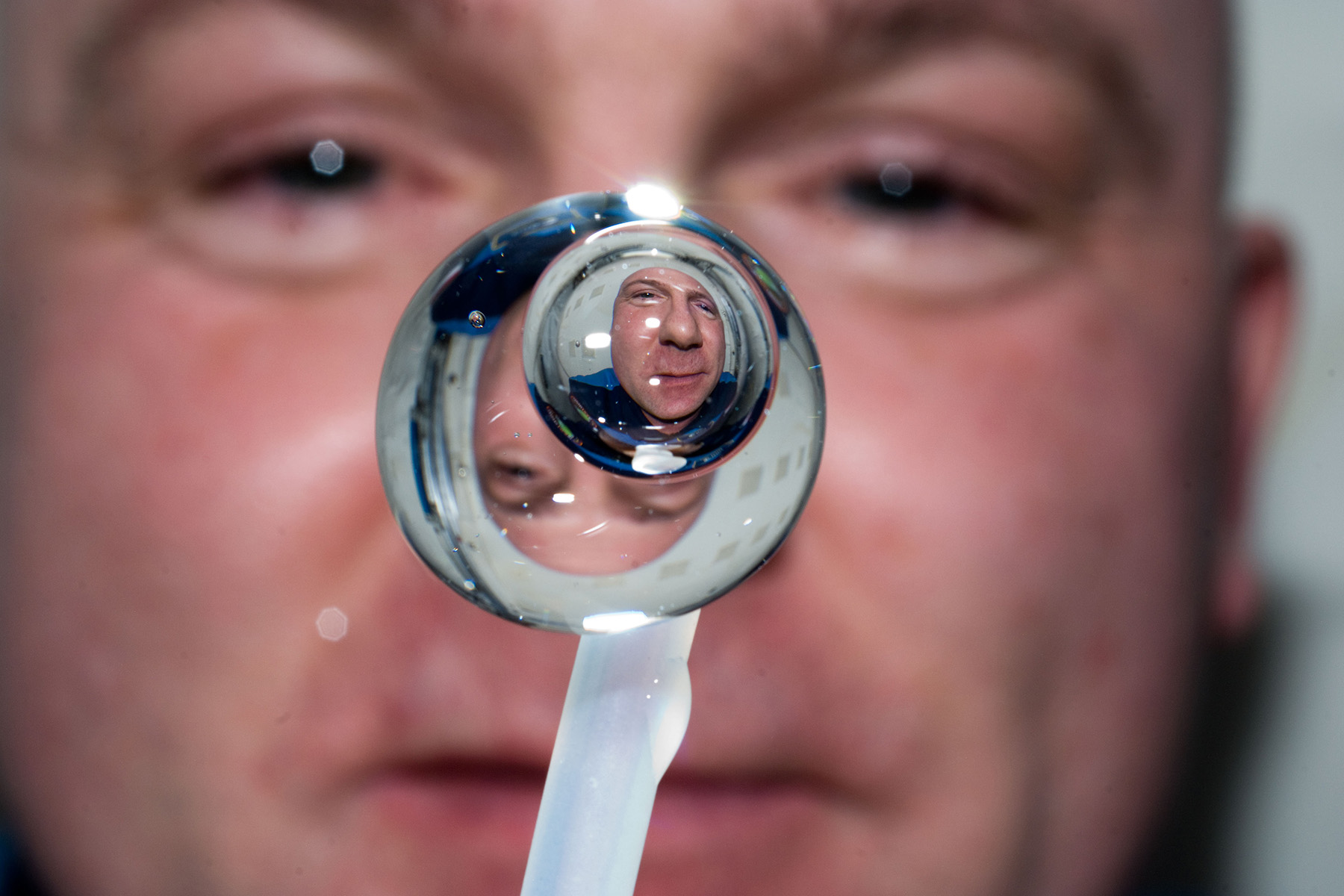
Onboard the ISS, a simple drop of water can become an astronaut’s favourite plaything.
The microgravity means liquids float in the air, forming orbs of liquid held together by surface tension. It’s not uncommon for astronauts to squeeze out a drop and then take a sip from where it’s floating.
Another popular pastime is taking a selfie through the water bubble, which flips the astronaut’s image upside-down.
Astronaut André Kuipers took things a step further in 2012, however, by blowing an air bubble into his water, which transformed his hydration break into a funhouse mirror.
Read more:
