The top IQ scores ever reported are between 200 and 280 – but what exactly does that mean? Well, intelligence quotient (IQ) is used to measure a person’s level of, you guessed it, intelligence.
Scores are gathered by participants completing standardised tests that measure abilities in puzzle-solving, memory, and more.
Based on an average score of around 100, your given IQ score indicates how your intelligence compares to that of the general population. Below 85 is seen as a relatively low score, while a score of 130 and above is exceptionally high, ranking in the top 2 per cent of the population.
It is difficult to accurately judge intelligence and it’s always worth taking IQ scores with a pinch of salt. As a study in Frontiers in Systems Neuroscience states, “intelligence test scores are often misunderstood and can be misused”.
Another factor to consider: an IQ score is not a unit of measurement. For example, someone with an IQ score of 130 is not 30 per cent smarter than someone with an IQ score of 100. Given the changes to testing across the decades, it is also tricky to compare scores achieved at different times.
There is no clearly defined upper limit for IQ scores. In practice, however, it's tricky to validate exceptionally high scores, as they fall so far beyond the range covered by standardised IQ tests.
Even so, some people claim to be in a very small minority of exceptionally brainy people, with reported IQ scores exceeding 200.
Who has the highest IQ in the world?
Pictured above, Terence Tao is said to have one of the highest IQs in the world, with an impressive estimated score somewhere between 220 and 230.
This score has not been officially documented, but is an estimate extrapolated from Tao’s exceptionally high scores in childhood tests. If the youngest-ever UCLA professor does indeed score an IQ of 230, he is probably top of the charts.
Nicknamed the ‘Mozart of Maths’, Tao studied university-level calculus at just age nine, and started his PhD at Princeton at 16. He has now published at least 17 books and more than 300 research papers.
From 2021, Tao also served on Joe Biden’s President’s Council of Advisors on Science and Technology.
Effectively tying for the title, though, is Marilyn vos Savant. Her recorded IQ in the Guinness World Records was 228, and was reprinted as the highest globally in every edition published between 1986–1989.
From 1986 until 2023, Marilyn used her incredible intellect to write Parade’s famous ‘Ask Marilyn’ column, where readers addressed questions to the woman with the ‘highest recorded IQ in the world’.
However, vos Savant hasn’t always been as accepted by her peers as her high-IQ male counterpart. Unfortunately she found herself at the centre of academic scandal, when a reader asked her to solve the popular probability dilemma – the Monty Hall problem.
Though Marilyn’s answer to the reader would ultimately turn out to be correct, the magazine received over 10,000 angry letters from disgruntled mathematicians of the day telling her she was wrong.
Among these, around 1,000 carried the signature of PhD holders. One letter apparently sneered: "Maybe women look at math problems differently than men."
Marilyn’s record IQ score was discontinued in the Guinness World Records in 1990, when IQ scores were deemed too unreliable to document.
In February 2026, however, Guinness World Records awarded the record for 'most people to sign up for an IQ test in one month'. It went to 61,980 people in Riyadh, Saudi Arabia.
Marilyn Vos Savant photographed in 1986 - Credit: Paul Harris via Getty Images
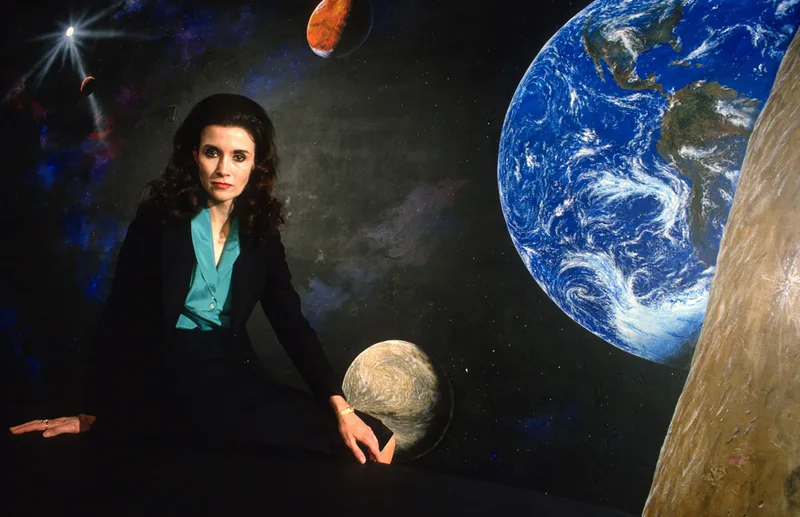
Marilyn Vos Savant photographed in 1986 - Credit: Paul Harris via Getty Images
Coming a close second to Vos Savant is Christopher Hirata, who is said to have a staggering IQ score of 225.
Who has had the highest IQ ever?
It's tricky to judge who has had the highest IQ ever. For many great minds, the IQ test simply did not exist during their time on Earth. The validity of others who are said to have taken an intelligence test is in question, too, as official records are tough to locate.
However, this hasn't stopped some humans from being declared to have had the highest IQ ever.
William James Sidis
American child prodigy and mathematician William James Sidis (1898–1944), circa 1915 - Credit: Archive Photos via Getty Images
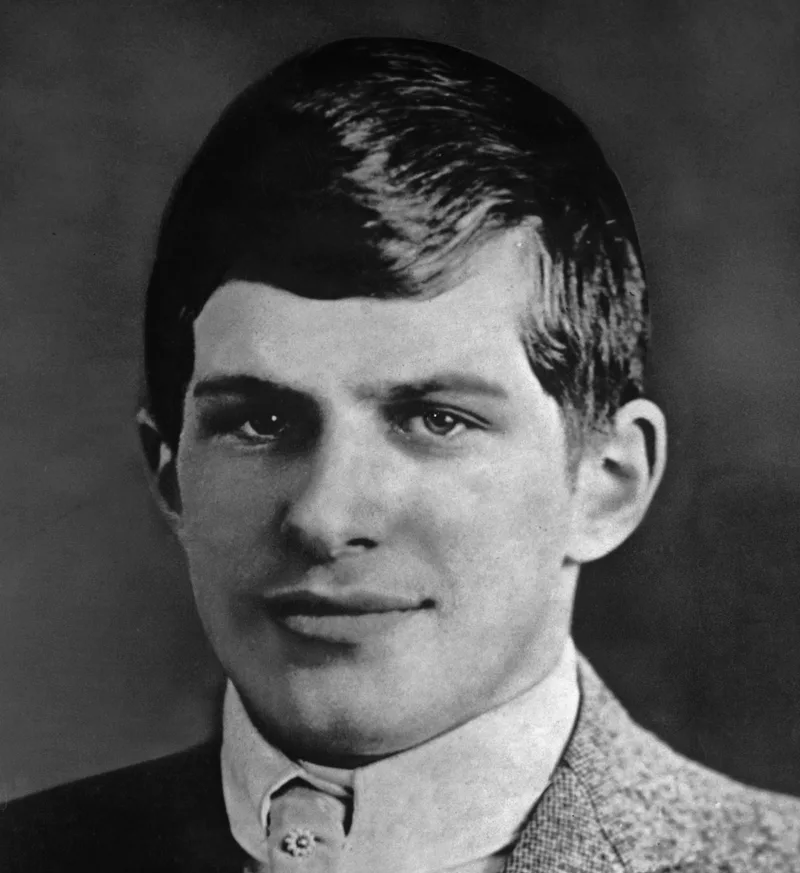
American child prodigy and mathematician William James Sidis (1898–1944), circa 1915 - Credit: Archive Photos via Getty Images
Said to be one of the smartest people who has ever lived, William James Sidis is the benchmark for child prodigies. He was reportedly able to read the newspaper aged just 18 months and entered Harvard University aged 11, graduating at 16.
He wrote various studies, including creating a constructed language in the Book Of Vendergoord (aged 7) and The Animate and the Inanimate (which covered cosmology and the reversibility of the second law of thermodynamics and predicted the black hole).
In Psychology For The Millions, Abraham Sperling details how he had been told by Helena Sidis (William's sister) that "a few years before his death, her brother Bill took an intelligence test with a psychologist."
Sperling explains that William Sidis' "score was the very highest that had ever been obtained. In terms of IQ, the psychologist related that the figure would be between 250 and 300."
In the years since, however, the claims of Sidis' IQ score have been heavily disputed.
Ada Lovelace
The first computer scientist, Ada Lovelace is often mentioned when it comes to the most intelligent people who ever lived. Through her work on the Analytical Engine, she is often credited as the world's first computer programmer.
Albert Einstein
German-born physicist Albert Einstein (1879–1955) - Credit: MPI via Getty Images
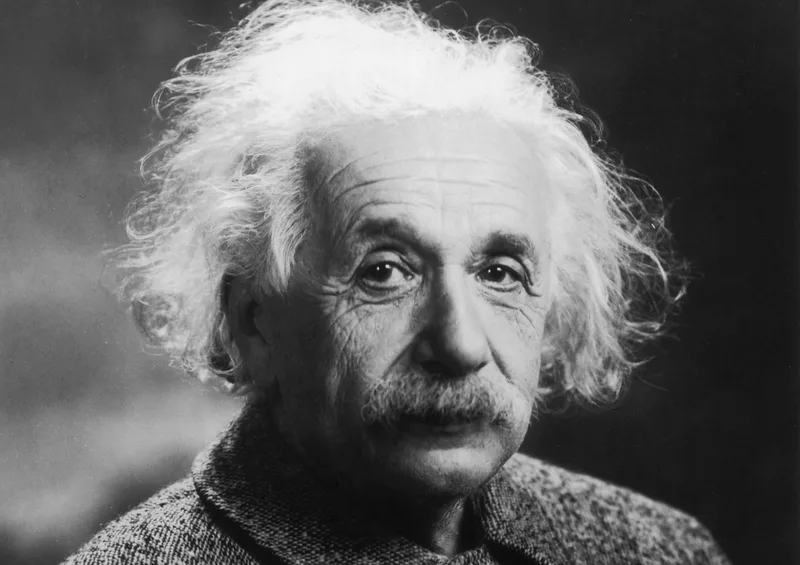
German-born physicist Albert Einstein (1879–1955) - Credit: MPI via Getty Images
Often regarded as one of the smartest people who ever lived, it is often claimed that Einstein's IQ was actually lower than you might think. Given that the test wasn't around when Einstein walked the Earth, however, it's impossible to know just how intelligent this famous scientist actually was.
Leonardo da Vinci
Another who is often regarded as one of the smartest people ever, Leonardo da Vinci was a mathematician, engineer, botanist, cartographer and much more, so it’s hard to single out one achievement.
Sho Yano
Sho Yano was a college freshman at the tender age of nine and became a medical doctor at just 21. This reportedly made him the youngest student in the University of Chicago's history to receive an MD.
Katherine Johnson
Portrait of NASA human computer and African-American mathematical pioneer Katherine Johnson (1918–2020) - Credit: Smith collection, Gado via Getty Images
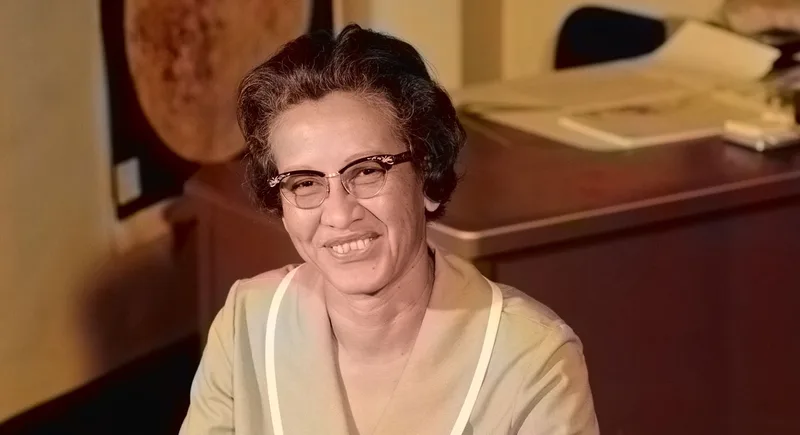
Portrait of NASA human computer and African-American mathematical pioneer Katherine Johnson (1918–2020) - Credit: Smith collection, Gado via Getty Images
You will have come across mathematician Katherine Johnson if you've seen the Oscar-nominated film Hidden Figures. Her work was vital in early NASA space missions and played a role in getting astronauts John Glenn and Alan Shepard into space. Johnson's orbital calculations were even used in the Apollo missions.
Stephen Hawking
What can be said about Stephen Hawking? The Simpsons legend is one of history's most famous theoretical physicists and cosmologists. He famously showed that black holes radiate energy, slowly shrink, and explode in a flash of gamma rays, with Hawking radiation becoming a key cosmological theory.
How accurate are IQ tests?
Unfortunately, lots of different factors can weigh into how a person performs in an IQ test. Research has shown that some individuals score very differently when taking the same test at different times in the day, or when taking more than one kind of IQ test at the same age.
A person’s familiarity with taking tests and their anxiety around testing can severely limit their score.
The age at which you take the test can also have an impact – retesting children who achieved high IQ scores at a young age revealed that they dropped as many as 9 points when retested as adolescents.
Is IQ the best way to measure how intelligent someone is?
Psychologist Raymond Cattell argued that intelligence consists of different abilities that interlink and cooperate with each other to produce an overall intelligence, which early tests failed to take into account.
He proposed the idea of ‘fluid intelligence' – being able to think flexibly and reason your way through problems – and 'crystallised intelligence', which is based in the hard knowledge of facts and skills that you gain throughout life.
He also suggested that as you age, you rely more on your crystallised intelligence than your fluid intelligence, meaning that not only are there polar-opposite types of intelligence coexisting within a person, but that they are likely to change over time.
But why stop at two? Psychologist Howard Gardner at the Harvard Graduate School of Education argues that there are multiple kinds of intelligence a person can gain and grow over the course of their lives.
In his research, he has assessed mathematical, verbal, visual-spatial, physiological, naturalistic, self-reflective, social and musical aptitudes.
Additionally, in the 1990s, Drs Salovey and Mayer also put forward their model of Emotional Intelligence (EI), a method of measuring a person’s ability to perceive, understand and manage emotions.
Read more:
- 22 pioneering women in science history you really should know about
- 15 of the world's weirdest-ever inventions
- 'It's rigged': The dirty secret behind what IQ scores really measure
To have your mind blown by more science, check out our ultimate fun facts page.
Additional reporting by Steph Santos Paulo