
Spotting a liar is a vital skill. We all want to be better at it because lies can affect us in any number of ways, some of them harmful.
The trouble is, as studies have shown, reliably spotting when someone is lying is difficult. And there's a simple reason why: liars don't all look or behave the same way when they're lying.
So, it's no good trying to seek them out.
If we're going to catch a liar, we need to use another sense: our hearing.
We need to use our ears rather than our eyes because, as recent research is revealing, the things people say and the way they say them can provide clues to whether they're trying to deceive us.
These linguistic indications can vary as liars don’t all lie the same way or in the same context, and there are different motivations to lie.
Lies can be spontaneous, told in the moment without any planning, or they can be made up in advance. Sometimes they’re even based on a warped version of the truth.
As well as creating the lie, a liar might also have to navigate and adapt their responses to the situation or the different questions they’re asked.
In short, it’s not easy being a liar, but we can make it a lot harder for them if we learn to listen more closely to the things they say.
Here are five ways a liar’s words can help unmask them…
1. Repetition
Repetition in a person’s story is something to listen out for.
A study published in Psychological Bulletin in 2003 found that when someone repeats themselves, it should put us on high alert that they could be lying.
There are various forms of linguistic repetition – it could be the repeated use of a pronoun. Take, for example, Dr Brian Crickitt, the Australian GP who murdered his partner by injecting her with a fatal dose of insulin.
He lied about the circumstances of her death and in his interview with the police said: “I, I, I, I, well… I, well… You know… I… What I said was wrong about where I was last night.”
Crickitt appears stuck on the pronoun as if he’s unsure how to proceed. This may be due to being asked a question that he was unprepared for.
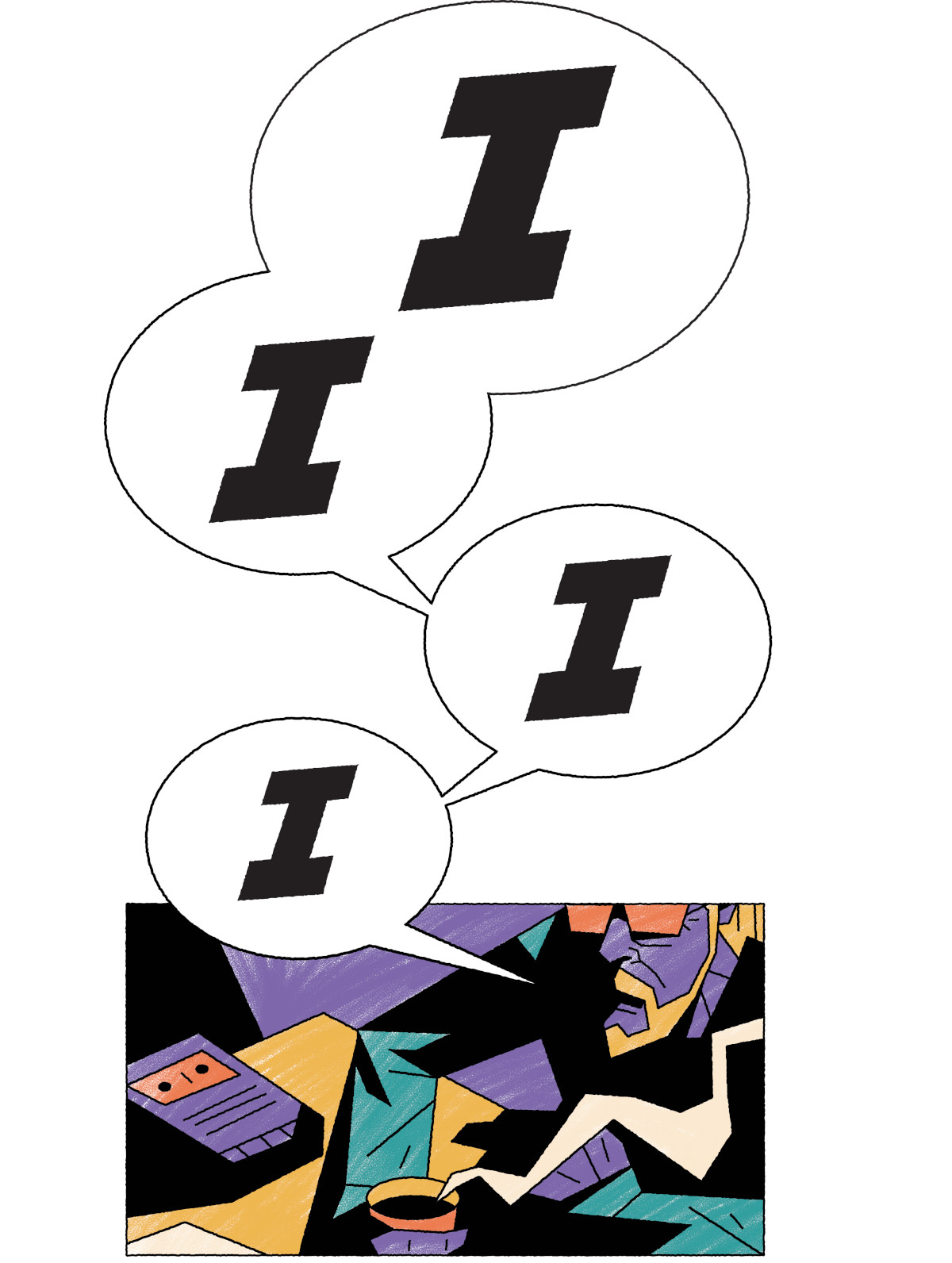
Repetition can also occur with an adjective or verb. This is usually when a liar is finding it hard to add more detail to a fabricated story. Such repetition can be heard in the US actor Jussie Smollett’s account of being attacked.
It appears to be factual until he gets to the crucial part of his story. At this point, he says something that should be an immediate red flag:
“We ended up tussling by the stairs. Err… [we were] fighting. Fighting. Fighting.”
Having lots of repetition but little detail in this crucial part of his account is suspicious and an indication that he may not be telling the whole truth.
Indeed, it was later revealed that Smollett fabricated the attack.
Liars also use repetition to appear cooperative and helpful. It’s a form of impression management – a ploy to convince the interrogator that their openness is actually a sign of honesty.
However, it’s hard for the liar to supply detailed information that doesn’t reveal they’re lying without creating more fabricated details, which in turn makes remembering what they’ve said that much harder.
Read more:
- The best technique for spotting a liar, according to psychologists
- Here’s how you could be a psychopath and never know it
- 6 simple, science-backed ways to fix your broken attention span
A study published in the Journal of Communication Disorders in 2004 found that the amount of mental effort this requires can result in a person’s speech becoming muddled and less fluent.
You can see this in the case of Stuart Hazell. He murdered his step-granddaughter Tia Sharp and hid her body in the house he lived in.
Hazell did a TV interview with a journalist while Tia was still said to be missing. The journalist asked Hazell if he knew of any reason why Tia would go missing.
He replied: “No. She’s got no problems at all. She’s… She’s a happy-go-lucky. I mean, golden… Angel, y’know what I mean? She’s… She’s… She’s perfect. She’s… No arguments, no nothing, no… Nothing that we can think of, absolutely nothing.”
Hazell’s repetition of the pronoun ‘she’ and the phrase ‘no nothing’, along with his inability to find the right words to answer the journalist’s question, should immediately raise a finger of suspicion.
2. Foregrounding
The first thing someone says can be highly revealing in detecting deception. When we tell someone about an experience, we normally use a chronological structure, with a beginning, middle and end.
In certain contexts, however, we’ll naturally prioritise the critical information and put it at the beginning of our account.

This selective ordering of information informs the listener of urgency and can reveal the likelihood of deception. Take this call to emergency services, for example:
“I parked my car at the pub probably about four to five hours ago and… Um, my Dad’s just rang me asking if I’m alright. And I was like, ‘Yeah, I’m fine. Why?’
"And he said he rang because the… Um, the Cholsey Straight is closed off, or something, and… Um, then he turned round and said ‘Can I check your registration number?’ And I gave him my registration number and he said my car’s gone.”
The caller, Maria Sutton from Didcot in the UK, is reporting her car as stolen, but she doesn’t start her call by telling the operator that. Instead, she foregrounds the information: a narrative about her father, phone calls and registration numbers.
Sutton was lying. It later emerged she had killed a cyclist, 54-year-old Dr Graham Ruecroft, while driving under the influence.
We can see she’s likely to be lying by her foregrounding – her excuse precedes the issue. Before getting to the point of her call (reporting her stolen car), there’s a lot of unnecessary information.
This amount of extra detail can indicate lies that have been prepared, and is referred to as the ‘Pinocchio effect’.
Evidence for it was seen in a study published in Discourse Processes in 2012, which showed that liars tend to use more words than people telling the truth.
As implied by the name, foregrounding requires more words than starting with the key information.
This can be seen in an excerpt from another call to emergency services that was made in 2013:
“I’ve got a shop with a lodger above, and he’s drunk. I had gone to ask him to turn the music down, he started abusing me and pulled a gun on me, so I pulled the gun away, and the gun has gone off, and he has got shot.”
The operator doesn’t find out that the emergency is for a man who’s been shot until the end – a clue that the truth is being hidden.
As you may well have guessed, in this incident it turned out the caller had shot the lodger and was making a desperate attempt to hide his involvement.
3. Negative affective state
Language reveals our feelings and our true intentions, even when we try to hide them.
Someone who’s lying about their involvement in something or trying to appear innocent in some way, for instance, will usually slip up in what they say and, in doing so, give us a sign that they’re trying to deceive us.
Research has shown that these slip-ups tend to happen in the language people use to refer to someone or something.
Watching out for the different ways someone does this can give us an insight into their true feelings and can help us identify whether we’re being deceived.
Someone’s negative affective state is revealed when they use ‘distancing language’. These are words or phrases that indicate a separation between the speaker and the person or thing they’re talking about.
We all have a negative affective state towards people or things we don’t like or want to get away from. Other people may do things that upset us, and the language we use when we refer to them reveals this.
For instance, you may not like your neighbours, and instead of referring to them by their names, you refer to them as “the neighbours” or the more negative “them next door”.
When you’re annoyed at someone, you may refer to them as “that man/woman”.
We all use this type of language. It occurs spontaneously and reveals our feelings. What we need to watch out for is when someone uses distancing language when we don’t expect it.
According to a paper from 2003, when the person speaking shouldn’t be displaying a negative affective state towards the person or thing they’re referring to, but they do, then it’s a good sign that they may be lying.
Case in point: Thomas Lang, a retired doctor, stabbed his partner, Maureen Boyce, to death in Brisbane, Australia in 2015.
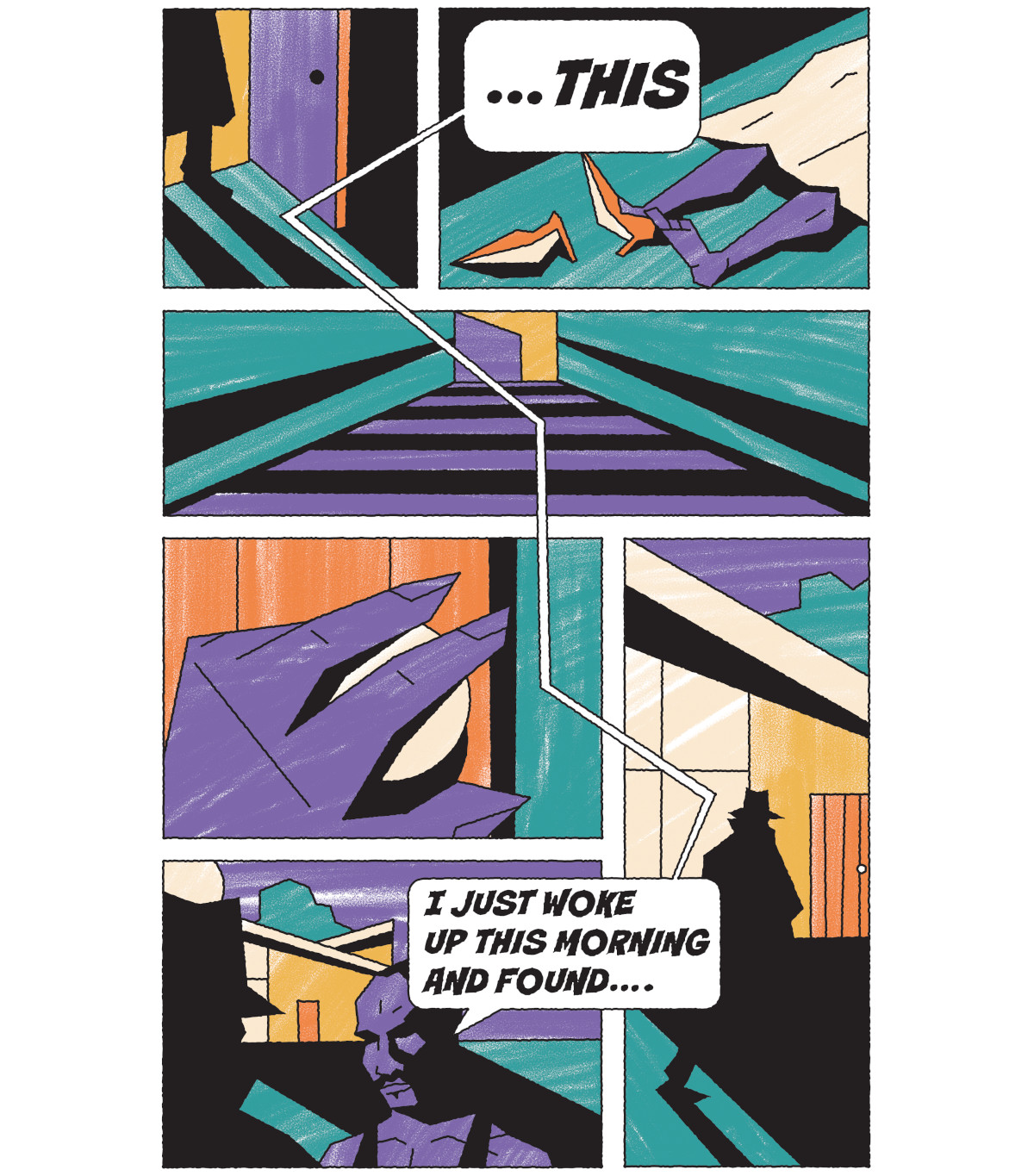
When police officers arrived on the scene, he claimed she’d died by suicide and described finding her body by saying: “I just woke up this morning and found this.”
Lang revealed his negative affective state by using the word ‘this’. Boyce isn’t referred to by her name or even the pronoun ‘her’, a clear indication that he’s trying to put as much distance as he can between himself and his deeds.
Read more:
- 9 subtle signs your co-worker is a narcissist, according to leading psychologists
- Decades of research say eyewitness testimony can't be trusted. These scientists say otherwise
- Experts are finally learning what power does to the brain – and it's not what anyone expected
4. Missing sensory information
People often lie about being robbed to claim insurance on something they’ve lost or broken – a mobile phone, for example. And it happens more than you might think.
According to figures from 2020, insurance fraud costs the UK around £2 billion (over $2.6bn) annually.
Some people also lie about being robbed to get sympathy or maintain their public image when they’ve done something that could damage their reputation.
This is what American swimmer Ryan Lochte did during the 2016 Olympics in Brazil. He lied about being robbed to hide that he and his teammates had in fact vandalised a service station.
In his statement to authorities, Lochte said:
“We got pulled over, in the taxi, and these guys came out with a badge – a police badge – no lights, no nothing. Just a police badge and they pulled us over.
"They pulled out their guns; they told the other swimmers to get down on the ground – they got down on the ground. I refused; I was like, ‘We didn’t do anything wrong, so I’m not getting down on the ground.’
"And then the guy pulled out his gun, he cocked it, put it to my forehead, and he said, ‘Get down.’ And I put my hands up… He took our money, he took my wallet.”
Apart from all the repetition – itself a potential indicator of lying (see section 1) – there’s a noticeable absence of any sensory-perceptual details. There’s almost nothing to convey what he heard, felt, saw, smelt or tasted.
These sorts of words describe not only what we detect with our senses, but also our inner physical state (our balance or body posture).
When we experience shocking, surprising or traumatic events, we’ll relate our experience by using words that describe these things.
Studies on the words we use when we discuss our personal experiences from as far back as 1967 support this idea. Similarly, a study on the cues to deception published in 2003 found that people use fewer sensory descriptions when they’re lying.
If Lochte had been telling the truth, his account might have sounded something like this:
“We were in a taxi going back to our hotel when suddenly we got pulled over by an unmarked car, and these four guys came out with police badges. They quickly pulled out their guns and pointed them at us.
"They told the other swimmers to get down on the ground. My heart was racing. The others looked really worried. It was a bit stupid, but I refused.
"I was like, ‘We didn’t do anything wrong.’ And then I could hear the sound of a gun being cocked, and then one of them pushed a gun hard against my forehead.”
Descriptive detail is often absent in a liar’s account, whether they’re claiming they’ve been robbed or describing another kind of shocking experience.
This is because they’re using constructed memories that aren’t connected to their perceptual experience, and the absence of descriptive, sensory words in their language gives this away.
5. Hiding among others

Pronouns can be another clue that someone is lying. Personal pronouns are the words we use to refer to ourselves or other people: I, he, she, they, me, him, her and so on.
When we refer to ourselves, we normally use the singular form ‘I’ or ‘me’. Liars, however, prefer not to. This may be because using I or me places them solely in the spotlight.
Using a plural form of the pronoun, however, allows them to remain a little hidden. Essentially, using the plural form allows a liar to seek safety in numbers.
An example of this is Mark Robinson. The former lieutenant governor of North Carolina was claimed to have been the author of racist comments on a pornography website in 2024. Claims he refuted, saying: “This is not us. These are not our words”.
But they were his words (he later confessed to posting the comments).
Our inner thoughts and feelings can hijack our use of language, and as much as liars try to avoid placing the focus on themselves, their language often betrays them.
This same avoidance of self-focus slips out in more serious cases as well.
When Stephen McDaniel gave an interview to TV reporters regarding the disappearance of Lauren Giddings in 2011, he answered many of the questions directed at him in the plural, in one instance saying:
“I… We… We don’t know where she is. The only thing we can think is that maybe she went out running and someone snatched her. I’m… We went over… One of her friends had a key […] The door was locked when everyone got here. We just don’t know where she is.”
Every time McDaniel starts to use ‘I’, he switches to ‘we’ instead. He’s trying to hide his involvement. He confessed to murdering Giddings in 2014 and was sentenced to 30 years to life in prison.
Read more:
